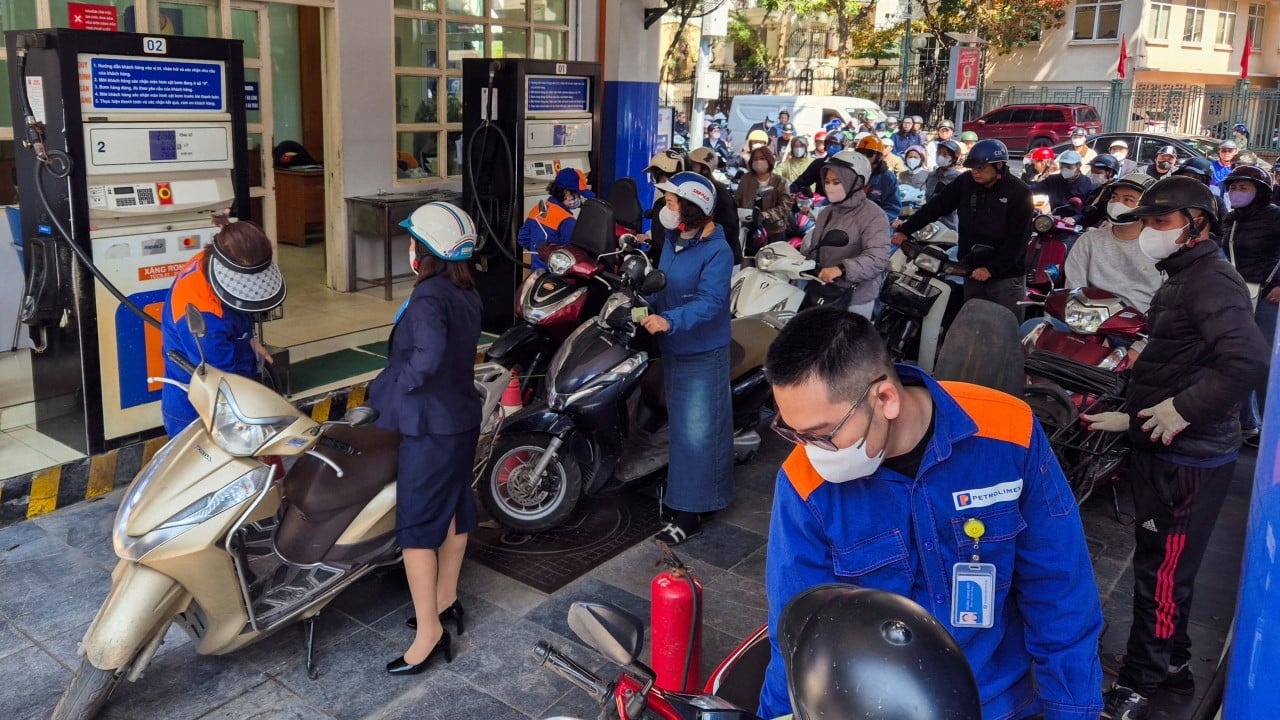
The lines at the gas stations in Beijing and Shanghai aren't a sign of economic savvy. They are a monument to collective innumeracy.
Every time the National Development and Reform Commission (NDRC) hints at a price hike, thousands of drivers waste their most non-renewable resource—time—to save a sum of money that wouldn't buy a decent cup of coffee in a tier-one city. The media frames this as a "rush to beat the hike." I call it a failure of basic arithmetic.
Let’s dismantle the "lazy consensus" that says topping off your tank tonight is a win for your wallet.
The Poverty of the Five-Dollar Win
Standard reporting focuses on the aggregate: "Prices to rise by 200 yuan per tonne." It sounds massive. It sounds like a structural shift. It isn’t.
When you break that down to the pump, you are looking at an increase of perhaps 0.15 to 0.22 yuan per liter. If you have a standard 50-liter tank and you are currently at half-empty, you are idling in a line for forty minutes to save roughly 5 yuan.
$5 \text{ yuan} = 0.70 \text{ USD}$.
I have seen venture capitalists and "frugal" middle-class professionals alike lose an hour of their evening for less than the cost of a steamed bun. This is the "optimization trap." You feel like you are winning because you took action against a system, but you ignored the opportunity cost. If your time is worth more than 10 yuan an hour, you just lost money by trying to save it.
The Myth of the "Biggest Hike"
The headline "Biggest Hike This Year" is a classic journalistic trope designed to trigger FOMO (Fear Of Missing Out). In the energy sector, "biggest" is a relative term that ignores the baseline.
China’s domestic fuel pricing mechanism is indexed to global crude rates, specifically looking at a ten-working-day cycle. When Brent or WTI crude fluctuates, the NDRC adjusts. But here is the nuance the "rush" articles miss: these prices are capped and floored.
- The Ceiling: When international crude hits $130 per barrel, domestic prices stop rising to protect consumers.
- The Floor: When it drops below $40, prices stop falling to discourage carbon consumption.
By the time you see the news alert on your phone, the "market signal" is already ten days old. You are reacting to a ghost. You are chasing a price point that has already been priced into the logistics chain of every product you’ll buy next week anyway. Topping off your tank doesn't insulate you from the inflationary pressure of higher fuel; it just delays one specific micro-cost by four days.
The Hidden Cost of the Full Tank
There is a technical irony in the rush to fill up. A full tank adds weight.
While the impact on fuel economy for a single passenger vehicle is marginal, it is still a net negative. More importantly, the idling time spent in the queue—engines humming, air conditioning blasting—frequently consumes more fuel than the price difference saves.
Imagine a scenario where 500 cars are idling for 30 minutes at a single station. The collective carbon output and wasted fuel volume effectively cancel out the "savings" for the group. It is a classic "Tragedy of the Commons" played out in a gas station parking lot. You aren't beating the system; you are the friction in the system.
The EV Elephant in the Room
The most glaring omission in the "petrol rush" narrative is the sheer irrelevance of the hike to China's actual automotive trajectory.
China is no longer a "petrol-first" economy. With NEV (New Energy Vehicle) penetration hitting 50% in certain months, the panic at the pump is increasingly a generational hangover. The people queuing are the ones trapped in an aging energy paradigm.
The real "hack" isn't filling your tank before midnight. The real move is recognizing that internal combustion engine (ICE) vehicles are becoming "luxury" liabilities in a country that subsidizes the electron over the atom. While you are sweating over a 0.20 yuan increase, the guy in the Li Auto or BYD next to you is charging at home during off-peak hours for a fraction of your "discounted" price.
Behavioral Arbitrage vs. Real Wealth
People love a visible win. Seeing the meter stop at a lower price gives a hit of dopamine. But real financial intelligence is about "behavioral arbitrage"—doing the opposite of the panicked crowd.
Instead of joining the queue:
- Audit your tires: Under-inflated tires can reduce fuel economy by up to 3%. Fixing that saves more over a month than one cheap tank of gas.
- Clean your trunk: Carrying an extra 45kg (100 lbs) can reduce your MPG by 1%.
- Work an extra hour: If you spent that "queuing hour" finishing a project or learning a skill, the ROI would be infinite compared to 5 yuan.
The Institutional Lie
Why do news outlets push these "rush to the pump" stories? Because they generate high-velocity traffic. It's easy, relatable content. It validates the reader's anxiety.
They won't tell you that the hike is often reversed in the next cycle. They won't tell you that the volatility of the yuan often has a deeper impact on your purchasing power than the cost of 95-octane. They want you focused on the micro so you don't look at the macro.
The "biggest hike of the year" is a rounding error in your annual budget. Treat it as such.
Stop treating your car like a piggy bank and start treating your time like the currency it is. The next time the NDRC announces a hike, stay home. Read a book. Sleep. Do anything except sit in a line of idling engines, waiting to save enough money to buy a single piece of chewing gum.
The line at the gas station isn't a shortcut to savings; it's a treadmill for the financially illiterate. Get off.