The structural reliance of Southeast Asian economies on the Strait of Hormuz creates a systemic single point of failure that transcends simple price volatility. While crude oil price spikes often dominate headlines, the actual threat to the Association of Southeast Asian Nations (ASEAN) resides in the Refining and Logistics Mismatch. A conflict involving Iran does not merely raise the cost of a barrel; it disrupts the specific molecular flow of light-to-medium sour crudes that many regional refineries are calibrated to process. When the primary feedstock for a nation’s industrial base is held hostage by a narrow maritime chasm 6,000 kilometers away, national sovereignty becomes a function of global supply chain elasticity.
The Triple Constraint of ASEAN Energy Security
To understand why a war in the Middle East hits Jakarta or Manila harder than London or New York, one must evaluate the three structural pillars that define the region's energy architecture.
1. The Maritime Choke Point Dependency
Approximately 70% to 80% of crude oil imports for major ASEAN economies—specifically Thailand, Vietnam, and the Philippines—transit through the Strait of Hormuz. Unlike the United States, which has pivoted toward domestic shale production and North American pipeline integration, or Europe, which is aggressively decoupling from fossil fuels via electrification, Southeast Asia remains in a "carbon-lock" phase of industrialization.
The logistical reality is binary: if the Strait is closed or contested, there is no immediate "Plan B." Rerouting tankers around the Cape of Good Hope adds roughly 15 to 20 days to transit times and increases freight costs by $2 to $4 per barrel. For thin-margin economies, this creates an immediate balance-of-payments crisis before the first drop of oil even reaches a refinery.
2. The Calibration Bottleneck
Refineries are not generic kitchens; they are highly specialized chemical plants. A significant portion of the refining capacity in Malaysia and Indonesia is optimized for Middle Eastern grades.
- Feedstock Specificity: Shifting to West African or Latin American crudes requires different "cracking" profiles.
- Yield Degradation: Using non-optimized feedstock reduces the output of high-value products like diesel and jet fuel, increasing the production of low-value residual fuel oil.
- Cost of Reconfiguration: Retrofitting a refinery to handle varying sulfur levels or API gravity takes months and billions in capital expenditure, making it a useless tactic during an active kinetic conflict.
3. The Fiscal Subsidy Trap
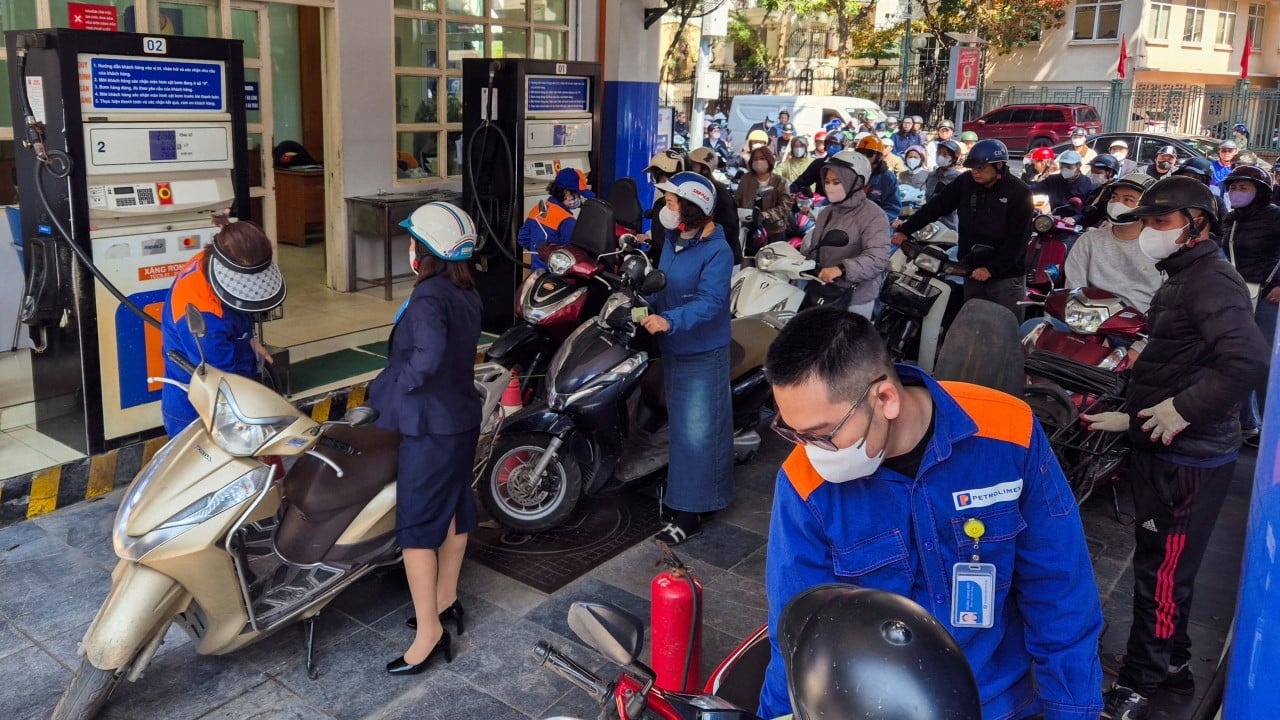
Unlike many Western nations where price increases are passed directly to the consumer, several Southeast Asian governments utilize fuel subsidies to maintain social stability. In Indonesia and Malaysia, the "Fiscal Break-even" is the most dangerous metric. When global Brent prices exceed the government's budgeted price point, the state must swallow the difference.
This creates a vicious fiscal cycle:
- Global oil prices rise due to Middle East tension.
- The government maintains low pump prices to prevent civil unrest.
- State deficits balloon, leading to currency depreciation.
- A weaker currency makes the next shipment of oil even more expensive to buy in USD.
- The government is eventually forced to cut subsidies anyway, leading to "overnight" price shocks of 30% or more, which triggers the very inflation and unrest they sought to avoid.
Quantifying the Vulnerability Index
Vulnerability is not uniform across the region. It is a product of the Net Import Ratio (NIR) and the Energy Intensity of GDP.
The High-Exposure Tier: Thailand and the Philippines
Thailand’s industrial sector is heavily dependent on natural gas and oil for manufacturing. Because Thailand lacks significant domestic reserves, its GDP is highly sensitive to input cost fluctuations. The Philippines faces a similar challenge but is exacerbated by its "Archipelagic Logistics Tax"—the high cost of moving fuel between islands, which amplifies every cent of a global price increase by the time it reaches the end consumer.
The Insulated Tier: Vietnam and Malaysia
Malaysia is a net exporter of high-quality "sweet" crude, which provides a natural hedge. However, it still imports cheaper Middle Eastern "sour" crude for domestic consumption. While the state treasury gains from high prices, the domestic subsidy bill rises in tandem, resulting in a net-neutral or slightly positive fiscal impact that obscures the underlying microeconomic pain felt by logistics firms. Vietnam has increased its domestic refining capacity (e.g., Nghi Son and Dung Quat), yet it remains tethered to global crude markets for feedstock.
The Infrastructure Gap in Strategic Petroleum Reserves
A critical failure in the ASEAN energy strategy is the absence of a unified or robust Strategic Petroleum Reserve (SPR) system. While China and Japan maintain reserves exceeding 90 days of net imports, most Southeast Asian nations operate on a "Just-in-Time" inventory model managed by commercial entities, often holding only 20 to 30 days of supply.
The Problem with Commercial-Only Stocks
Commercial stocks are designed for operational fluidity, not national security. In a crisis, private companies prioritize fulfilling existing contracts or selling to the highest bidder, not necessarily ensuring domestic availability. Without a state-controlled SPR, a three-week blockade in the Persian Gulf would lead to immediate fuel rationing and the suspension of non-essential industrial activity.
The Gas-to-Power Displacement Risk
The vulnerability extends beyond the gas station to the power grid. As domestic gas fields in the Gulf of Thailand and the South China Sea mature and deplete, the region is pivoting toward Liquefied Natural Gas (LNG).
The Middle East, particularly Qatar, is a primary supplier of this LNG. A war involving Iran threatens the security of LNG carriers just as much as oil tankers.
- The Spot Market Exposure: Most ASEAN utilities lack the long-term, fixed-price contracts common in North Asia. They rely on the "Spot Market."
- Price Cannibalization: During a crisis, European and North Asian buyers will outbid Southeast Asian utilities for available LNG cargoes.
- Rolling Brownouts: If a utility cannot afford the fuel, it simply cuts the power. This has a multiplier effect on the digital economy and manufacturing sectors that require 24/7 uptime.
Strategic Decoupling Mechanisms
To mitigate these risks, the analytical focus must shift from "finding more oil" to "structural diversification of the energy stack."
The Trans-ASEAN Power Grid (TAPG)
The most effective hedge against Middle Eastern oil volatility is the integration of regional power markets. By linking Laos’s hydroelectric power, Indonesia’s geothermal assets, and Vietnam’s wind capacity, the region can reduce the total percentage of electricity generated from imported fossil fuels. The bottleneck here is not technology, but the regulatory harmonizing of 10 different national grids.
Advanced Biofuel Integration
Indonesia and Malaysia have a unique advantage: the world’s largest supply of palm oil. While controversial from an environmental standpoint, B35 and B40 biodiesel mandates act as a critical "relief valve" during oil spikes. Every percentage point of biodiesel blended is a percentage point of Middle Eastern crude that does not need to be imported.
Redefining the "Security" Metric
National security must be redefined to include Energy Storage as Infrastructure. Governments should treat SPR tank farms with the same priority as highways or airports.
The immediate strategic play for an ASEAN member state is threefold:
- Mandate a 60-day Minimum Sovereign Reserve: Move beyond commercial stocks to state-owned, physically held reserves located near refining hubs.
- Accelerated Grid Electrification: Move the transport sector toward the grid to leverage domestic coal, gas, and renewables, thereby reducing the "Strait of Hormuz" dependency of the passenger vehicle fleet.
- Currency-Swap Agreements: Establish bilateral oil-trade agreements in local currencies (e.g., IDR or THB) with non-Middle Eastern producers (e.g., Brazil or Australia) to bypass the USD liquidity crunch that typically accompanies energy crises.
The vulnerability of Southeast Asia is not an inevitable byproduct of geography, but a consequence of delayed infrastructure investment and fiscal policy inertia. As the Middle East enters a period of prolonged kinetic uncertainty, the cost of this inertia is no longer theoretical; it is a direct tax on the region’s future growth.