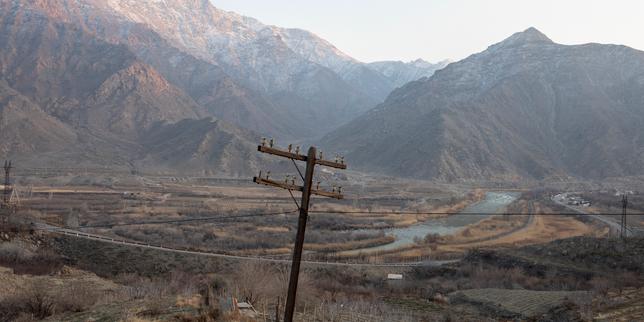
A single finger hovers over a button in a reinforced concrete room somewhere in the rugged highlands of Yemen. Thousands of miles away, a family in Eilat sits down to dinner, oblivious to the physics of ballistics currently calculating their coordinates. This is the new geometry of modern warfare. It is no longer about front lines or trenches. It is about the terrifying collapse of distance.
The Houthi movement, officially known as Ansar Allah, has recently claimed responsibility for a series of missile and drone strikes aimed squarely at the heart of Israel. In their official statements, the rhetoric is familiar: a "sacred duty" to support Iran and a direct response to the escalating conflict in Gaza. But the cold, metallic reality of a missile launch is far more complex than any political slogan. It represents a fundamental shift in how we perceive security in the 21st century.
The Geography of Ghostly Threats
To understand why a group in the southern tip of the Arabian Peninsula is firing at a city on the Red Sea's northern tip, we have to look at the map—not as a collection of borders, but as a series of pressure points. The Houthis are not just a local militia; they have become a regional lever. By launching these projectiles, they are effectively telling the world that no corner of the Middle East is unreachable.
Imagine a specialized technician in a Houthi-controlled bunker. He isn't looking at the sky. He is looking at a screen. He is monitoring telemetry provided by guidance systems that were likely designed in Tehran. The "human element" here is chillingly detached. There is a profound, tragic irony in the fact that the most personal, emotional grievances are being settled through the most impersonal, cold technologies.
These missiles are not just weapons. They are messages. Each one that streaks across the desert sky carries a subtext: We are here. We are watching. We are capable.
The Calculus of Interception
When the sirens wail in Israel, the response is a marvel of engineering. The Arrow defense system, designed to intercept ballistic missiles outside the atmosphere, is a testament to the sheer desperation of human ingenuity. It is a bullet hitting a bullet in the dark.
Consider the physics of it. A ballistic missile launched from Yemen must travel roughly 1,600 kilometers. It climbs into the thin, cold air of the upper atmosphere, arching toward its target at several times the speed of sound. On the ground, radars hum. Computers crunch numbers at a rate no human brain could ever match. In seconds, an interceptor is launched.
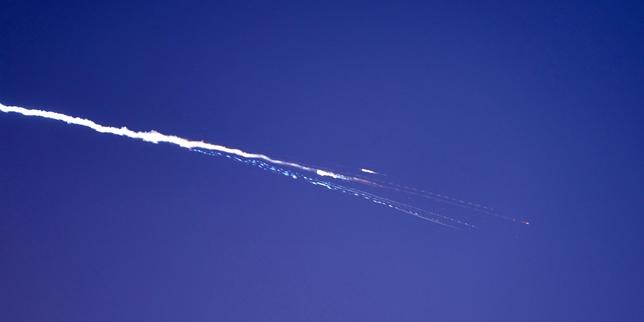
This is where the "invisible stakes" become visible. If the interceptor misses, lives are lost. If it hits, the debris falls like burning stars over the desert. The cost of a single interceptor can run into the millions of dollars. The cost of the missile it destroys? A fraction of that. This is the asymmetrical reality of modern conflict. One side spends pennies to create terror; the other spends fortunes to maintain peace.
The Iranian Shadow
The Houthis do not act in a vacuum. Their alliance with Iran is the pulse under the skin of every operation. To view this as a purely Yemeni-Israeli conflict is to miss the forest for the trees. It is a regional chess match where the pieces are made of high-grade explosives.
For Iran, the Houthis provide "plausible deniability." They are a proxy that allows Tehran to exert pressure on Israel and its allies without triggering a direct, full-scale war. It is a strategy of attrition. Every missile launched from Yemen is a test of Israeli air defenses, a drain on its treasury, and a psychological blow to its population.
But what about the people in Yemen?
In the streets of Sana'a, the narrative is framed as one of resistance and solidarity. But the cost of this "solidarity" is a nation already broken by years of civil war and famine. The resources poured into these missile programs are resources that could have gone toward food, medicine, or infrastructure. The human tragedy is doubled: civilians in Israel live in fear of the strike, while civilians in Yemen live in the hollowed-out shell of a country that prioritizes regional posturing over national survival.
The Silence After the Siren
There is a specific kind of silence that follows a successful interception. It is the sound of a held breath being released. It is the sound of a mother in Eilat tucking her children back into bed, knowing that for tonight, the sky stayed closed.
But that silence is fragile.
As the Houthis vow to continue their "military operations," the tension only tightens. They are no longer just a rebel group fighting for control of a mountainous province; they have become a maritime and aerial threat that can disrupt global shipping and target distant nations. The Red Sea, once a vital artery of global trade, has become a shooting gallery.
The technology of war has outpaced our ability to find peace. We have built machines that can see across horizons and engines that can cross continents in minutes, yet we remain trapped in the same ancient cycles of retribution and blood-feud.
The missile launched from Yemen is more than a piece of hardware. It is a symptom of a world where the distance between us has vanished, but the space between our understandings has never been wider. The shadow of the Red Sea is growing longer, and it covers us all.
Late at night, when the heat of the day finally bleeds out of the desert sand, the only thing certain is the glow of the radar screens, waiting for the next blip to appear. It is a vigil of the high-tech and the high-stakes, a waiting game played with lives as the currency. In the end, the missiles may fall or be intercepted, but the fear they sow remains rooted in the earth, waiting for the next spark to ignite the horizon once again.