The standard geopolitical take on Armenia and Iran is lazy, predictable, and dangerous. You’ve seen the headlines. They paint a picture of a "strategic necessity," a "vital southern gate," or a "civilizational bridge." These phrases are academic noise designed to mask a harsh reality: Armenia’s over-dependence on Tehran isn't a safety net. It’s a tightening noose.
While analysts in Yerevan and Paris wring their hands over how a regional war might "destabilize" Armenia’s economy, they miss the point entirely. The destabilization is already here. It is baked into the structure of an economy that treats a pariah state as its primary lung.
We need to stop pretending that being the "only Christian neighbor" of the Islamic Republic is a masterstroke of diplomacy. It is a desperate survival tactic that has reached its expiration date.
The Myth of the Energy Savior
For years, the "Gas for Electricity" swap has been hailed as a triumph of Armenian pragmatism. Armenia sends 3 kWh of electricity to Iran in exchange for 1 cubic meter of natural gas. On paper, it’s a neat loop. In reality, it has stunted Armenia's energy independence for decades.
By leaning on the Iran-Armenia pipeline, Yerevan gave itself an excuse to delay aggressive investment in modular nuclear reactors or large-scale renewables. I’ve sat in rooms with energy consultants who marvel at this arrangement. They call it "innovative." I call it a sedative.
Every time there is a flare-up between Israel and Iran, or a shift in Washington’s sanctions regime, the Armenian energy grid holds its breath. That isn't sovereignty. That is being a hostage to a neighbor's chaotic foreign policy. If you are relying on a country that is regularly disconnected from the SWIFT banking system to keep your lights on, you haven't solved your energy problem. You’ve just outsourced your risk to a high-stakes gambler.
The North-South Corridor is a Sunk Cost Fallacy
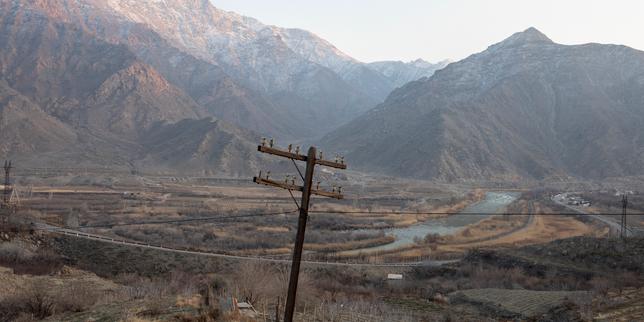
Let’s talk about the North-South Road Corridor. It’s the darling of the Armenian Ministry of Territorial Administration. Millions of dollars—much of it borrowed—are being poured into asphalt through the Syunik mountains. The logic? To turn Armenia into a transit hub connecting the Persian Gulf to the Black Sea.
Here is the truth nobody wants to admit: The logistics don't work.
- Geography is a Relentless Tax: The winding, high-altitude passes of southern Armenia will always be slower and more expensive than the coastal routes through Azerbaijan. You can’t "policy" your way out of the laws of physics.
- The Infrastructure Gap: While Armenia builds a single road, its neighbors are building integrated rail networks and deep-water port facilities.
- Political Volatility: International investors are not going to bet billions on a transit route that relies on the stability of the Armenian-Iranian border when the alternative routes are already operational.
The North-South project is a classic "Field of Dreams" error. Just because you build it, doesn't mean the cargo will come. Betting the national budget on becoming a transit hub for a sanctioned state is like opening a luxury boutique in a neighborhood under a permanent police cordon.
The Sanctions Shadow is Poisoning Foreign Direct Investment
Western investors are not stupid. They see the handshake between Yerevan and Tehran, and they see a compliance nightmare.
I’ve watched multi-million dollar deals in the Armenian tech sector evaporate the moment a legal team realizes the "strategic partnership" with Iran involves shared infrastructure or opaque banking workarounds. You can have the best tax incentives in the world, but if a US or EU firm thinks their funds might even tangentially touch an Iranian-linked entity, they will run.
Armenia’s "balanced" foreign policy is often described as a sophisticated dance. From the perspective of a Silicon Valley VC or a German manufacturer, it looks like a lack of commitment. You cannot be a gateway to the EAEU, a partner of the EU, and a "brother" to Iran all at once without someone getting burned. Usually, it’s the Armenian entrepreneur who can’t get a simple wire transfer through because a mid-level compliance officer in New York flagged "Armenia" and "Iran" in the same paragraph.
The Syunik Obsession
The media is obsessed with the "Zangezur Corridor"—the proposed route through southern Armenia that Azerbaijan and Turkey demand. The fear is that this corridor would cut Armenia off from Iran.
The contrarian view? Armenia’s obsession with keeping the Iranian border open at all costs has blinded it to the necessity of diversifying its borders elsewhere. By framing the Iranian border as the "only" path to the outside world, Yerevan has given Baku and Ankara a massive psychological advantage.
Imagine a scenario where Armenia focused 100% of its diplomatic capital on forcing the opening of the Turkish border without preconditions, rather than acting as a regional advocate for Iranian transit. The leverage shifts instantly. But as long as Armenia acts like its life depends on the bridge over the Araks river, it remains predictable. In geopolitics, if you are predictable, you are a target.
Trade Statistics are a Mirage
Proponents of the Armenia-Iran axis point to the $700 million trade turnover as proof of success. Look closer. What are we actually trading? It’s not high-value technology or intellectual property. It’s raw materials, energy, and low-margin commodities.
This is "poverty trade." It keeps the wheels turning, but it doesn't build a modern, resilient economy. It’s the economic equivalent of eating fast food because it’s cheap and nearby; eventually, the health consequences will catch up with you.
The Security Illusion
The most dangerous misconception is that Iran is a security guarantor for Armenia. This is a fantasy born of desperation.
Iran cares about its own territorial integrity and its "red lines" regarding border changes. It does not care about Armenian democracy, Armenian prosperity, or Armenian sovereignty. If a deal is struck in Moscow or Ankara that benefits Tehran’s broader regional goals, Armenia will be traded away without a second thought.
Relying on a regional power that is itself under constant threat of internal upheaval and external bombardment is not a "security strategy." It is an abdication of responsibility.
The Actionable Pivot
We have to stop asking, "How can we protect the Iran-Armenia link?" and start asking, "How fast can we make it irrelevant?"
- Aggressive Decentralized Energy: Shift every available dram into solar, wind, and small-scale storage. Make the "Gas for Electricity" swap a relic of the 2010s.
- Compliance Supremacy: Establish an elite, transparent financial oversight body that ensures no Iranian capital touches Armenian growth sectors. This is the only way to unlock real Western FDI.
- The Georgia-First Policy: Quadruple down on the northern route. Georgia is the only partner that offers a path to the West that isn't burdened by the baggage of a revolutionary guard.
- Tech as the Borderless Border: Focus on an economy that doesn't rely on physical transit. If your primary exports are code and design, a closed border in Syunik is an inconvenience, not a death sentence.
The "comfort" of the Iranian relationship is a trap. It’s a warm blanket in a room that’s slowly filling with smoke. Armenia needs to wake up, throw off the blanket, and head for the exit before the roof collapses.
Stop mourning the potential loss of the Iranian link. Start planning for the freedom of not needing it.