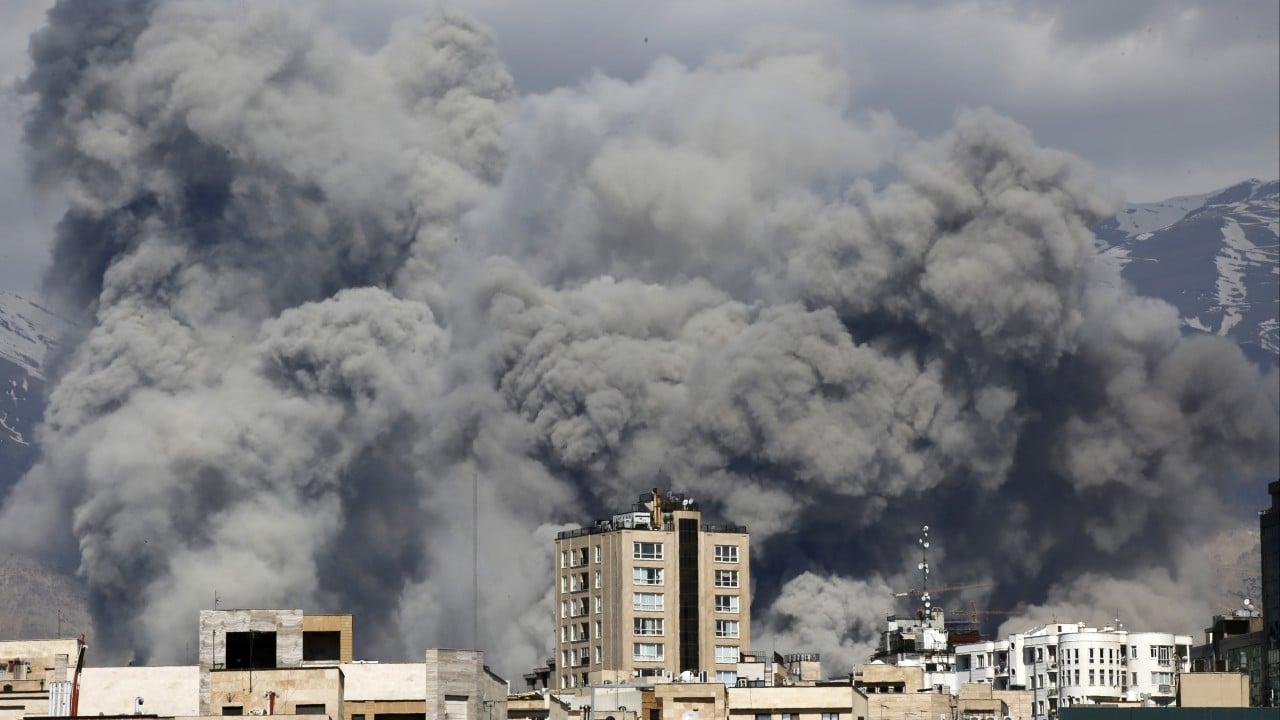
Fear-mongering is the cheapest currency in commodity trading.
The consensus "analysts" are currently clutching their pearls over the prospect of a hot war in the Middle East, screaming that China’s methanol supply chain is one stray missile away from total collapse. They point to the fact that Iran supplies roughly 80% of China’s methanol imports. They look at the Strait of Hormuz and see a chokehold. They see a crisis.
I see a long-overdue cleansing of a bloated, inefficient market.
The narrative that China is "vulnerable" to an Iranian supply shock is a fundamental misunderstanding of how the CCP handles energy security and how the global chemical industry actually functions. If you’re betting on a price spike that cripples Chinese manufacturing, you’ve already lost. Here is why the "disruption" narrative is a lie sold by people who don't understand $C_1$ chemistry or the ruthless pragmatism of Beijing.
The Myth of the Iranian Chokehold
Let’s dismantle the 80% statistic immediately. Yes, China buys the lion's share of Iranian methanol. Why? Because Iran is a pariah state that has to sell its molecules at a massive discount.
China isn't "dependent" on Iran; China is arbitraging Iran.
If the Strait of Hormuz closes tomorrow, the "analysts" expect a catastrophic shortage. They forget that China is the world’s largest producer of methanol via coal-to-olefins (CTO) and coal-to-methanol (CTM) pathways. While the rest of the world transitioned to cheap natural gas, China spent the last two decades building a massive, domestic coal-based infrastructure.
Currently, many of these domestic plants run at sub-optimal capacity because it’s simply cheaper to buy discounted Iranian liquid. A war doesn't destroy China’s supply; it simply flips a switch. The moment Iranian imports drop, the domestic coal-based spigots open. The "crisis" is actually a massive subsidy for the Chinese mining sector and a chance to burn off excess coal inventory.
The Price Spike Paradox
You’ll hear that prices will skyrocket. This ignores the basic mechanics of the Methanol-to-Olefins (MTO) sector.
In a sane market, raw material costs drive the price of the finished product. In the Chinese chemical market, the MTO plants—the biggest consumers of methanol—operate on razor-thin margins. If methanol prices spike beyond a certain threshold, these plants simply shut down. They don't keep buying at $500/tonne; they go dark.
This creates a hard ceiling on how high methanol can actually go. A supply disruption doesn't lead to infinite price growth; it leads to a temporary demand destruction that rebalances the market faster than any shipping detour could. The "disruption" is a self-correcting mechanism.
The Stealth Reserves
Nobody talks about the "floating storage" or the strategic commercial reserves held in the East China ports.
I’ve spent years watching the divergence between "reported" inventory and the actual movement of tankers. China’s storage capacity has expanded quietly and aggressively. They are not living hand-to-mouth. If Iran goes dark, China has enough "dark" inventory—product bought during the 2023-2024 price troughs—to bridge the gap until domestic production scales or alternative routes from the US Gulf Coast or Trinidad are secured.
Western analysts look at a map and see a blocked pipe. Chinese planners look at a map and see a diversified portfolio where the "riskiest" asset (Iran) is also the one they are most prepared to lose.
Why "Diversification" is a Consultant's Fairy Tale
The standard advice for Chinese importers is always: "Diversify your sources. Buy more from the US, Saudi Arabia, or Malaysia."
This is idiocy.
Why would a Chinese buyer pay a premium for US-produced methanol—subject to higher freight costs and geopolitical whims—when they can get Iranian product at a "sanctions discount"?
War doesn't change the math; it just changes the risk premium. Even if a conflict breaks out, the "shadow fleet" doesn't just vanish. It gets more creative. We saw this with Russian crude. Every time the West tries to "disrupt" a flow, the molecules simply find a more circuitous, opaque route. A war in Iran won't stop the flow of methanol; it will just move it from the "official" ledger to the "unofficial" one, likely via ship-to-ship transfers in the Malacca Strait.
The Technological Leapfrog
Here is the part the "news" misses: A supply shock is the ultimate catalyst for the "Green Methanol" transition.
China is currently leading the world in CO2-to-methanol technology. They are using captured carbon and green hydrogen to create the same molecules they currently buy from Iran. Currently, this process is slightly more expensive than traditional gas-based synthesis.
Nothing accelerates an energy transition like a war in your primary supply zone.
If Iran is offline, the massive capital currently flowing into traditional petrochemicals will pivot instantly to hydrogen-based methanol. The CCP doesn't view a conflict as a reason to panic; they view it as a "strategic window" to force the industry toward the next technological paradigm. They did it with EVs. They are doing it with solar. They will do it with methanol.
The Real Winner: The United States
This is the hard truth that hurts to hear: If Iran’s methanol exports are genuinely crippled, the biggest beneficiary isn't China—it’s the American producers in the Gulf Coast.
The US has an abundance of cheap shale gas. We have the infrastructure. We have the export terminals. While analysts cry about "global instability," the smart money is watching the arbitrage window between Henry Hub gas prices and the potential spike in Asian methanol benchmarks.
But here is the catch: China knows this. They will not trade dependence on Iran for dependence on the US. They will choose the third option every single time: Aggressive Domestic Autarky.
Stop Looking at the Ships, Look at the Coal
If you want to know if the Chinese methanol market is in trouble, stop tracking tankers in the Persian Gulf. Start tracking the daily rail shipments of coal from Inner Mongolia to the coastal chemical hubs.
The "Iran War" narrative is a distraction for the retail crowd. The real story is the resilience of the Chinese coal-to-chemical chain. It is dirty, it is carbon-intensive, and it is absolutely bulletproof against Middle Eastern geopolitical volatility.
The "experts" are telling you to prepare for a shortage. I’m telling you to prepare for a massive, state-mandated surge in domestic production that will eventually result in a global methanol glut once the "conflict" inevitably cools down.
The Playbook for the "Disrupted" Market:
- Ignore the Headline Spot Price: It’s a volatility trap. Look at the MTO operating rates. If they aren't dropping, the "shortage" is imaginary.
- Watch the Freight Rates, Not the Molecules: The cost of moving the product is a bigger threat to margins than the cost of the gas used to make it.
- Bet on the Pivot: The real money isn't in "surviving" the Iranian shock; it’s in the infrastructure for the green methanol transition that will be accelerated by ten years because of it.
The consensus is that China is a victim of Middle Eastern instability. The reality is that China is the only player in the world with a "Plan B" that involves burning its own mountains to keep its factories running.
The analysts are playing checkers. Beijing is playing 4D chess with a coal-fired board.
Stop worrying about the Strait of Hormuz. Start worrying about why you’re still listening to people who think a chemical superpower can be brought down by a few drones in a shipping lane.