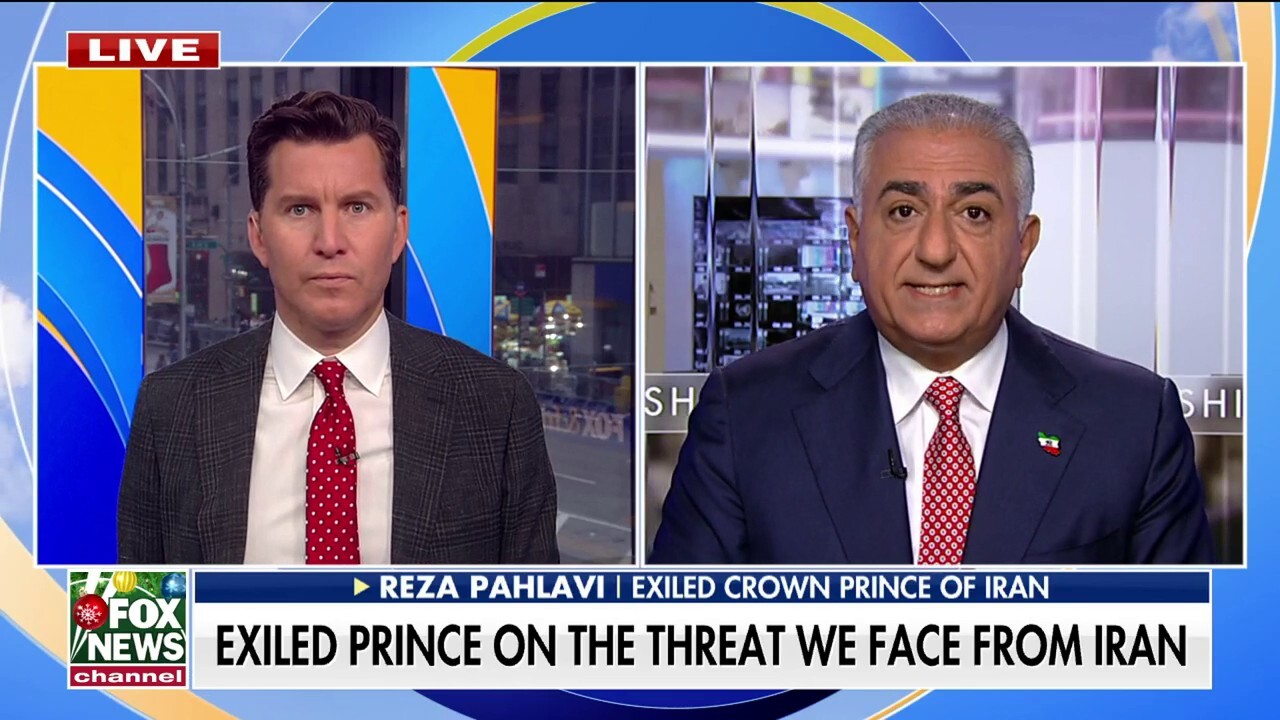
The Strait of Hormuz is not merely a geographic bottleneck; it is a high-stakes lever of economic coercion where the physics of maritime logistics meets the cold calculus of sovereign desperation. Any report suggesting that Iran intends to restrict transit through this corridor to Chinese-flagged vessels exclusively indicates a shift from passive deterrence to an active, discriminatory maritime regime. This strategy, if implemented, represents a fundamental rejection of the United Nations Convention on the Law of the Sea (UNCLOS) in favor of a bilateral "protected corridor" model. Such a move would reconfigure global energy supply chains by imposing a geopolitical tax on every non-Chinese barrel of oil attempting to exit the Persian Gulf.
The Mechanics of Maritime Exclusion
To understand the feasibility of a Chinese-only transit policy, one must deconstruct the operational requirements of "Total Domain Awareness" in the Strait. The waterway is roughly 21 miles wide at its narrowest point, with shipping lanes—consisting of two-mile-wide inbound and outbound channels—separated by a two-mile buffer zone.
Control over this passage is exerted through three specific layers of intercept capability:
- Electronic Identification and Verification: Every commercial vessel operates an Automatic Identification System (AIS). A discriminatory policy requires cross-referencing real-time AIS data against global registry databases and "White Lists" provided by Beijing. The friction here arises from flag-of-convenience shipping; a vessel may be Greek-owned but registered in Panama. Iran’s enforcement would require a legal definition of "Chinese vessel" that extends beyond the flag to include ultimate beneficial ownership—a data-heavy task that invites frequent misidentification.
- Kinetic Signaling: Iran’s Islamic Revolutionary Guard Corps Navy (IRGCN) utilizes a swarm-based doctrine. By deploying fast attack hulls equipped with anti-ship missiles and boarding parties, Iran creates a physical "toll booth" environment. This forces ship captains to choose between the risk of seizure or the high insurance premiums associated with unauthorized transit.
- The Coastal Battery Umbrella: The presence of Silkworm and Noor anti-ship cruise missiles along the Iranian coastline provides the "heavy lifting" for the exclusion zone. These systems ensure that any Western naval intervention to "break the blockade" faces a high-attrition environment.
The Sino-Iranian Bilateral Cost Function
The logic behind favoring Chinese vessels is rooted in a specific economic symbiosis. For Iran, China is the "buyer of last resort," absorbing the majority of Iranian crude through "teapot" refineries and complex ship-to-ship transfers that bypass Western sanctions. For China, the Strait of Hormuz is a critical artery for its "Belt and Road" energy security.
However, a formal policy of exclusivity introduces a severe Strategic Paradox. If Iran bans all but Chinese ships, it effectively turns the Strait into a Chinese internal waterway. This creates several secondary effects:
- Monopsony Power: If China is the only nation allowed to transport oil out of the region, it gains absolute pricing power over Middle Eastern producers. Saudi Arabia, the UAE, and Kuwait would be forced to either use Chinese logistics—paying a premium for the privilege—or find alternative, more expensive routes like the East-West Pipeline to the Red Sea.
- The Insurance Vacuum: International maritime insurers, largely concentrated in London (Lloyd's), would likely void policies for any vessel entering a zone where the coastal state has declared discriminatory access. China would be forced to provide its own state-backed insurance, tethering its financial system even more tightly to Iranian stability.
Tactical Deficiencies in the Exclusive Transit Model
The "Sources" cited in reports of this policy often overlook the physical reality of transit. The deep-water channels required for Fully Laden Supertankers (VLCCs) actually fall within Omani territorial waters as much as Iranian ones.
For Iran to enforce a "Chinese Only" rule, it must physically prevent ships from utilizing the Omani side of the Traffic Separation Scheme. This necessitates a violation of Omani sovereignty, potentially drawing a broader coalition of regional actors into a kinetic conflict. The logistical bottleneck is not just about who is allowed through, but about the density of traffic. If 20% of the world's oil transits the Strait, and that volume is suddenly compressed into a subset of "allowed" vessels, the global tanker market would face an immediate shortage of available hulls, driving "dirty tanker" spot rates to record highs.
The Three Pillars of Regional Escalation
If this policy moves from rumor to maritime directive, the fallout will follow a predictable escalation ladder:
I. The Redirection of the Global Tanker Fleet
Western operators would immediately initiate "Route Avoidance" protocols. We would see an immediate surge in utilization of the Sumed Pipeline in Egypt and the Abqaiq-Yanbu pipeline in Saudi Arabia. This shift would create a two-tier oil market: "Safe Oil" (shipped via pipeline or non-contested waters) and "Risk Oil" (shipped through Hormuz). The price delta between these two would likely exceed $15–$20 per barrel.
II. The Militarization of Commercial Escorts
The U.S. Fifth Fleet and the UK’s Royal Navy would be forced to move from "monitoring" to "active escort" duties. This creates a "Tripwire Effect." If an Iranian vessel attempts to board a British tanker in international waters to check for "Chinese credentials," the probability of a localized naval engagement nears 100%.
III. China’s Diplomatic Dilemma
While the policy favors China on paper, it is a poisoned chalice for Beijing. China’s foreign policy is built on the "Principle of Non-Interference" and the "Freedom of Navigation" (at least theoretically, to protect its own global exports). Accepting a special status in the Strait of Hormuz would mark China as a co-conspirator in a blockade, potentially triggering secondary sanctions against Chinese shipping giants like COSCO.
Quantifying the Disruptive Impact
The true measure of this threat lies in the "Elasticity of Supply." Approximately 21 million barrels of oil pass through the Strait daily.
- Total Capacity of Regional Bypass Pipelines: ~6.5 million barrels per day.
- Net Vulnerable Volume: ~14.5 million barrels per day.
If Iran restricts this volume to Chinese vessels, and assuming China can only mobilize enough tanker capacity to move 50% of that volume, the global market faces a structural deficit of 7 million barrels per day. In historical terms, the 1973 oil embargo involved a disruption of approximately 5 million barrels per day. The mathematical result is a projected 40–60% spike in Brent Crude prices within 72 hours of policy enforcement.
The Strategic Action Plan for Global Energy Stakeholders
The reported Iranian intention to prioritize Chinese vessels is likely a "Strategic Trial Balloon"—a method to test the limits of Western maritime resolve and the extent of Chinese complicity. However, preparing for the realization of this threat requires a three-pronged defensive posture.
First, energy-dependent nations must maximize Strategic Petroleum Reserve (SPR) fill rates immediately while the Strait remains nominally open. The objective is to create a 90-day buffer that can absorb the initial price shock and allow for the reconfiguration of tanker routes.
Second, maritime operators should move toward "Neutral Flagging" strategies. If the criteria for transit is indeed Chinese-linked, there will be a surge in joint ventures between Middle Eastern producers and Chinese state-owned enterprises to re-flag existing fleets. This "Commercial Camouflage" will be the primary method for non-Chinese oil to exit the Gulf under the new regime.
Third, the international community must prepare for the "Legalization of the Blockade." If Iran reclassifies the Strait as "Internal Waters" rather than an "International Strait," the legal basis for intervention shifts. Countering this requires a preemptive, multi-national maritime agreement that explicitly rejects any discriminatory transit fees or flag-based restrictions, backed by a standby combined task force ready to resume "Operation Earnest Will" style escorts.
The Strait of Hormuz is entering a phase where the cargo is secondary to the flag it flies. The "Chinese Only" directive is not just a trade preference; it is the weaponization of geography. Stakeholders must treat this as a high-probability volatility event rather than a localized diplomatic spat.