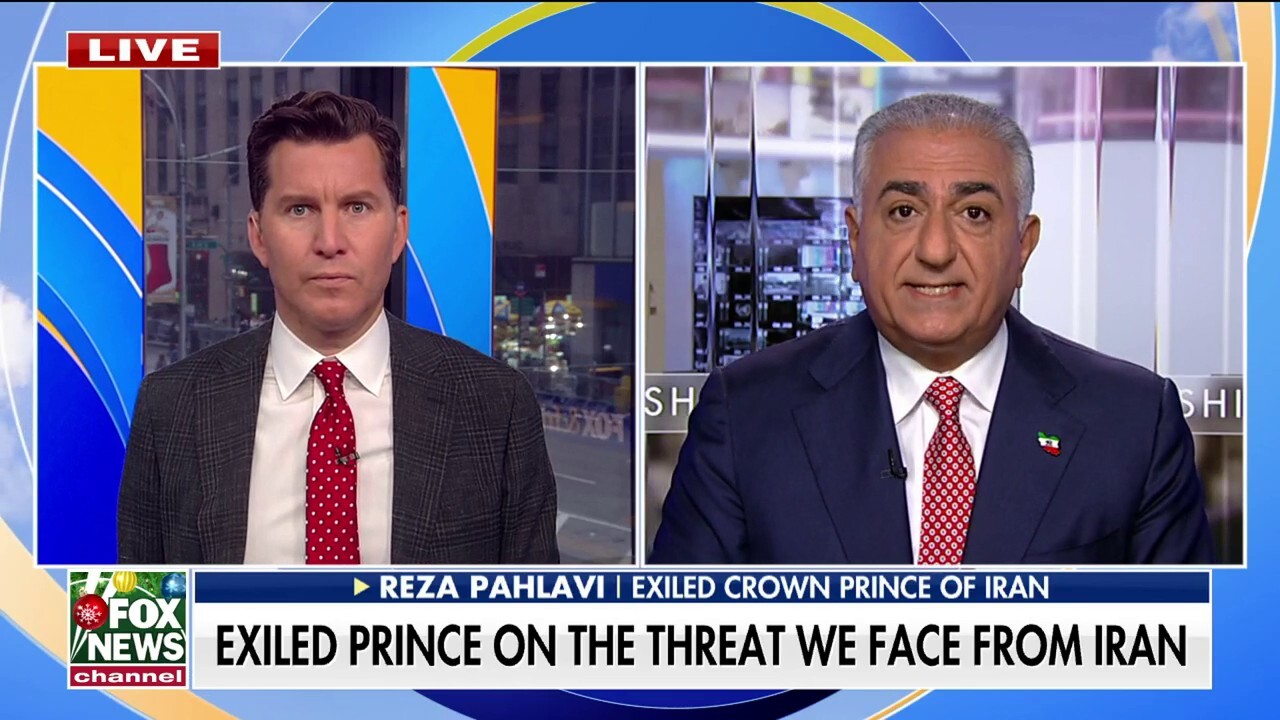
The Western foreign policy establishment is addicted to the ghost of the Peacock Throne. Every time the Islamic Republic stumbles, the same tired names circulate through the green rooms of cable news. Chief among them is Reza Pahlavi. The "lazy consensus" among DC hawks and headline-skimming pundits is that the son of the last Shah is the natural, secular, and democratic successor to the mullahs. Even Donald Trump, ever the master of the backhanded compliment, recently dismissed him as a "nice person" but signaled the obvious: "nice" doesn't topple a theocracy.
The obsession with Pahlavi isn't a strategy; it’s a symptom of intellectual rot. It is the political equivalent of trying to fix a software bug by reinstalling an operating system from 1978. If you think a 63-year-old exile living in Great Falls, Virginia, is the catalyst for a Persian spring, you aren't paying attention to the ground reality in Tehran, Mashhad, or Zahedan.
The Myth of the Unifying Figure
The primary argument for Pahlavi is that he represents a "symbol of unity." This is demonstrably false. To a specific demographic of the diaspora—largely those who remember the pre-1979 era with rose-tinted glasses—he is a hero. But inside Iran, the "Zan, Zendegi, Azadi" (Woman, Life, Freedom) movement has moved far beyond the binary choice of Turban vs. Crown.
The youth of Iran, who make up the vast majority of the population, are not looking for a restoration. They are looking for a revolution. Relying on a dynastic heir to deliver democracy is a fundamental contradiction in terms. You cannot build a forward-looking republic on the foundation of hereditary nostalgia.
When Pahlavi speaks, he carefully uses the language of human rights and secularism. He claims he doesn't want the throne, only to "serve" as a facilitator. It’s a polished pitch. But it ignores the deep-seated trauma of the SAVAK era—the Shah’s brutal secret police—which remains a potent tool for the current regime’s propaganda. By centering the opposition around Pahlavi, the West hands the Islamic Republic a gift: the ability to frame the resistance as a CIA-backed attempt to return to the "dark days" of monarchy.
The Trumpian "Nice Guy" Kiss of Death
When Trump calls someone a "nice person," it is coded language for "ineffectual." Trump’s skepticism, while crude, hits on a truth that the State Department refuses to acknowledge: Pahlavi lacks the "street" or the "steel" required for a coup or a mass uprising.
To overthrow a regime as entrenched and ideologically committed as the IRGC (Islamic Revolutionary Guard Corps), you need more than polite press releases and town halls in Maryland. You need a leader who can command the loyalty of the rank-and-file soldiers, peel away the middle management of the bureaucracy, and offer a concrete, radical alternative to the status quo. Pahlavi is a gentleman in a game of wolves.
The Diaspora Echo Chamber
I have spent years watching political movements burn out because they mistook Twitter engagement for political capital. The Pahlavi phenomenon is the ultimate echo chamber. His supporters are loud, well-funded, and speak perfect English. They dominate the "People Also Ask" metrics on Google because they are the ones writing the queries.
But go to the border regions of Sistan and Baluchestan or the Kurdish territories. Ask the activists who are actually facing the gallows if they are waiting for a King. They aren't. They are organized along ethnic, labor, and civil rights lines that have nothing to do with the Pahlavi name. In fact, many of these groups view a potential Pahlavi restoration with as much suspicion as they do the current clerical rule. They fear a "New Tehran" that is just as centralized and exclusionary as the old one.
The Fatal Flaw: The Lack of an Internal Network
The most glaring hole in the "Pahlavi as Leader" narrative is the absence of a viable underground network within Iran. History’s successful exiles—think Khomeini in 1979 or Lenin in 1917—had disciplined, fanatical networks on the ground long before they set foot back in their home countries. They had ways to move money, distribute instructions, and paralyze the state.
Pahlavi has a YouTube channel.
There is no "Pahlavist" underground cell disrupting Iranian infrastructure. There are no Pahlavi-aligned labor unions striking in the oil fields. The opposition inside Iran is decentralized and organic. Attempting to "lead" it from a distance without skin in the game is not leadership; it’s commentary.
Stop Asking "Could He Lead?" and Start Asking "Who Is Building?"
The question "Could Reza Pahlavi lead Iran?" is the wrong question. It assumes that leadership is a position to be granted by the international community or inherited by blood. True leadership in the Iranian context will emerge from the prisons of Evin or the strikes in the bazaar.
If you want to see the future of Iran, look at the lawyers, the teachers' union leaders, and the student activists who are currently being tortured. They are the ones with the E-E-A-T (Experience, Expertise, Authoritativeness, and Trustworthiness) that actually matters. They have the "battle scars" that a Virginia-based prince simply doesn't.
Why the Transition Will Be Ugly (and Why Pahlavi Can't Fix It)
Everyone wants a "seamless" transition. It’s a fantasy. The collapse of the Islamic Republic will be chaotic, potentially violent, and deeply fractured. The IRGC controls nearly 40% of the Iranian economy. They aren't going to hand over the keys to the central bank just because a "nice person" asks them to.
Any real transition will require:
- Splitting the IRGC: Offering an off-ramp to the rank-and-file while isolating the top brass.
- Economic Decentralization: Breaking the monopolies held by religious foundations (Bonyads).
- Ethnic Autonomy: Addressing the grievances of Azeris, Kurds, Arabs, and Baluchis to prevent the country from splintering like Yugoslavia.
Pahlavi’s brand of nationalism is too rigid to handle the third point, and his lack of leverage makes the first two impossible.
The Strategy of the Status Quo
The reason the West clings to Pahlavi is laziness. It is easier to deal with a singular, Westernized figurehead than to do the hard work of engaging with a messy, multi-ethnic, decentralized coalition of internal actors. It’s the same mistake made with Ahmed Chalabi in Iraq. We look for a "George Washington" in a three-piece suit who tells us what we want to hear, while the actual power dynamics on the ground move in a completely different direction.
If the goal is truly a democratic Iran, the international community needs to stop looking for a savior and start supporting the infrastructure of dissent. Support the VPN providers that keep the internet open. Support the labor funds that allow workers to strike without starving. Stop waiting for a "King" to descend from the clouds.
The Pahlavi era ended in 1979. It is time to let the dead bury their dead and face the reality that the next leader of Iran is currently someone whose name you can't pronounce, sitting in a cell you've never heard of, waiting for the world to stop talking about "nice people" and start talking about power.
Stop looking at the throne. The throne is gone. Start looking at the street.