The ground in Dimona didn't just shake from the physical impact of an Iranian missile on Saturday night. It shook the foundation of a decades-old psychological contract between Israel and the world. For over fifty years, the Negev Desert has held a secret everyone knew but no one was allowed to talk about. Israel’s nuclear facility at the Shimon Peres Negev Nuclear Research Center was the ultimate "red line."
That line was crossed on March 21, 2026.
By targeting Dimona directly, Iran didn't just aim for a city; it aimed for the heart of Israel's "nuclear ambiguity." This policy of neither confirming nor denying its nuclear arsenal has been the bedrock of regional stability—or at least a managed instability. Now, with shrapnel littering the streets of a town once thought "untouchable," the facade is crumbling. You can't have a "secret" deterrent when the enemy is actively trying to blow it up.
Why the Strike on Dimona Changes Everything
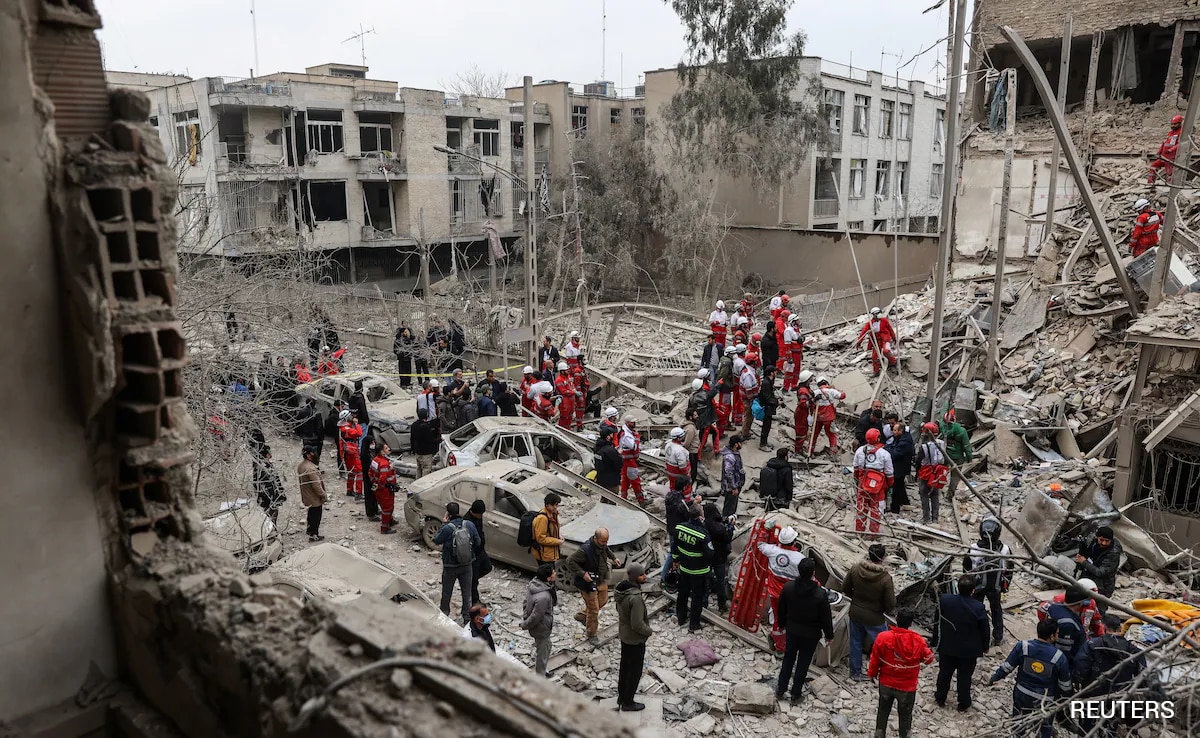
The Iranian barrage, which injured over 30 people in Dimona and dozens more in nearby Arad, was a retaliatory punch following US and Israeli strikes on the Natanz enrichment facility. But it wasn't just a "tit-for-tat." It was a strategic declaration. Tehran is basically telling Jerusalem: "Your ultimate insurance policy doesn't scare us anymore."
For years, the "Begin Doctrine" dictated that Israel would never allow an enemy state to acquire nuclear weapons. We saw it in Osirak (1981) and Al-Kibar (2007). But what happens when the enemy decides to flip the script? By hitting Dimona, Iran is testing whether Israel will finally "come out" as a nuclear power to re-establish deterrence.
If Israel confirms its arsenal to threaten Iran with total destruction, it loses the diplomatic cover it has enjoyed for decades. If it stays silent, it looks vulnerable. It’s a classic "damned if you do, damned if you don't" scenario.
The Failure of the Iron Dome and Arrow Systems
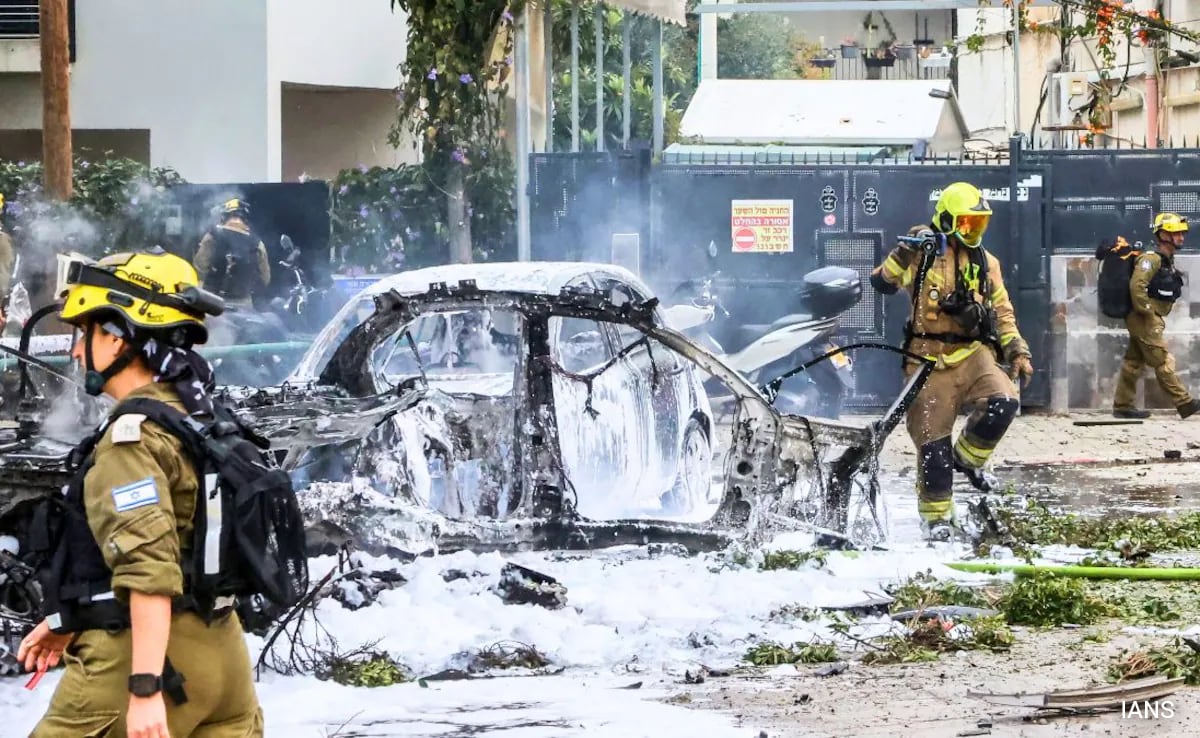
The most jarring part of Saturday's attack wasn't just the target—it was the fact that the missiles actually landed. Residents in Dimona have lived with a false sense of security for a long time. They thought the proximity to the reactor made them the most protected people in the country.
They were wrong.
The IDF is currently investigating why its multi-layered defense system failed to intercept the projectiles. We’re talking about the most heavily defended airspace on the planet. When an interceptor misses, and a missile gouges a crater five kilometers from a nuclear reactor, the "invincibility" narrative takes a massive hit.
- Human Cost: 33 people treated for injuries in Dimona alone.
- Infrastructure: Direct hits on residential buildings and a school.
- Psychological Impact: Residents are now afraid to go to supermarkets or send kids to school, even with "online learning" being mandated by the Education Ministry.
The Samson Option and the Risk of Total War
In military circles, there's a grim concept called the "Samson Option." It refers to the biblical figure who brought the temple down on himself and his enemies. Essentially, it’s Israel’s "last resort" nuclear doctrine—the idea that if the state’s survival is threatened, it will take the entire region down with it.
By striking Dimona, Iran is playing a high-stakes game of chicken with this doctrine. They're betting that Israel won't go nuclear over a conventional missile strike. But as the 2026 war intensifies, the "existential threat" threshold is getting lower. When you have 100+ casualties in a single night across southern Israel, the pressure on Netanyahu to "go big" is immense.
The Natanz Connection
Tehran claims the Dimona strike was a "response" to an attack on their own Natanz facility earlier that day. This creates a terrifying symmetry. Both nations are now targeting the other’s nuclear infrastructure. This is no longer a "shadow war" of assassinations and cyber-attacks. It’s a direct, high-kinetic conflict where the world’s most dangerous toys are on the table.
What This Means for Regional Security
The fallout isn't just about radiation; it's about the geopolitical map being redrawn in real-time.
- Saudi Arabia’s Pivot: Riyadh just expelled the Iranian military attaché. They're terrified. A nuclear-adjacent war in their backyard is their worst nightmare.
- US Involvement: Operation "Epic Fury" (the US-Israel joint campaign) was supposed to "decapitate" the Iranian regime. Instead, it’s triggered a regional firestorm that reached as far as the Diego Garcia base in the Indian Ocean.
- The IAEA’s Irrelevance: Rafael Grossi is calling for "maximum restraint," but nobody's listening. The international watchdogs are essentially spectators watching two heavyweights trade haymakers.
No More Safe Zones
If you're looking for a silver lining, you won't find one here. The strike on Dimona proves that the "old rules" of Middle Eastern engagement are dead. There are no more off-limit sites. There's no more ambiguity that provides a safety net.
The residents of Dimona, like Sigal Ohayon whose mother's house was destroyed, are living the reality that security was always an illusion. "We didn't think this would happen here," she said. That sentiment is echoed across the entire region.
The next steps for the IDF aren't just about rebuilding apartment blocks in the Negev. It's about deciding if the policy of "nuclear opacity" is worth the paper it's not written on. If deterrence has failed, Israel may find itself forced to show its hand—and once that happens, there's no going back to the secret in the sand.
Watch the skies over Isfahan and Tehran tonight. If the pattern holds, the response will be louder than anything we've seen yet.