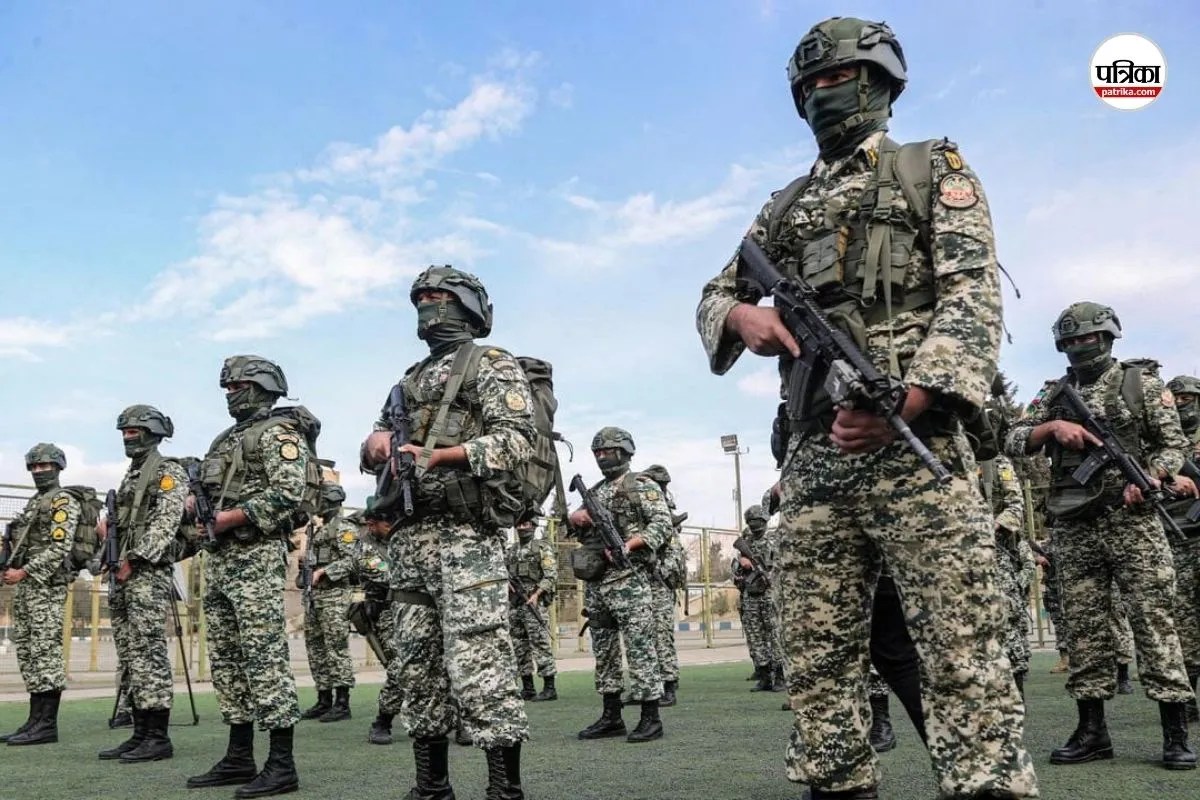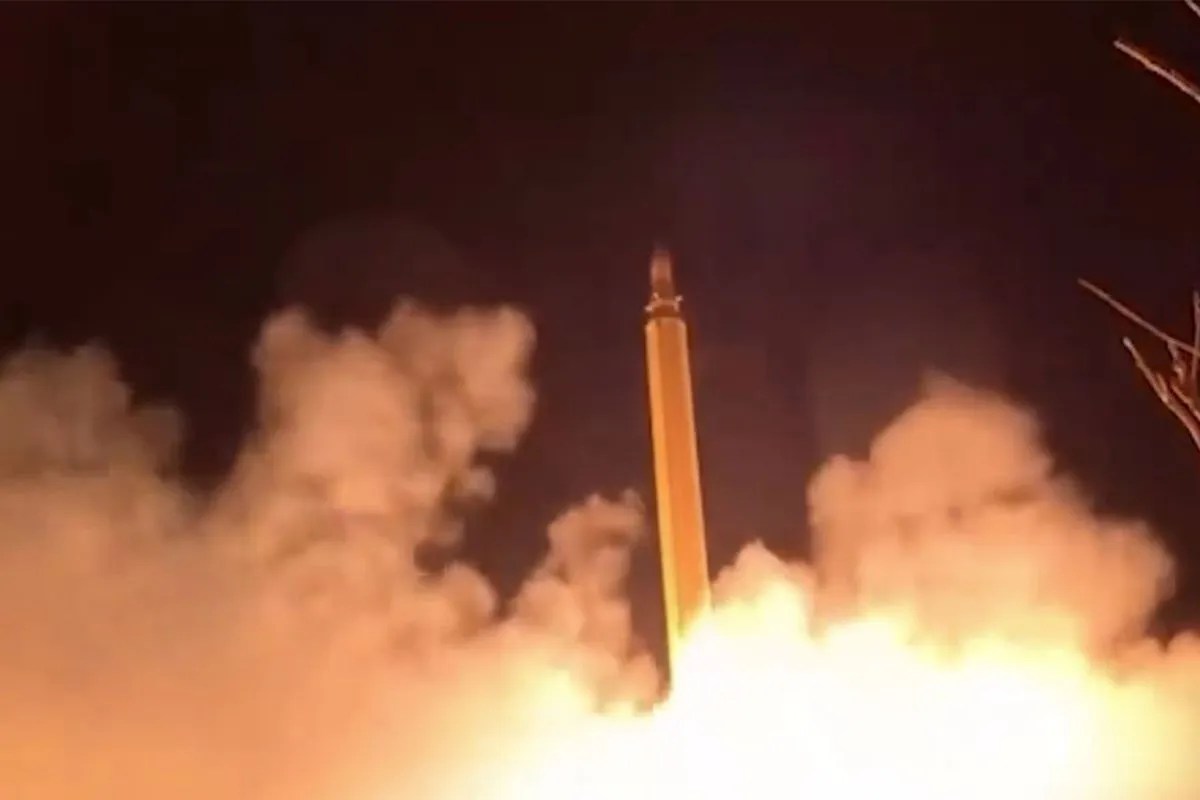
The headlines are screaming about a "massive escalation" and "unprecedented direct attacks." They want you to believe we are on the precipice of World War III because a swarm of slow-moving drones and a handful of ballistic missiles crossed international borders. They are wrong. What we witnessed wasn't the start of a global conflagration; it was a highly choreographed, multi-billion dollar piece of performance art designed to preserve the status quo, not shatter it.
If you believe the mainstream narrative that Iran intended to "decimate" Israeli infrastructure, you are falling for the oldest trick in the geopolitical playbook. We are seeing a shift from traditional kinetic warfare to what I call Performative Attrition. This is where the goal isn't to win a war, but to manage domestic expectations while ensuring your enemy stays just strong enough to keep the cycle of defense spending alive.
The Physics of the Paper Tiger
Let’s look at the math that the pundits ignore. Iran launched hundreds of Shahed drones. These are essentially flying lawnmowers. They travel at roughly 185 km/h. For context, a Cessna 172—a common four-seat propeller plane—is faster.
When you launch a weapon that takes six to nine hours to reach its target, you aren't trying to achieve tactical surprise. You are sending a calendar invite. You are giving the IDF, the U.S. Navy, and every regional air defense system a massive window to prepare, calibrate, and engage.
The "overwhelming" nature of the swarm is a technical fallacy. In real combat, mass only works when combined with velocity or stealth. Iran provided neither. This wasn't a "stunning blow"; it was a stress test that Israel passed because the test was designed to be passed. The real danger isn't the missiles that were intercepted; it’s the fact that we are now treating "sending a notification of attack" as the new standard for international conflict.
The Iron Dome Economy
Everyone loves to talk about the 99% interception rate. It’s a great stat for defense contractors. But let’s talk about the economic asymmetry that nobody wants to touch.
Israel and its allies spent over $1 billion in a single night to intercept a flurry of drones and missiles that likely cost Iran less than 10% of that figure. We are witnessing the birth of Financial Siege Warfare.
- Interceptor cost: A single Arrow-3 missile costs roughly $3.5 million.
- Target cost: A Shahed-136 drone costs between $20,000 and $50,000.
$\text{Cost Ratio} \approx \frac{3,500,000}{20,000} = 175:1$
The math is brutal. You don't have to hit a building to win. You just have to force your opponent to keep buying $3 million bullets to shoot down $20,000 toys. If you think this is a "victory" for Western defense strategy, you haven't looked at a balance sheet lately. The "success" of the interception is actually a massive transfer of wealth from taxpayers to the military-industrial complex, triggered by an adversary who knows exactly how to bleed a treasury dry without ever winning a dogfight.
The Myth of the Proxies
The competitor piece suggests Iran is "using" its proxies like the Houthis and Hezbollah as tools for expansion. This is a fundamental misunderstanding of regional dynamics. These aren't tools; they are buffer zones for plausible deniability.
By launching from Iranian soil, Tehran did something it almost never does: it took ownership. But even that ownership was wrapped in layers of diplomatic signaling. They announced the mission was "concluded" before the drones even arrived. This is the geopolitical equivalent of a "per my last email" follow-up.
The status quo is comfortable for everyone involved:
- Iran gets to satisfy its hardliners with footage of launches.
- Israel gets to demonstrate its technological superiority and secure more U.S. funding.
- The U.S. gets to reaffirm its role as the regional protector.
The only losers are the civilians living under the flight paths and the taxpayers footing the bill for the fireworks.
Cyber Warfare is the Only Real War
While the world watches grainy videos of explosions in the night sky, the real war is happening in the fiber optic cables. If Iran or Israel actually wanted to "target" one another, they wouldn't start with a drone. They would start with the water pumps, the power grids, and the banking switches.
A kinetic strike is a loud, messy signal. A cyber strike is a quiet, effective kill. We focus on the missiles because they are photogenic. We ignore the fact that the "physical" attack was likely a distraction for deep-tissue digital probing. While the sensors were aimed at the sky, how many backdoors were being installed in civilian infrastructure?
Why Decoupling is the Only Solution
The common "People Also Ask" query is: "How can the U.S. stop the escalation?"
The answer is brutally honest: You can't. Not as long as the U.S. remains the primary underwriter of the regional defense budget. The current strategy of "de-escalation through superior firepower" is a contradiction. It only incentivizes more frequent, lower-cost provocations from Iran to test the limits of Western resolve and wallets.
True stability only comes when the financial incentive for the "performance" is removed. As long as every intercepted drone results in a fresh multi-billion dollar aid package, the drones will keep flying. It’s a closed-loop system.
Stop looking for a "peace treaty" or a "decisive victory." Those are relics of the 20th century. In the current landscape, the "war" is the product. The tension is the commodity. The missiles are just the marketing department at work.
If you want to know who is actually winning, don't look at the map of intercepts. Look at the stock prices of the companies making the interceptors. The drones aren't the weapon; the fear of the drones is the weapon. And business is booming.
Stop falling for the theater. The next time you see "breaking news" about a drone swarm, check your pulse and then check your wallet. You aren't watching a war; you're watching a transaction.
Would you like me to analyze the specific supply chain vulnerabilities of the components used in these "low-cost" drone swarms?