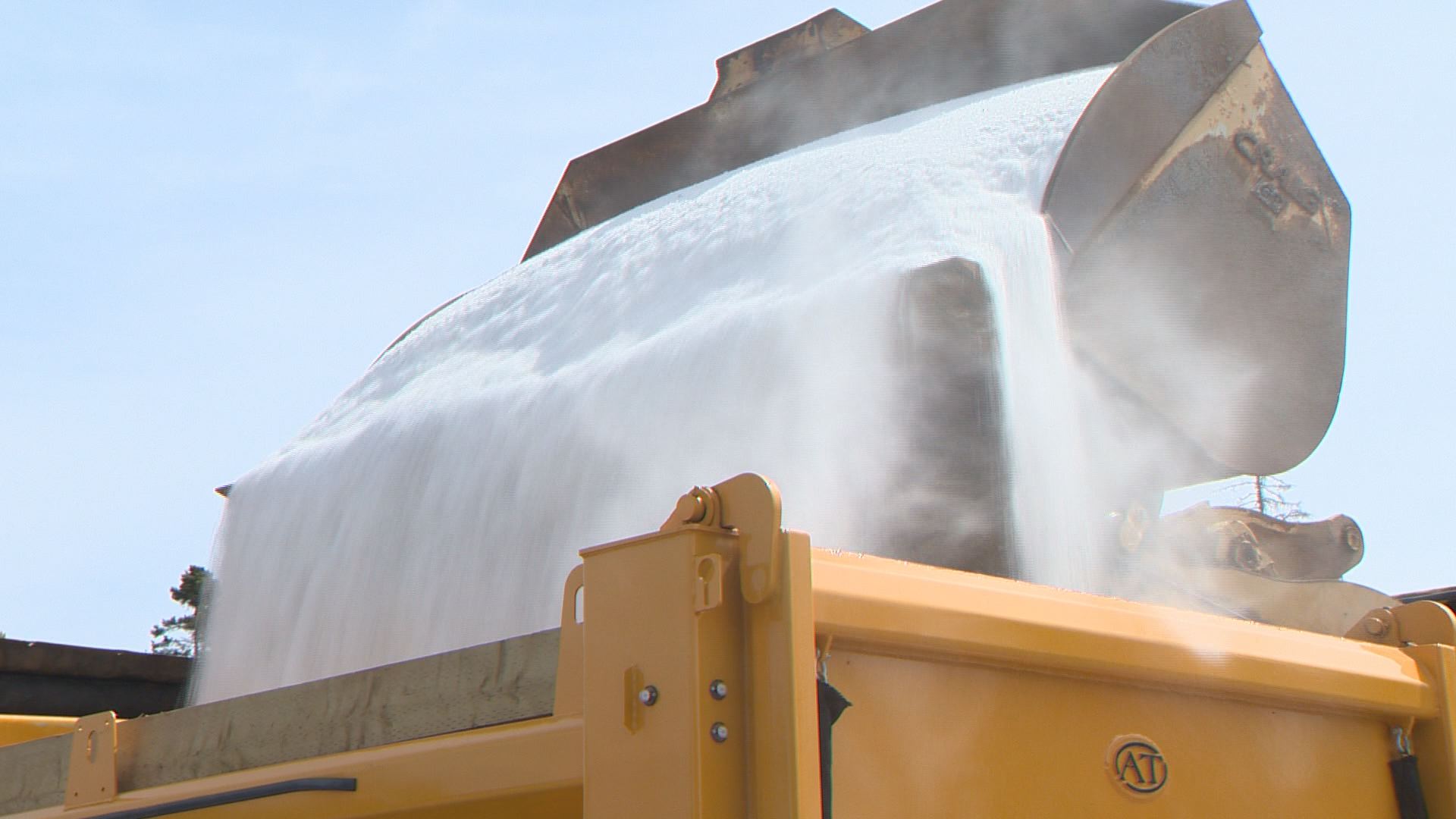
The air smells like iron and frozen pine. It is that specific, biting scent of a Tuesday morning in February when the sun is out but the heat is a lie. On the edge of town, a yellow truck heaves itself up a steep grade, its back open, bleeding a steady stream of coarse, gray-white crystals onto the blacktop. We call it safety. We call it "getting to work on time."
But Sarah, who lives three miles down the ridge in a house her grandfather built, calls it something else. She calls it the reason her coffee tastes like a penny.
For decades, we have treated road salt as a miraculous eraser. We spread it to vanish the ice, to make the world friction-firm again, and to keep the gears of commerce grinding through the blizzard. We use roughly 25 million tons of it every year in this country alone. It is a staggering volume of sodium chloride—essentially table salt—hurled at the landscape with the reckless abandon of a wedding guest throwing rice.
Then the sun comes out. The snow melts. The salt disappears.
Except salt never actually disappears. It just changes its address.
The Great Migration Underground
When the slush turns to water, it carries those millions of tons of dissolved minerals off the shoulder of the road and into the soft, receptive earth. It seeps. It trickles. It finds the path of least resistance.
Think of the soil as a giant, porous sponge. For a long time, that sponge was clean. But year after year, we have been pouring a brine solution into it. Eventually, the sponge gets saturated. The salt reaches the water table—the hidden, silent rivers that provide drinking water to millions of families who rely on private wells.
Sarah didn't notice it at first. It started as a faint metallic tang in the back of her throat. Then, the water heater died. When the plumber pulled the heating element, it looked like something salvaged from a shipwreck, encrusted in a thick, stony armor of mineral deposits.
"Your chloride levels are through the roof," the technician told her, pointing to a digital readout.
The numbers were clear. In many regions, chloride concentrations in groundwater are climbing steadily, sometimes doubling every decade. This isn't a temporary spike that washes away with the spring rains. It is a legacy. We are drinking the road salt of 1998 today, and our children will be drinking the salt we spread this morning.
A Chemical Invasion of the Veins
The problem isn't just a ruined water heater or a bad cup of coffee. For someone like Sarah’s father, who lives in the guest cottage and manages a delicate balance of blood pressure medication, the salt is a silent predator.
Most people don't think about their tap water as a source of dietary sodium. We track the salt in our soup and the salt on our fries. But when the local aquifer becomes brackish, every glass of water, every pot of pasta, and every ice cube becomes a delivery system for a mineral that the body, in excess, struggles to process.
Doctors have begun to warn that for those on low-sodium diets, the hidden salt in the tap can be enough to tip the scales. It’s an invisible tax on the heart. The EPA suggests a limit of 250 milligrams of chloride per liter for "aesthetic" reasons—meaning taste and smell—but there is no federal health standard for how much salt is too much in a private well. You are on your own.
The chemistry is also surprisingly aggressive. Salt doesn't just sit there; it acts as a catalyst. As salty water travels through old plumbing, it becomes highly corrosive. It eats away at lead and copper pipes, leaching heavy metals into the stream of water that ends up in a toddler’s sippy cup. It is a domino effect of chemical reactions, triggered by a handful of crystals thrown onto a highway miles away.
The Suffocation of the Creek
Move past the kitchen sink and follow the water further down the hill. It eventually finds the creek—the one where the kids catch crawdads in July.
Freshwater life is a masterclass in precision. A trout or a dragonfly larva is designed to live in a world of low salt. Their bodies are tiny machines built for fresh water. When the spring thaw hits and a massive pulse of road salt surges into the stream, it creates a "toxic shock" event.
The salt sinks. Because salt water is denser than fresh water, it settles at the bottom of ponds and lakes. It forms a heavy, suffocating layer that prevents oxygen from reaching the deep water. The lake can’t "breathe" or turn over its nutrients. The bottom-dwellers die first. Then the fish that eat them. Then the birds that eat the fish.
It is a slow-motion collapse. We are essentially turning our freshwater ecosystems into miniature versions of the Dead Sea, one bag of grit at a time.
The Search for a Better Way
We are trapped in a paradox. No one wants to see the pile-ups on the interstate. No one wants to tell the nurse she can't get to the hospital because the hill is a sheet of glass. We need traction. We need safety.
But we have become addicted to the "black pavement" standard—the idea that even in a Category 4 blizzard, the road should be as clear as a summer day in July. It is a standard that the environment can no longer afford to subsidize.
Some towns are getting creative. They are experimenting with "pre-wetting" the salt with beet juice or brine, which helps the crystals stick to the road instead of bouncing into the ditch. Others are using sophisticated GPS tracking to ensure they use only the exact amount of salt needed—no more, no less.
But the real change has to come from us, the people behind the wheel. It requires a shift in expectation. Maybe we don't need to go 65 miles per hour when the sky is falling. Maybe we need winter tires instead of more chemicals. Maybe we need to accept that winter has a texture, and that texture is occasionally slippery.
The Invisible Ghost
Last night, it snowed again.
Sarah watched from her window as the plow went by, its blade sparking against the pavement, leaving behind that familiar white trail. She looked at the glass of water on her nightstand. It looked clear. It looked cold. It looked perfect.
But she knew better now.
She knew that the white dust on the road was already beginning its long, slow journey. It would soak into the yard. It would bypass the roots of the sleeping maples. It would find the cracks in the bedrock. And months from now, or years from now, it would arrive in her glass, a ghost of a storm long forgotten.
The cost of a clear road is never just the price of the salt. It is the price of the water. And once the water goes salty, there is no easy way to turn it back.
We are mining our future to pay for our commute.
The salt stays. The water remembers. And the earth is beginning to lose its thirst.