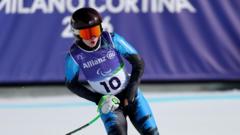
Varvara Voronchikhina just shook up the 2026 Winter Paralympics. She didn't win gold. She didn't even place second. But her bronze medal in the women’s downhill standing event at Cortina d’Ampezzo is the most talked-about piece of hardware in Italy right now.
Why? Because for the first time since 2014, a Russian athlete stood on a Winter Paralympic podium with their national flag flying behind them. No "neutral" labels. No "Russian Paralympic Committee" acronyms. Just the white, blue, and red.
It's been 12 years of sporting exile, doping scandals, and geopolitical bans. Voronchikhina’s third-place finish isn't just a win for her trophy cabinet—it’s a massive statement about the return of Russia to the official global stage.
A Podium Over a Decade in the Making
Let’s be real. If you’ve followed para-alpine skiing, you know Voronchikhina is a force. She’s only 23, but she’s been living in a state of competitive limbo for years. Back in 2022, she was actually in Beijing, training on the slopes, ready to go. Then, the International Paralympic Committee (IPC) pulled the rug out. On the eve of the Games, following the invasion of Ukraine, the IPC banned Russian and Belarusian athletes entirely.
"In Beijing we were there," Voronchikhina told reporters after her run. "I had third training in downhill and after we had to go back home. For me it was really, really sad."
Watching her take bronze on the Tofane slopes 2.47 seconds behind Sweden’s Ebba Aarsjoe felt like a full-circle moment. It wasn't her strongest event. Downhill is a gutsy, high-speed discipline, but she’s traditionally a technical wizard in Slalom and Giant Slalom. Pulling a medal here suggests she’s got a lot more coming in the next few days.
The Wildcard That Upset the Room
You can’t talk about this medal without talking about the room’s temperature. It’s freezing, and not just because of the snow. The IPC’s decision to grant six wildcards to Russian athletes—allowing them to compete under their own flag and anthem—hasn't been a smooth ride.
- The Boycott: Seven nations, including Ukraine, Czechia, and Finland, skipped the opening ceremony in protest.
- The Boos: When the small Russian delegation walked into the Arena di Verona, the reception was... mixed. Boos were clearly audible.
- The Tension: While Voronchikhina says the atmosphere in the village is "good conditions," she’s visibly avoided questions about her Ukrainian competitors.
Honestly, it’s a mess of sports and politics that nobody knows how to clean up. On one hand, you have athletes like Voronchikhina who have spent their lives training for these few seconds on a hill. On the other, you have a global community still deeply divided over whether they should even be allowed in the gate.
Aleksei Bugaev and the Double Bronze
Voronchikhina wasn't the only one breaking the drought. Shortly after her run, Aleksei Bugaev grabbed bronze in the men’s standing downhill. Bugaev is a veteran. He’s a three-time Paralympic champion who lived through the "neutral athlete" years.
He called this one of the most difficult medals of his career. It’s easy to see why. The pressure of being the "face" of a return from exile is heavy. For these six athletes, they aren't just skiing against the clock; they’re skiing against a narrative of exclusion that has defined Russian sport for over a decade.
What This Means for the Rest of the Games
The IPC’s gamble on "wildcards" has essentially turned these Paralympics into a litmus test. If a Russian athlete wins gold, we’re going to hear that national anthem at a major global event for the first time in years.
Ukraine is currently dominating the biathlon events, sweeping medals and dedicating them to their military. The contrast is sharp. It’s an uncomfortable, high-stakes environment where every podium finish carries the weight of a diplomatic cable.
Voronchikhina is scheduled for four more events. Given her history as a world champion in technical disciplines, that bronze is likely just the beginning of her week.
If you’re watching the schedule, keep an eye on the technical races later this week. That’s where the real speed—and the real controversy—will likely peak. Check the official Paralympic standings daily, but don't just look at the times. Look at the flags. That's where the real story is written this year.



