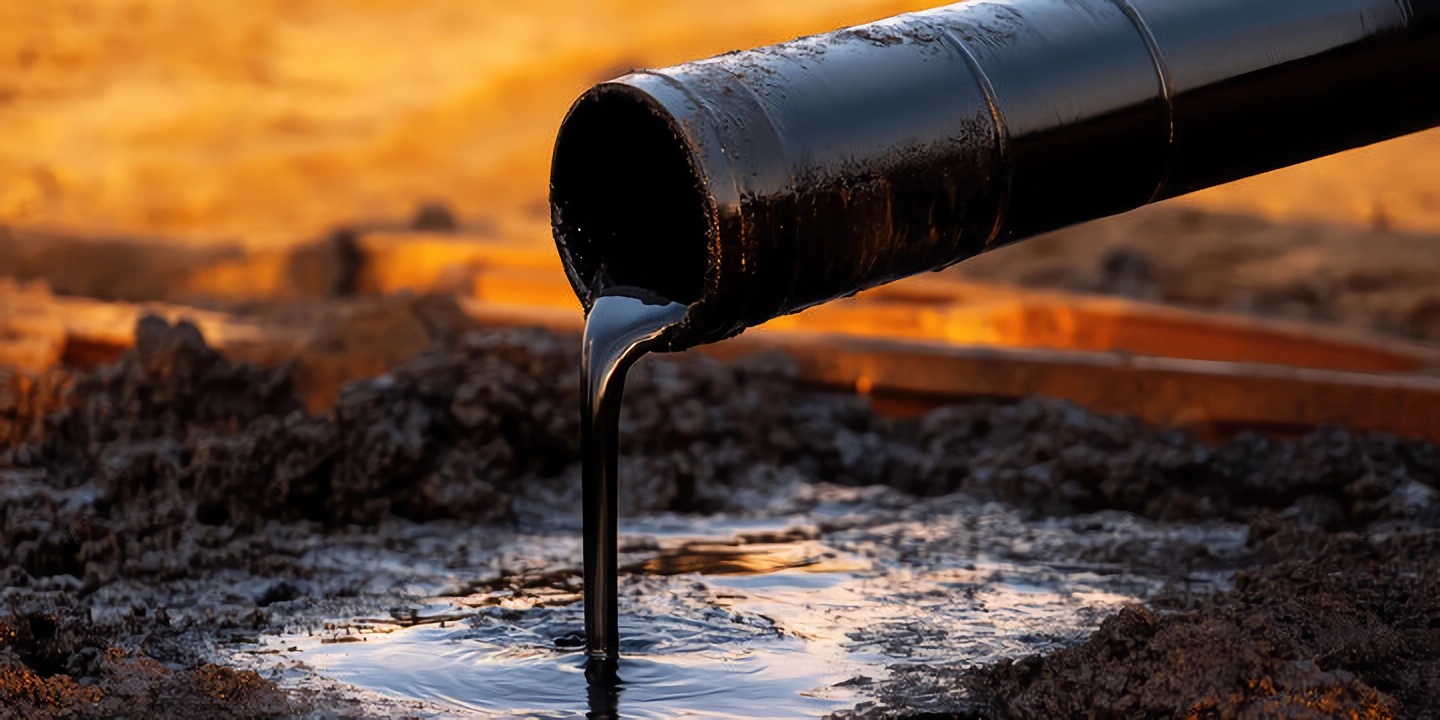
The marginal easing of US sanctions on Russian energy exports functions as a desperate recalibration of the global supply-demand curve rather than a shift in geopolitical strategy. While the objective of Western policy remains the degradation of Russian fiscal capacity, the reality of inelastic global demand has forced a compromise. This tension creates a "Volatility Trap" where the effort to restrict Russian revenue directly conflicts with the necessity of price stability in G7 economies. Crude prices remain elevated because the market has priced in the structural inefficiency of "shadow fleets" and the permanent loss of low-friction logistics.
The Mechanics of Supply Elasticity and the Price Cap Friction
To understand why prices remain high despite perceived easing, one must analyze the Friction Coefficient of current energy trade. Before 2022, Russian Urals flowed into Europe via short-haul maritime routes and the Druzhba pipeline. This was a high-efficiency, low-cost system. The imposition of the $60 price cap and subsequent sanctions forced a redirection of these flows to India and China.
This redirection introduced three structural cost drivers:
- The Logistics Premium: The voyage from Baltic ports to Gujarat is roughly five times longer than the route to Rotterdam. This increases the "oil on water" volume—inventory that is effectively removed from the immediate market—thereby tightening physical spot availability.
- The Insurance Risk Gap: By barring Western maritime services from handling Russian oil sold above the cap, the US forced the creation of a non-Western service ecosystem. This "shadow fleet" operates with higher insurance premiums and lower regulatory oversight, costs which are ultimately baked into the global Brent benchmark.
- Refining Incompatibility: Global refinery configurations are not universally fungible. The loss of Russian medium-sour grades in European refineries forced a scramble for substitutes from the Middle East and the US Gulf Coast. This competition for specific molecular compositions drives up the price of non-Russian barrels.
The Revenue vs. Volume Paradox
The US Treasury’s "easing" measures—often appearing as specific licenses or a lack of enforcement on certain tankers—are tactical maneuvers to prevent a Supply Shock. If Russian production were to be fully sidelined, the resulting price spike would provide Russia with more revenue on fewer barrels while simultaneously triggering a recessionary feedback loop in Western consumer markets.
This creates the Revenue-Volume Paradox: To keep Russian revenue low, the West must ensure Russian volume remains high. If volume drops, the global price ($P$) rises. Because oil is a primary input for almost all industrial processes, the global price elasticity of demand is low in the short term. A 5% drop in global supply can trigger a 20% spike in price. In this scenario, Russia’s total export earnings ($P \times V$) could actually increase despite lower sales volumes ($V$), while Western inflation targets are decimated.
The Three Pillars of Persistent High Pricing
Crude prices are not staying high because of a single policy failure; they are sustained by a tripartite structure of market realities:
1. The Eroded Spare Capacity Buffer
OPEC+ maintains a cautious production stance, largely because the Western push for an energy transition has stifled long-term capital expenditure (CapEx) in traditional upstream projects. When US sanctions fluctuate, the market looks to Saudi Arabia or the UAE to offset potential disruptions. However, these nations now prioritize price floors over market share, leaving the global system with a razor-thin margin for error.
2. The Geopolitical Risk Premium
Sanctions are binary in theory but fluid in practice. The "easing" of sanctions is often perceived by traders as a temporary reprieve rather than a permanent policy shift. Consequently, risk desks at major banks continue to apply a $5 to $10 "Geopolitical Risk Premium" to every barrel. This premium accounts for the possibility of a sudden enforcement "snap-back" or a kinetic escalation in the Black Sea.
3. The Fragmentation of Trade Currency
The move away from Petrodollar dominance in Russian-Chinese and Russian-Indian trade has introduced currency conversion frictions. When oil is traded in Yuan or Rupees, the transaction costs increase, and the transparency of the trade diminishes. This opacity prevents the market from accurately pricing in true supply levels, leading to "fear-based" bidding in the Brent and WTI futures markets.
The Cost Function of Regulatory Uncertainty
For a strategy consultant, the "easing" of sanctions represents an increase in Regulatory Entropy. Businesses require predictability to optimize supply chains. When the US Treasury issues General Licenses that are valid for only 90 days, it prevents long-term contracting.
This uncertainty forces physical players into the spot market. In oil markets, a shift from long-term contracts to spot buying creates upward price pressure and increased volatility. Refiners cannot plan their "coker" runs or "cracker" yields months in advance, so they pay a premium for guaranteed immediate delivery of non-sanctioned alternatives.
The Strategic Miscalculation of the Price Cap
The price cap was designed to function as a "buyer’s cartel." The logic was that by limiting the price at the point of sale, the West could capture the "resource rent" that previously went to the Kremlin. However, this failed to account for the Arbitrage Capacity of midstream players.
Large trading houses in jurisdictions outside G7 control began capturing the spread between the $60 cap and the global market price. Instead of the savings being passed to consumers or the revenue being denied to the producer, the value was captured by intermediaries. This "leakage" in the sanctions framework means that the global consumer still pays a price based on $80+ Brent, while the logistical complexity added by the sanctions keeps the floor high.
Quantifying the "Easing" Effect
The recent US moves to ease pressure—specifically regarding the use of certain ports or the processing of payments—are not an admission of defeat but a recognition of Macroeconomic Gravity.
- Metric A: Inflationary Correlation. There is a near 1:1 correlation between energy costs and core CPI in the Eurozone and the US.
- Metric B: Election Cycle Sensitivity. Historically, no US administration has allowed significant supply-side tightening in an election year.
- Metric C: SPR Depletion. The Strategic Petroleum Reserve is at multi-decade lows. The US no longer has the "physical bazooka" required to blunt a price spike if sanctions enforcement actually succeeded in removing Russian barrels.
The easing is a release valve. By allowing some Russian oil to flow with less friction, the US is attempting to lower the Systemic Heat of the global economy. Yet, the heat remains because the "plumbing" of global energy has been permanently altered. You cannot dismantle a 40-year-old energy trade architecture and expect the new, fragmented version to operate at the same price point.
The Structural Shift to a High-Floor Environment
We have transitioned from a "Just-in-Time" energy economy to a "Just-in-Case" economy. In the "Just-in-Time" era (2010–2020), Russian oil was a reliable, low-cost baseline. In the "Just-in-Case" era, every barrel of Russian oil is viewed as a liability.
This liability necessitates:
- Higher inventory levels (carrying costs).
- Redundant supply lines (capital inefficiency).
- Increased hedging activity (derivative premiums).
These factors create a new "Natural Floor" for oil. Where $50–$60 was once the equilibrium for WTI, the structural inefficiencies introduced by the sanctions regime have likely pushed that equilibrium to $70–$80, regardless of marginal "easing" measures.
The Strategic Recommendation for Energy Procurement
Market participants must stop waiting for a return to the 2019 price environment. The easing of US sanctions is a tactical fluctuation, not a reversal of the deglobalization trend in energy.
Strategic advantage will now be found in Molecular Agnostic Optimization. Firms must invest in refining and processing flexibility to handle a wider variety of crude grades, thereby reducing their exposure to the specific geopolitical bottlenecks of the Urals or the Middle East. Furthermore, energy-intensive enterprises must shift from price hedging to Volume Sequestration—securing physical equity in production or long-term storage—to bypass the volatility inherent in a sanctioned global market.
The high price of crude is the "Tax on Fragmentation." As long as the global energy market remains split into "compliant" and "shadow" ecosystems, the inefficiency of that split will be paid for at the pump and in the factory. The US easing some sanctions is merely an attempt to keep that tax from becoming an existential threat to the Western economy.
Monitor the spread between Urals and Brent; as this spread narrows due to "easing," expect Brent to remain stagnant or rise, as the "shadow" discount is absorbed by the market rather than acting as a downward pressure on the global benchmark.
Would you like me to perform a deep-dive analysis into the specific "Shadow Fleet" vessel counts and their impact on maritime insurance premiums for the upcoming fiscal quarter?