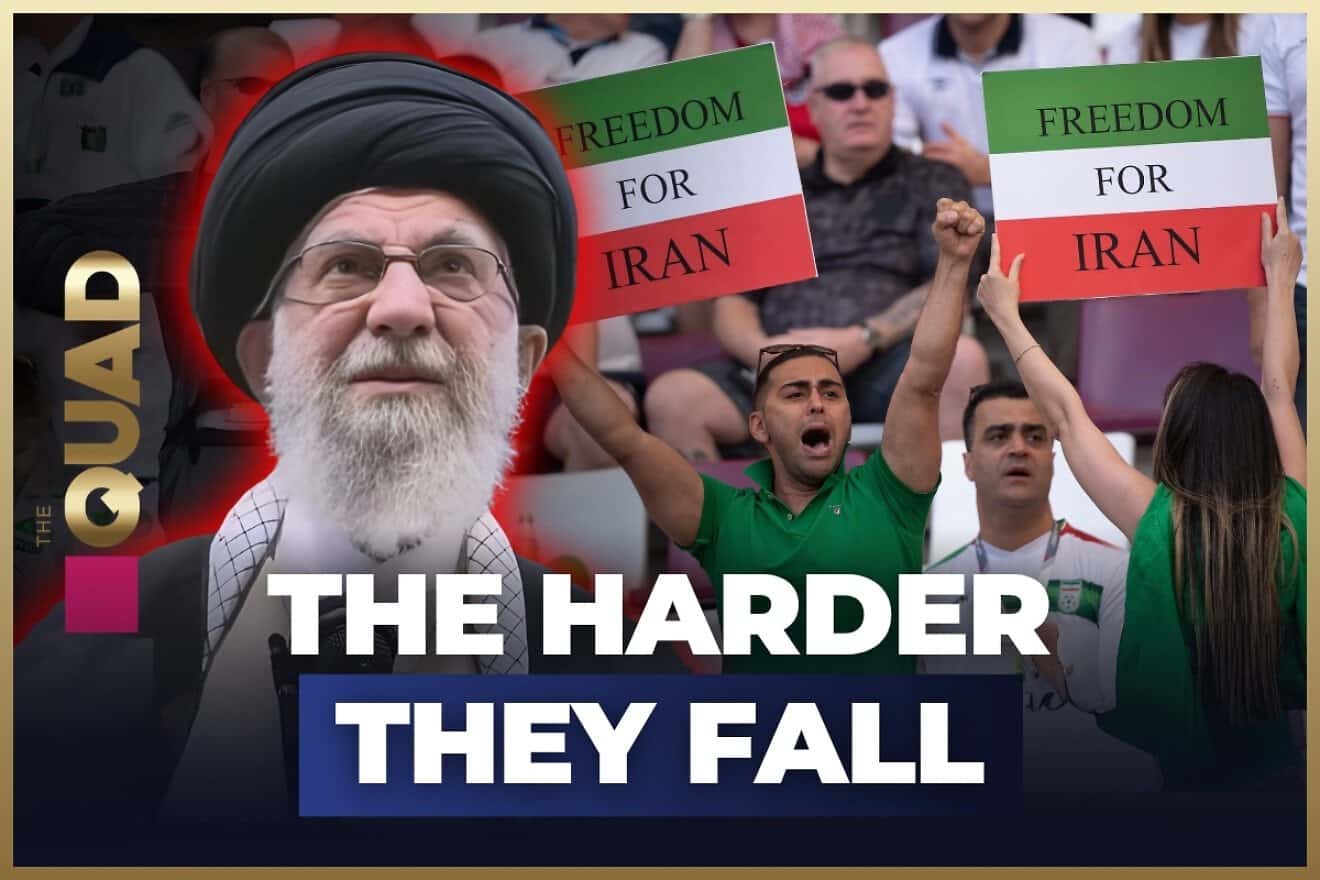
The endurance of Ali Khamenei is not a product of simple tyranny. While the Western lens often focuses on the "iron fist" of the Islamic Republic, that description misses the complex machinery of survival that has kept the 86-year-old Supreme Leader at the center of Middle Eastern power for over three decades. Khamenei’s reign has been defined by a singular, obsessive goal: the preservation of the revolutionary system against both foreign intervention and internal decay. He has achieved this not just through force, but through a sophisticated balancing act between competing clerical, military, and economic factions that would otherwise tear the country apart.
To understand the current state of Iran, one must look past the headlines of protests and sanctions to the architectural genius of the Office of the Supreme Leader, known as the Beit-e Rahbari. This is the nerve center of the Iranian state. It is here that Khamenei has spent thirty-five years insulating his authority from the traditional bureaucracy of the presidency and the parliament. By creating a parallel government—one that controls the military, the judiciary, and massive economic conglomerates—Khamenei ensured that no matter who won a popular election, the ultimate direction of the nation remained unchanged.
The Military Pivot and the Rise of the Guards
When Khamenei took power in 1989, he lacked the charismatic authority and the high-ranking clerical credentials of his predecessor, Ruhollah Khomeini. He was a compromise candidate, a mid-ranking cleric elevated to prevent a power vacuum. This inherent weakness dictated his early strategy. He needed a shield. He found it in the Islamic Revolutionary Guard Corps (IRGC).
Over the decades, Khamenei shifted the foundation of the state from the mosque to the barracks. He granted the IRGC unprecedented autonomy and, more importantly, immense economic wealth. Today, the Guards are not just a military force; they are a multi-billion dollar corporate empire involved in everything from dam construction and telecommunications to oil smuggling and banking. This was a deliberate trade. In exchange for total loyalty to the Leader, the IRGC was allowed to become the primary stakeholder in the Iranian economy.
This military-industrial complex serves two purposes. First, it makes the IRGC the most effective tool for suppressing domestic dissent. Second, it creates a class of elites whose personal wealth is tied directly to the survival of the regime. If the system falls, their fortunes vanish. Khamenei didn't just rule through fear; he ruled through the shared interest of a well-armed, wealthy minority.
The Strategy of Managed Instability
Critics often point to Iran’s isolation as a sign of Khamenei’s failure. On the contrary, isolation is a core component of his survival strategy. A normalized Iran—one integrated into the global financial system and open to Western cultural influence—presents a far greater threat to the Islamic Republic’s ideological purity than a sanctioned one.
Khamenei’s foreign policy, often referred to as "Strategic Patience" or the "Axis of Resistance," is designed to keep threats far from Iran’s borders. By funding and directing proxies in Lebanon, Iraq, Yemen, and Gaza, the Supreme Leader ensured that any conflict involving Iran would be fought on someone else’s soil. This "forward defense" doctrine has been remarkably consistent. It projects power while maintaining a layer of deniability that prevents direct, devastating strikes on the Iranian heartland.
Inside the country, he employs a similar strategy of managed pressure. He allows a certain degree of political debate during election cycles, giving the public a safety valve to release frustration. However, he always retains the "veto" through the Guardian Council, which disqualifies any candidate who poses a genuine threat to the status quo. When the pressure boils over—as seen in 2009, 2019, and 2022—the response is swift and uncompromising. The "iron fist" only appears when the "managed instability" threatens to become unmanageable.
The Economic Shield of the Foundations
A significant and often overlooked pillar of Khamenei’s power is the system of Bonyads, or charitable foundations. These organizations, such as the Setad and the Mostazafan Foundation, report directly to the Supreme Leader and are exempt from taxes and government audits. They control an estimated 20% to 30% of the Iranian economy.
These foundations function as a private treasury. They allow Khamenei to bypass the official national budget to fund paramilitary operations, reward loyalists, or provide social services to the rural poor—the regime's traditional base of support. By controlling the bread as well as the bullets, the Office of the Leader maintains a level of independence that no democratically elected president can match.
The Succession Crisis and the Shadow of the Future
The most pressing question facing Iran today is not whether the regime will reform, but who will follow the man who has spent thirty-five years making himself indispensable. Khamenei has avoided naming a successor, likely to prevent the formation of a rival power center while he is still alive. This silence has created a high-stakes shadow war among the Iranian elite.
The death of President Ebrahim Raisi in a helicopter crash in 2024 removed the most obvious frontrunner, throwing the succession plans into disarray. The selection of the next Leader will not be a religious process, despite the formal involvement of the Assembly of Experts. It will be a backroom deal brokered by the IRGC and the inner circle of the Beit-e Rahbari.
The risk for the regime is that the very system Khamenei built—one based on a delicate balance of factions—may fail once the balancer is gone. Without his veteran hand to mediate between the hardliners and the "ultra-hardliners," the internal competition for resources and power could turn violent. The IRGC, now the most powerful entity in the country, may no longer feel the need for a clerical figurehead at all, potentially transitioning the Islamic Republic into a purely military autocracy.
The Disconnect of the New Generation
Khamenei’s greatest challenge is demographic. More than 60% of Iranians are under the age of 30. They did not live through the 1979 Revolution or the Iran-Iraq War. They are digitally connected, highly educated, and increasingly secular. To them, the revolutionary rhetoric of the 1980s sounds like a foreign language.
The "Woman, Life, Freedom" movement was a manifestation of this deep-seated cultural rift. While the state managed to suppress the street protests, it has failed to win back the hearts and minds of the youth. Khamenei has responded by doubling down on ideological indoctrination and tightening internet controls, but these are 20th-century solutions to 21st-century problems.
The Supreme Leader has built a fortress that is largely impervious to external shocks and political maneuvering. However, the foundation of that fortress—the social contract with the Iranian people—is crumbling. He has traded long-term legitimacy for short-term control, a bargain that has served him well for three decades but leaves his successors with a volatile inheritance.
The survival of the Islamic Republic under Khamenei has been a masterclass in bureaucratic consolidation and cold-blooded pragmatism. He survived the "Maximum Pressure" campaign of the Trump administration, the COVID-19 pandemic, and multiple national uprisings. He did so by betting that the international community has no appetite for another war in the Middle East and that his domestic opponents are too fragmented to pose a coordinated threat. So far, he has been right.
The true test of his "iron fist" will not be the next protest, but the moment he is no longer there to clench it. The transition will reveal whether he built a sustainable system or merely a personality cult supported by a military with a vested interest in the status quo.
Identify the key players in the Assembly of Experts and the IRGC high command; they are the ones who will decide if the Islamic Republic survives the man who defined it.