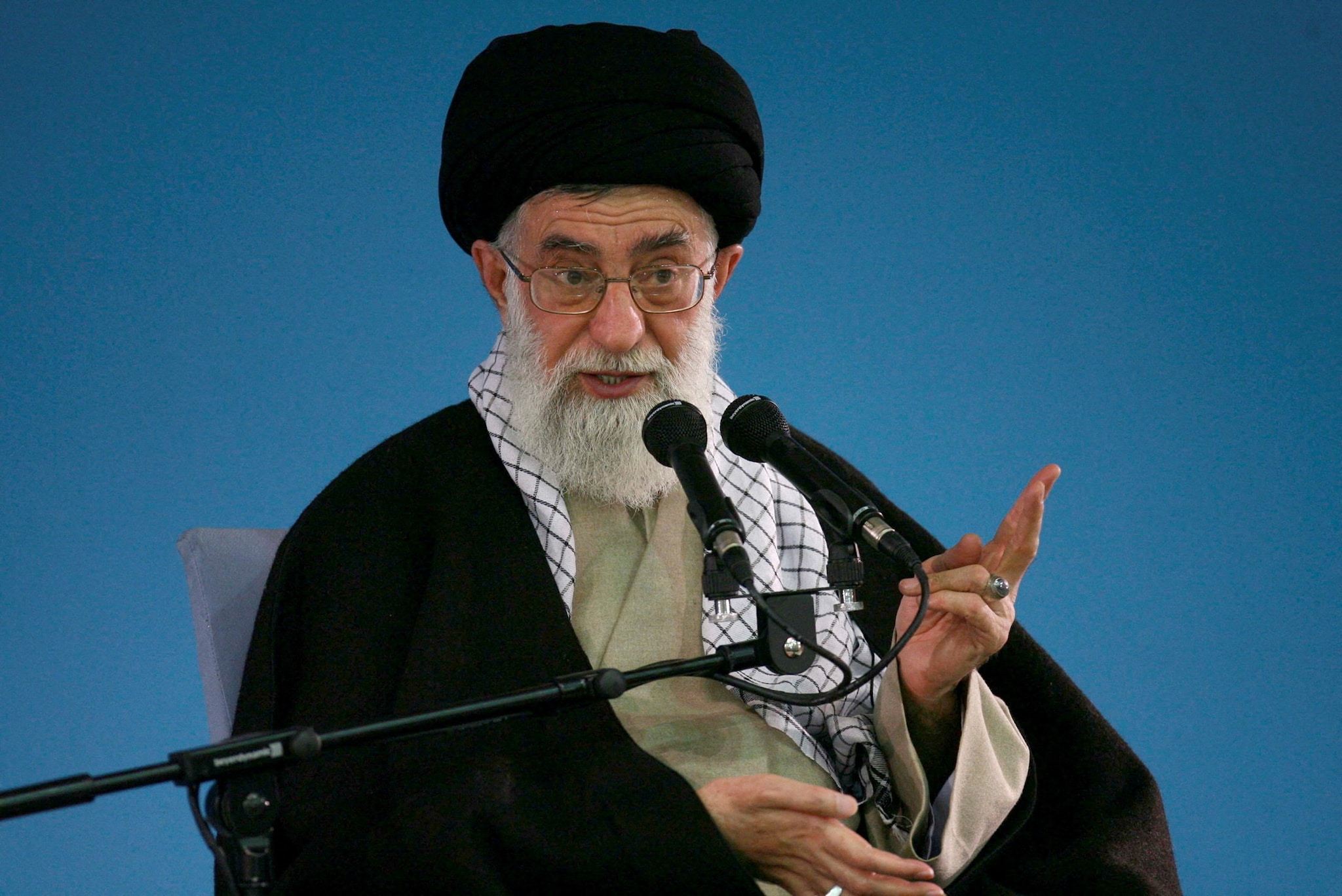
The death of Ayatollah Ali Khamenei would not merely be a transition of power. It would be a systemic shock to a theocratic engine that has spent thirty-five years refining a singular, rigid vision of Islamic governance. While the Western gaze often fixates on the street protests or the shadow war with Israel, the true battle for Iran’s future is currently being fought in the hushed corridors of Qom and the high-security compounds of the Revolutionary Guard. This is a struggle over the Assembly of Experts, the clerical body tasked with choosing the next Supreme Leader, and it is a process shrouded in enough secrecy to make a papal conclave look transparent.
The core mechanism for succession is the Assembly of Experts, a group of 88 clerics who, at least on paper, hold the keys to the kingdom. If Khamenei dies or becomes incapacitated, this body must convene immediately to select a successor. However, the reality of Iranian power dictates that the Assembly is less of a decision-making body and more of a rubber stamp for a consensus already reached by the military and security apparatus. The Iranian constitution demands a leader who is not only a top-tier Islamic jurist but also possesses the political acumen to manage a sprawling, often fractured state. Finding a figure who satisfies both the aging clerical elite and the hyper-nationalist generals of the Islamic Revolutionary Guard Corps (IRGC) is a task that may prove impossible without a violent internal rupture.
The Myth of the Clerical Consensus
For decades, the assumption was that a high-ranking cleric with impeccable religious credentials would naturally rise to the top. This is no longer a safe bet. The traditional power centers in Qom have been systematically sidelined by a political class that prioritizes "revolutionary" fervor over theological depth. We are seeing a shift from a leadership based on Marja’iyya—religious authority that commands a following—to one based on institutional loyalty.
The IRGC has spent the last decade embedding itself into every facet of the Iranian economy, from telecommunications to dam construction. They are not about to hand the keys of the state to a moderate cleric who might try to curb their influence or pursue a rapprochement with the West. The Guard needs a Supreme Leader who functions as their protector. This creates a massive friction point. If the Assembly of Experts chooses a candidate who is perceived as weak or overly conciliatory, the IRGC has the physical power to intervene. We are looking at a potential scenario where the "selection" is actually a managed coup, designed to present a veneer of constitutional legitimacy over a military-backed installation.
The Mojtaba Khamenei Factor
No discussion of Iranian succession is complete without addressing Mojtaba Khamenei, the Supreme Leader’s second son. In many ways, Mojtaba is the ultimate "deep state" candidate. He has operated in the shadows for years, reportedly managing his father’s office and maintaining deep ties with the security services.
Critics argue that a hereditary transition would be a betrayal of the 1979 Revolution’s anti-monarchical roots. This isn't just a philosophical point; it’s a political landmine. If the Islamic Republic moves toward a dynasty, it loses its last shred of ideological distinction from the Pahlavi monarchy it overthrew. Yet, for the hardliners, Mojtaba represents continuity. He is a known quantity. He understands the levers of repression. The elevation of a son to the role of Supreme Leader would be a desperate move, signaling that the regime no longer trusts anyone outside of the immediate family circle to maintain the status quo.
The Empty Bench of Moderate Candidates
There was a time when figures like Hassan Rouhani or the late Akbar Hashemi Rafsanjani could have steered the country toward a more pragmatic path. Those days are gone. The Guardian Council, which vets candidates for all major elections, has effectively purged the Iranian political landscape of anyone who isn't a hardline loyalist.
This purge has left the regime with an "empty bench" problem. By eliminating the middle ground, Khamenei has ensured that his successor will be just as uncompromising as he is. But this creates a fragility. When a system cannot bend, it breaks. A leadership that lacks the ability to co-opt the opposition or offer meaningful reform is a leadership that can only rule through fear. This works as long as the security forces remain unified and the treasury can fund the subsidies that keep the poor from revolting. If either of those pillars crumbles during a messy transition, the entire structure of the Velayat-e Faqih (Guardianship of the Islamic Jurist) is at risk.
The Assembly of Experts Under Pressure
The 88 members of the Assembly are mostly elderly men, many of whom owe their positions directly to Khamenei's patronage. In the event of a vacancy, they are supposed to form a committee to review potential candidates. This list of names is one of the most closely guarded secrets in Tehran.
Historically, the process is swift. When the first Supreme Leader, Ayatollah Khomeini, died in 1989, Ali Khamenei was elevated within twenty-four hours, despite his relatively low religious ranking at the time. They needed stability, and they needed it fast. Today, the stakes are higher. The country is facing an environmental crisis, a collapsing currency, and a population that is increasingly disillusioned with theocratic rule. A prolonged debate within the Assembly could provide a window of opportunity for mass civil unrest. The regime knows this. They will likely attempt to present a name before the public even has time to process the news of Khamenei's passing.
The Role of the Supreme Council
The Iranian constitution allows for a leadership council if a single suitable candidate cannot be found. This would be a committee of three to five individuals who would share the duties of the Supreme Leader. While this might seem like a way to balance different factions, it is a recipe for paralysis. In a system built on the absolute authority of one man, a committee would inevitably devolve into infighting. The IRGC would likely view a leadership council as an invitation to chaos and would press for a single, strong figurehead they can control.
Regional Shockwaves and the Proxy Network
The transition of power is not just a domestic Iranian issue. It is a regional crisis. Iran’s "Axis of Resistance"—which includes Hezbollah in Lebanon, the Houthis in Yemen, and various militias in Iraq—relies on the personal authority and religious legitimacy of the Supreme Leader. These groups do not just take orders from Tehran; they view the Supreme Leader as their spiritual guide.
A contested succession could lead to a fragmentation of this network. If the new leader lacks the prestige or the personal relationships that Khamenei built over decades, these proxy groups might start acting more independently. This could lead to a miscalculation on the regional stage, drawing Iran into a direct conflict it is not prepared for. Conversely, a new, more radical leader might feel the need to "prove" his revolutionary credentials by ordering an escalation against Israel or U.S. interests. Either way, the period following Khamenei's death will be the most volatile window in the Middle East in half a century.
The Ghost of 2022 and the Street’s Response
We cannot ignore the "Woman, Life, Freedom" movement that shook the country in late 2022. While the regime managed to suppress the protests through sheer brutality, the underlying grievances have not been addressed. The Iranian youth are not waiting for a more "moderate" Supreme Leader; they are increasingly questioning the validity of the theocratic system itself.
The death of the Supreme Leader is a moment of profound psychological vulnerability for any dictatorship. It is the moment when the "invincibility" of the state is briefly suspended. If the succession is marred by rumors of foul play, family squabbles, or military interference, it could act as a catalyst for a new wave of protests. The regime’s greatest fear is a "convergence of crises"—a succession battle happening at the same time as a currency collapse and a popular uprising. In that scenario, the IRGC may decide that the only way to save the state is to abandon the theocratic shell entirely and move toward an overt military dictatorship.
Institutional Decay and the Path Forward
The tragedy of the current Iranian state is that it has traded long-term stability for short-term control. By hollowing out every institution that could have provided a bridge to a post-Khamenei era, the leadership has ensured that the coming transition will be a high-stakes gamble.
The world often looks for signs of "reformers" within the Iranian system, but this is a fundamental misunderstanding of how power is currently distributed. The reformers have been jailed, exiled, or silenced. The remaining players are all variations of the same hardline ideology, differing only in how they believe that ideology should be enforced. Whether the next leader is Mojtaba Khamenei, a quietist cleric from Qom, or a hardline jurist like Ebrahim Raisi's theoretical successor, the fundamental direction of the country is unlikely to change without a total systemic collapse.
Succession in Tehran is not a democratic exercise; it is an exercise in survival. The men in the room when the next leader is chosen will not be thinking about the welfare of the Iranian people or the stability of the global oil market. They will be thinking about their own heads, their own bank accounts, and the survival of a revolutionary project that has long since lost its way. The transition will be fast, it will be opaque, and it will be backed by the barrel of a gun.
Those waiting for a "Tehran Spring" following the passing of the Old Guard are likely to be disappointed. The infrastructure of repression is too well-funded and too deeply entrenched to vanish overnight. Instead, we should prepare for an Iran that is more insular, more paranoid, and more reliant on its military-industrial complex than ever before. The transition isn't about finding a new leader; it’s about whether the system Khamenei built can survive the absence of its architect. The answer to that question will determine the map of the Middle East for the next several decades.