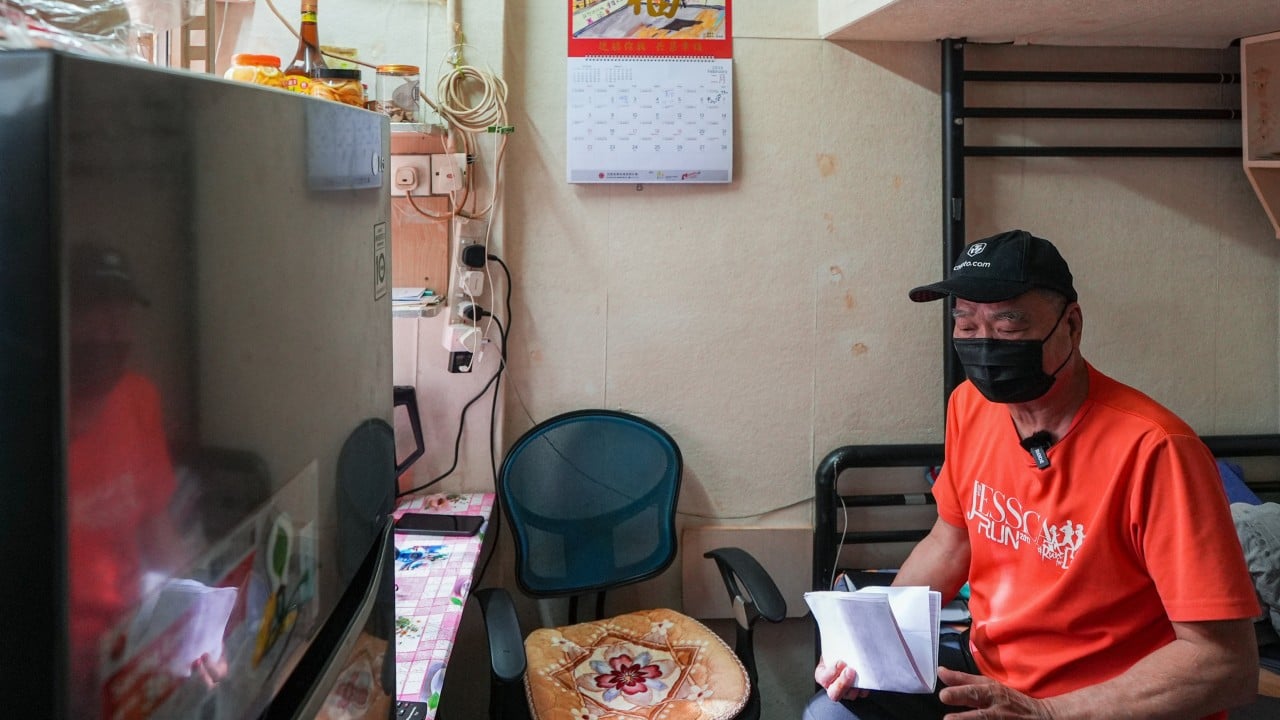
The Hong Kong government’s introduction of the "Basic Housing Credit" (BHC) system—a regulatory floor requiring subdivided flats (SDUs) to meet minimum size (8 square meters), hygiene, and safety thresholds—marks the transition from an informal, laissez-faire housing market to a monitored, compliance-driven asset class. While framed as a humanitarian intervention, the policy functions as a supply-side shock that mandates the immediate obsolescence of roughly 30,000 to 40,000 units. The critical friction lies not in the standards themselves, but in the sequential mismatch between unit decertification and the delivery of public housing alternatives.
This reform triggers a three-stage economic displacement cycle. First, owners of non-compliant units calculate the Net Present Value (NPV) of conversion versus exit. Second, the resulting shrinkage in the "bottom-tier" supply forces a migration of the lowest-income tenants toward even more precarious, unregistered, or illegal "shadow" units. Third, the legal inventory undergoes a "quality premium" price hike, effectively raising the entry-level rent for the city’s most vulnerable demographic.
The Triple Constraint of SDU Compliance
To understand why the BHC standards create a wave of evictions, one must analyze the three physical and economic constraints that govern the SDU market. When a regulator dictates that a unit must have a window, a separate toilet, and a minimum of 8 square meters, they are not just improving living conditions; they are redefining the unit’s economic density.
1. The Geometry of Displacement
Most non-compliant SDUs are "coffin homes" or "cage homes" that exist precisely because they ignore the spatial requirements of the BHC. If a 20-square-meter apartment was previously split into five 4-square-meter cubicles, the new mandate forces a reconfiguration into two compliant units.
- Mathematical Supply Loss: In this specific configuration, 60% of the previous tenant capacity is eliminated.
- Structural Barriers: Many older buildings (tong lau) possess plumbing stacks and load-bearing walls that prevent the installation of "separate toilets" for every subdivided unit. For these properties, the cost of compliance exceeds the total asset value, leading to the permanent withdrawal of the units from the market.
2. The Capital Expenditure (CapEx) Trap
Landlords facing the BHC must decide whether to invest in renovations or evict and sell.
- The Breakeven Problem: A landlord spending $100,000 HKD to bring a unit up to code must recoup that capital through higher rents.
- The Displacement Trigger: Since the target demographic—those earning below the median income—cannot absorb a 20-30% rent increase, the landlord has a rational incentive to terminate existing leases and pivot toward a slightly higher-income "co-living" or "premium SDU" segment to justify the investment.
3. The Enforcement Lag and Shadow Market Proliferation
The government has proposed a "grace period" for registration and conversion. In a high-demand, low-supply environment, this creates a limbo period. Landlords who know their units can never comply have zero incentive to maintain the property or renew long-term leases. They will likely maintain occupancy until the final enforcement deadline, then initiate mass evictions.
Mapping the Tenant Migration Path
The assumption that evicted tenants will move seamlessly into Public Rental Housing (PRH) or "Light Public Housing" (LPH) ignores the geographic and temporal bottlenecks of the current system.
The PRH Queue Friction
While the government claims the wait time for PRH is roughly 5.5 years, this figure is an average that masks the reality for single, non-elderly applicants who often wait over a decade. The BHC standards do not accelerate the construction of permanent housing; they only accelerate the removal of temporary housing. This creates a "bottleneck effect" where the flow into the housing system is restricted while the exit from the private market is mandated.
The Rise of Unregulated "Shadow" Units
When a legal standard becomes too high for the poorest participants to afford, the market does not disappear; it goes underground. We can anticipate the growth of "shadow SDUs"—units in industrial buildings or remote rural areas (New Territories) that operate entirely outside the BHC registration system. These units will likely be more dangerous and less sanitary than the current ones, as they must remain hidden from inspectors.
The Economic Logic of Mandatory Quality Floors
Regulatory intervention in low-end housing markets typically follows the Filtered Housing Theory, which suggests that as new housing is built, older housing becomes affordable. However, the BHC flips this. By mandating a quality floor, the government is "cutting off the bottom of the ladder."
The resulting market behavior can be modeled as follows:
$$R_{new} = R_{old} + (\frac{C}{L}) + P$$
Where:
- $R_{new}$ is the post-compliance rent.
- $R_{old}$ is the current rent.
- $C$ is the total cost of renovation/compliance.
- $L$ is the expected lease term for recovery.
- $P$ is the "Regulatory Risk Premium" landlords charge for the hassle of inspections.
In every scenario where $R_{new}$ exceeds the tenant’s maximum ability to pay, an eviction is the only logical outcome for the landlord. Because the BHC applies to all units simultaneously, the "substitutability" of low-end housing vanishes. Tenants cannot simply find another 4-square-meter unit down the street; those units are now illegal.
Structural Deficiencies in the Mitigation Strategy
The government's primary mitigation tool is the LPH scheme—prefabricated units designed to house people for 5 years while they wait for permanent PRH. However, LPH faces two critical failures in preventing BHC-induced evictions:
- Logistical Misalignment: Many LPH sites are located in outlying areas like Yuen Long or Tuen Mun. SDU tenants typically live in urban cores (Sham Shui Po, Kwun Tong) to be near low-skill service jobs. The "economic cost of commuting" from an LPH site often cancels out the subsidy provided by the lower rent.
- The Eligibility Gap: BHC enforcement will likely catch many "new arrivals" or individuals who do not yet meet the 7-year residency requirement for certain housing subsidies. These individuals are the most likely to be evicted and the least likely to have a legal safety net.
Strategic Recommendation for Risk Mitigation
To prevent the BHC from becoming a catalyst for a homelessness crisis, the policy must transition from a "standard-first" approach to a "capacity-first" approach.
1. Tiered Decertification Based on LPH Availability
Enforcement should be localized and synchronized with the opening of LPH clusters. If an LPH project with 2,000 units opens in Kai Tak, then 2,000 units of non-compliant SDUs in the surrounding districts should be targeted for the first wave of enforcement. This ensures that for every "exit" created by regulation, there is an "entry" provided by the state.
2. The Conversion Subsidy Model
Rather than a purely punitive model, the government should offer "Compliance Grants" to landlords of units that are structurally capable of being upgraded. These grants should be contingent on a "Rent-Cap Agreement," where the landlord agrees to freeze rents for five years in exchange for the renovation funding. This stabilizes the $R_{new}$ variable and prevents the "quality premium" from pricing out the current tenant.
3. Institutionalizing the Master-Landlord System
The government can mitigate mass evictions by leasing non-compliant blocks from private owners, performing the necessary structural upgrades at scale, and then sub-leasing them back to the original tenants. This removes the "individual landlord profit motive" from the compliance equation, treating the transition of the SDU market as a public infrastructure project rather than a private real estate headache.
The success of the BHC will not be measured by how many windows are installed, but by whether the 110,000 people currently in SDUs are still housed three years from now. Without a direct link between unit demolition and unit replacement, the "Basic Housing Credit" will function less as a standard of living and more as a mandate for displacement.