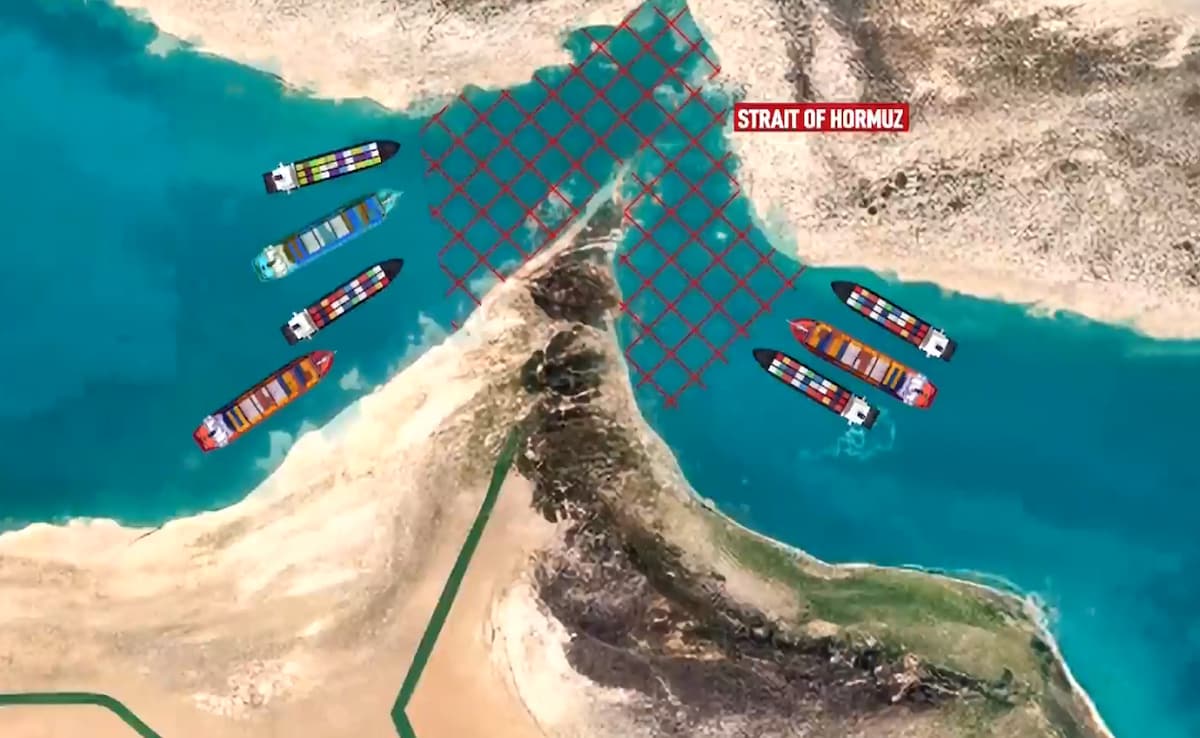
Fujairah is the only Emirati emirate with a coastline solely on the Gulf of Oman, placing it outside the volatile Strait of Hormuz. This single geographic fact makes it the most important piece of energy infrastructure in the Middle East. While most of the world’s oil must pass through a narrow twenty-one-mile choke point susceptible to Iranian threats and geopolitical posturing, Fujairah offers a direct exit to the Indian Ocean. It serves as the safety valve for global energy markets, ensuring that even if the Strait is closed, millions of barrels of crude can still reach the refineries of Asia and Europe.
The Geography of Survival
The Strait of Hormuz is a geographic nightmare for logistics. One-fifth of the world’s total oil consumption passes through that sliver of water. For decades, the threat of a blockade has been used as a diplomatic hammer. Fujairah effectively breaks that hammer. By utilizing the Habshan-Fujairah pipeline, the United Arab Emirates can transport roughly 1.5 million barrels of oil per day directly to the port, bypassing the Strait entirely.
This isn't just about a pipeline. It’s about the transformation of a quiet fishing outpost into the world’s third-largest bunkering hub, rivaling Singapore and Rotterdam. Ships don't just come here to load oil; they come to refuel, maintain their engines, and swap crews. The rugged Hajar Mountains provide a backdrop to a massive subterranean storage project that can hold tens of millions of barrels of oil, protected from both the elements and potential aerial strikes.
The Mechanics of the Habshan Pipeline
The engineering behind this shift is often overshadowed by the politics. The 230-mile Abu Dhabi Crude Oil Pipeline (ADCOP) starts at the Habshan onshore field and terminates at the Fujairah export terminal. It is a massive 48-inch diameter steel artery. Under normal conditions, it moves a significant portion of Abu Dhabi’s Murban crude, but its true value is its surge capacity. In a crisis, the flow can be cranked up to sustain the global economy when other routes are severed.
The port facilities are designed for speed. Deep-water berths allow the world’s largest tankers—Very Large Crude Carriers (VLCCs)—to dock and load without the need for lightering, a process where smaller ships transfer oil to larger ones in open water. This efficiency reduces costs and minimizes the time a vessel spends in a high-risk zone.
Bunkering and the Hidden Economy of Fuel
While the headlines focus on crude exports, the real money in Fujairah is often in the bunkering business. Every ship crossing the Indian Ocean needs fuel. Fujairah provides a "one-stop shop" model. Because of the sheer volume of traffic, the port has developed a sophisticated ecosystem of blending and storage.
Companies like Vopak and Uniper operate massive tank farms that dot the coastline. These aren't just holding pens; they are active trading hubs. Traders buy fuel when prices are low, store it in these tanks, and sell it when the market spikes. The port’s ability to handle multiple grades of fuel, including the low-sulfur options required by modern environmental regulations, keeps it ahead of regional competitors who are still catching up to international standards.
The Risk of a Single Point of Failure
Relying on Fujairah as the ultimate backup plan creates its own set of vulnerabilities. If an adversary cannot close the Strait of Hormuz, they might instead target the pipeline or the storage tanks in Fujairah. Security here is obsessive. The UAE military maintains a heavy presence, and the surveillance tech monitoring the pipeline path is among the most advanced in the world.
There is also the issue of capacity. While 1.5 million barrels a day is a staggering amount, it is only a fraction of the 20 million barrels that typically move through the Strait. Fujairah is a relief valve, not a total replacement. If the Strait were to be completely shut down for an extended period, Fujairah’s current infrastructure could not prevent a global price shock. It would merely soften the blow for the UAE and its primary customers.
Diversification Beyond the Barrel
The local government understands that being a "gas station" for the world isn't a long-term strategy in a world moving toward decarbonization. They are aggressively expanding into liquefied natural gas (LNG) and hydrogen. The planned LNG export terminal will further cement the port’s status as a comprehensive energy hub.
The move into LNG is particularly savvy. As coal is phased out in developing nations, natural gas has become the bridge fuel of choice. By positioning itself as a primary LNG exit point, Fujairah ensures its relevance for the next fifty years, regardless of what happens to the internal combustion engine.
The Trading Floor Shift
For years, the price of Middle Eastern oil was set elsewhere—mostly in London or New York. The launch of the ICE Futures Abu Dhabi (IFAD) exchange, which trades Murban crude futures, changed the power dynamic. By trading a physical commodity that is actually delivered in Fujairah, the UAE has gained significant influence over how oil is priced in the Eastern Hemisphere.
This shift from a passive transit point to an active financial center is the final piece of the puzzle. It attracts banks, traders, and insurance adjusters. The physical presence of the oil gives the financial instruments their teeth. When a trader buys a Murban contract, they know exactly where that oil is and exactly how it’s going to get to their refinery without having to worry about an Iranian patrol boat.
The Geopolitical Insurance Policy
Regional rivals are watching closely. Saudi Arabia has its own East-West pipeline to Yanbu on the Red Sea, but that route faces its own challenges with the instability in the Bab el-Mandeb strait. Fujairah remains the most stable, most accessible, and most technologically advanced exit point in the region.
The port represents a massive bet on stability. Every kilometer of pipe and every cubic meter of storage is a testament to the belief that the world will continue to need Middle Eastern energy, but it will no longer tolerate the risk of the Strait of Hormuz. Fujairah is the physical manifestation of that risk mitigation.
Check the daily bunkering rates and vessel wait times at the Fujairah Port Authority’s digital dashboard to see the real-time health of the global shipping industry.