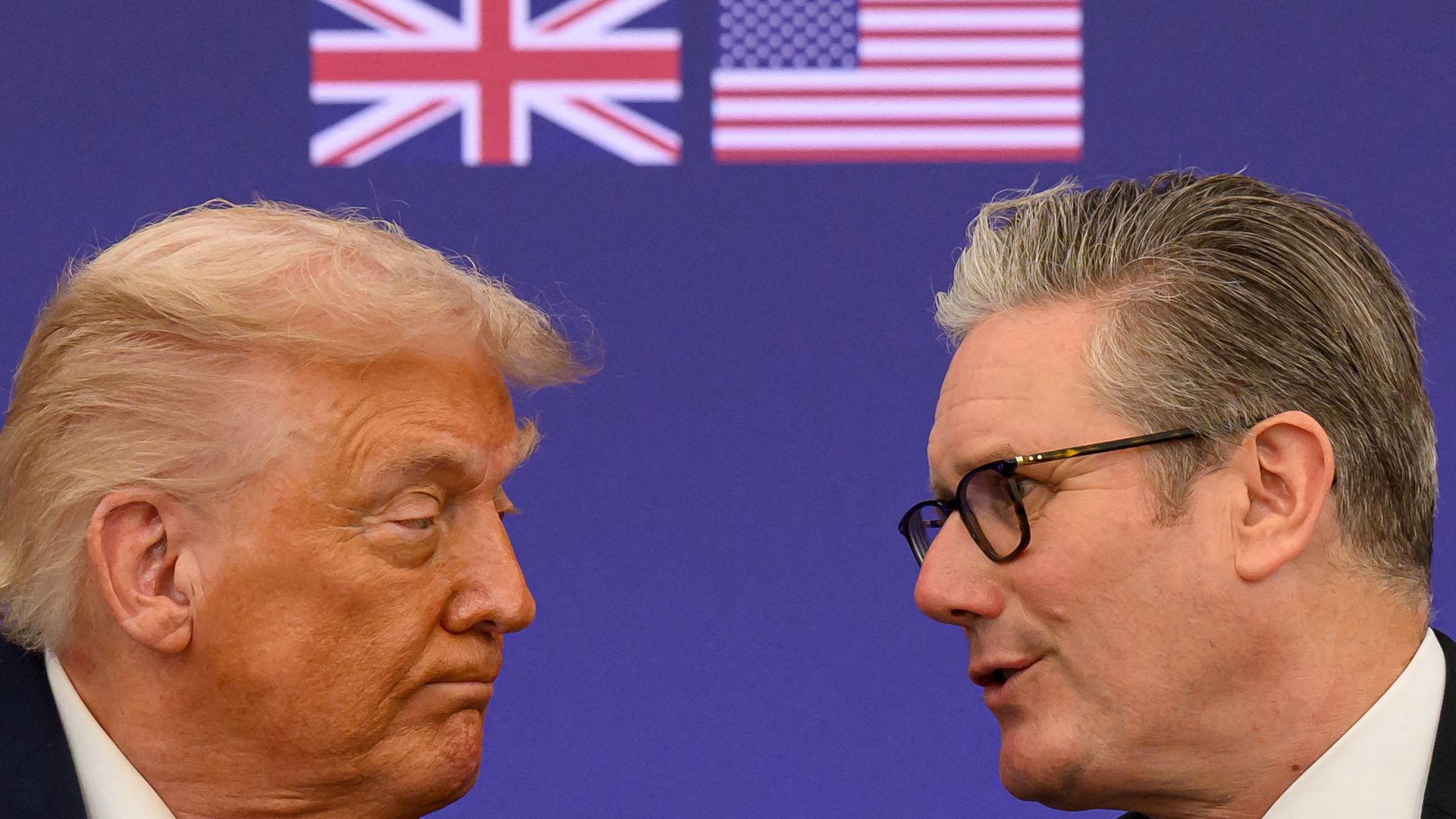
The supposed "Special Relationship" between Washington and London has always been more of a convenient ghost than a concrete contract. When the drums of war beat, this spectral alliance faces its most brutal audit. History shows that conflict does not inherently bind these two powers together; instead, it exposes the jagged edges of their differing national interests. While the rhetoric in the Rose Garden suggests a unified front, the reality in the situation rooms is often a frantic scramble where the junior partner—the United Kingdom—struggles to maintain relevance without sacrificing its remaining sovereignty.
War forces a cold recalculation of what this partnership actually provides. For the United States, Britain is a useful diplomatic shield and a source of niche military capabilities. For Britain, the alliance is a desperate attempt to stay "top table" in a world where its economic and military shadows are shrinking. When a new conflict breaks out, the friction between American global hegemony and British regional anxiety creates a volatile environment that can leave the relationship more fractured than it was before the first shot was fired.
The Myth of Shared Command
One of the most persistent delusions regarding the US-UK alliance is the idea of shared decision-making. It does not exist. In every major conflict since 1945, the United States has set the tempo, the strategy, and the exit parameters. The UK is frequently informed of major shifts in policy via news cycles or late-night phone calls rather than through a collaborative process.
Take the 2021 withdrawal from Afghanistan. The British government was left reeling when the Biden administration set a hard deadline for departure. Despite decades of "shoulder to shoulder" rhetoric, London was treated like any other secondary stakeholder. This is the fundamental flaw in the special relationship during wartime. The US operates on a scale that ignores the domestic political sensitivities of its allies. When the Pentagon moves, the Ministry of Defence is often left trying to figure out where the feet are landing.
This power imbalance creates a cycle of resentment. British officials, desperate to prove their worth, often commit resources they cannot afford to sustain. This isn't just about money. It is about the wear and tear on a military that has been hollowed out by a decade of austerity. When the US asks for "support," it expects a carrier strike group or elite special forces. When Britain provides them, it does so by cannibalizing other essential services, leading to a long-term degradation of its independent defense posture.
The Economic Price of Loyalty
War is expensive, but the diplomatic cost of being an American wingman is often higher. Britain’s alignment with US foreign policy frequently puts it at odds with its closest trading partners in Europe. During the lead-up to the Iraq War, the "Special Relationship" drove a wedge through the heart of the European Union, creating a "New Europe" versus "Old Europe" divide that arguably planted the seeds for the geopolitical isolation Britain feels today.
There is also the matter of the defense industrial complex. While the two nations share intelligence through the Five Eyes program, the flow of technology is overwhelmingly one-way. Britain buys American—F-35s, P-8 Poseidons, Apache helicopters—which ties its defense infrastructure to American supply chains. In a prolonged conflict, the UK becomes a vassal to the US logistics machine.
Sovereignty in the Shadow of the Pentagon
If London cannot maintain its own equipment without a software patch from Lockheed Martin, does it truly have an independent foreign policy? This is the question that haunts the corridors of Whitehall. In times of peace, this dependency is masked by shared training exercises and gala dinners. In wartime, the mask slips. The UK finds itself unable to engage in or withdraw from a conflict without the express permission of American technical and logistical support.
This dependency extends to the nuclear deterrent. The Trident missile system is a British-owned fleet of submarines carrying American-leased missiles. While the UK has the theoretical "independent" right to fire them, the technical architecture is so deeply entwined with US systems that a truly unilateral British nuclear strike is almost a technical impossibility. War doesn't strengthen this bond; it highlights the fact that the "Special Relationship" is essentially a lease agreement.
The Intelligence Trap
The Five Eyes alliance is often cited as the bedrock of the relationship. It is the one area where the UK truly punches above its weight, thanks to the reach of GCHQ. However, intelligence is a double-edged sword. In the buildup to conflict, the "raw data" shared between the two nations is often filtered through the political lens of the administration in power.
We saw this clearly with the "dodgy dossier" era. The pressure to align intelligence findings with the desired political outcome of the White House led to one of the greatest failures in British diplomatic history. When the US decides on a path to war, the pressure on the UK to find the "evidence" to support that path becomes immense. The intelligence community, rather than acting as a check on political impulse, becomes a tool for manufacturing consent for the alliance's goals.
This creates a dangerous feedback loop. The UK shares intelligence to stay relevant; the US uses that intelligence to justify actions that the UK must then support to maintain the relationship. Once the conflict begins and the inevitable "intelligence failures" come to light, it is the junior partner that often suffers the most significant loss of domestic and international credibility.
Domestic Fractures and the Cost of War
No British Prime Minister has ever truly recovered from a failed or unpopular war fought alongside the United States. The political graveyard is littered with the careers of those who thought that standing "shoulder to shoulder" with the President would earn them lasting prestige. Instead, they found that the British public has a very short fuse for conflicts that appear to be serving American interests rather than British ones.
The Suez Crisis remains the ultimate cautionary tale. When Anthony Eden attempted to act without American approval—and indeed against American wishes—the US didn't just withhold support; it actively crashed the British pound to force a withdrawal. This was the moment the "Special Relationship" was truly defined. It is a relationship that exists only as long as British actions do not interfere with American financial or geopolitical stability.
Modern conflicts in the Middle East have only reinforced this. The British public sees the human and financial cost of these wars and asks what the "Special Relationship" actually bought them. The answer is often "access," but access is not influence. Being in the room while the Americans make a decision is not the same as having a hand on the steering wheel.
The Pivot to the Indo-Pacific
As the US shifts its focus toward China, the Special Relationship is being tested in a new theater. AUKUS—the pact between Australia, the UK, and the US—is touted as a new era of cooperation. But look closer. It is a deal designed to sell American and British nuclear technology to Australia to create a regional bulwark against Beijing.
For the UK, this is a massive gamble. It involves committing naval resources to the other side of the world at a time when its own backyard—the North Atlantic and the Mediterranean—is increasingly volatile. The US wants Britain to be its deputy in the Pacific, but Britain lacks the hull count to play that role effectively. By trying to meet American expectations in Asia, the UK risks leaving itself exposed in Europe.
The Myth of the Bridge
For decades, British diplomats have sold the idea of the UK as a "bridge" between the US and Europe. This was a comfortable fiction that allowed London to feel essential. Today, that bridge has no foundations. Post-Brexit, the UK has lost its leverage in Brussels, making it less valuable to a Washington that needs its allies to influence European policy.
If Britain cannot deliver Europe, why should the US care about the Special Relationship? The answer is increasingly "they don't." The US is moving toward a more transactional form of diplomacy. It will work with the UK when it's convenient and ignore it when it's not. The sentimentality that once fueled the relationship—the shared history of WWII, the personal chemistry between leaders like Reagan and Thatcher—has evaporated.
Strategic Divergence
The most significant threat to the alliance isn't a disagreement over a specific war, but a fundamental divergence in how the two nations view the world. The US is an empire in a period of aggressive defense, willing to use sanctions, trade wars, and military intervention to maintain its pole position. The UK, meanwhile, is a mid-sized power trying to find a role for "Global Britain" while its internal economy stagnates.
When war breaks out, these two perspectives inevitably clash. The US wants a decisive, overwhelming victory to maintain its status. The UK, often more sensitive to the long-term regional fallout and the constraints of international law, prefers a more calibrated approach. These are not just tactical differences; they are existential ones.
The Special Relationship is not a shield against the chaos of war; it is a lightning rod. By tying its fate so closely to the American military machine, Britain ensures that every American mistake becomes a British crisis. Every failed intervention, every drone strike gone wrong, and every shifted objective in Washington sends tremors through the British political system.
The End of Sentiment
We have entered an era where "special" is a euphemism for "dependent." The hard truth is that in the next major conflict, the UK will be forced to choose between its own national stability and the maintenance of a relationship that provides diminishing returns. The US does not have "special" friends; it has interests.
The UK’s insistence on viewing the alliance through a lens of 1940s nostalgia is its greatest strategic weakness. While London talks about "values" and "shared history," Washington talks about "interoperability" and "burden sharing." One side is writing a love letter; the other is auditing a balance sheet.
If the UK wants to survive the coming decades of global instability, it must stop treating the Special Relationship as a sacred cult. It needs to recognize that in the cold calculus of war, being the favorite ally of a superpower is often just a fancy way of saying you are the first one sent into the breach. The relationship isn't breaking because of bad luck or bad leaders. It is breaking because the reality of 21st-century power has no room for the myths of the 20th.
British policy needs a brutal injection of realism. Stop chasing the ghost of Churchill and start looking at the actual capabilities of the modern state. If a relationship requires you to sacrifice your economic health and your military autonomy just to stay in the good graces of a partner who doesn't consult you, it isn't a relationship. It's a hostage situation.
Would you like me to analyze the specific impact of the AUKUS agreement on British naval procurement over the next decade?