The silence in Havana is not the peaceful kind. It is heavy. It is the sort of quiet that settles over a city when the machines stop breathing. In the Vedado district, a surgeon named Alejandro—a man whose hands have mended thousands of hearts—stands in a corridor that smells faintly of antiseptic and sweat. He is not holding a scalpel. He is holding a plastic gasoline canister.
He has been in line for fourteen hours.
Cuba is currently an island defined by the geometry of the curve. Not the curve of the coastline or the arch of a colonial doorway, but the jagged, exhausted lines of people snaking around city blocks, waiting for a liquid that has become more precious than blood. When the fuel runs out, the clock doesn't just slow down. It stops.
The Anatomy of a Standstill
To understand the current crisis in Cuba, you have to look past the vintage Chevrolets and the postcard-perfect crumbling facades. Those cars, the almendrones, are the country's circulatory system. When the tankers from Venezuela or Russia fail to arrive, or when the aging Caribbean refineries groan and fail, the system suffers a stroke.
The mathematics of the shortage are brutal. In recent months, fuel arrivals have dropped by nearly 50%. The government points to the tightening of the U.S. embargo and the financial struggles of its allies. The citizens point to their empty tanks. But statistics are cold. They don't capture the heat of a tropical afternoon spent pushing a Lada toward a pump that might be dry by the time you reach it.
Consider the ripple effect. A shortage of diesel means the trucks carrying flour don't reach the bakeries. The bakeries can't fire their ovens. The bread doesn't exist. A shortage of fuel means the thermoelectric plants, many of which are decades past their expiration date, cannot maintain the grid.
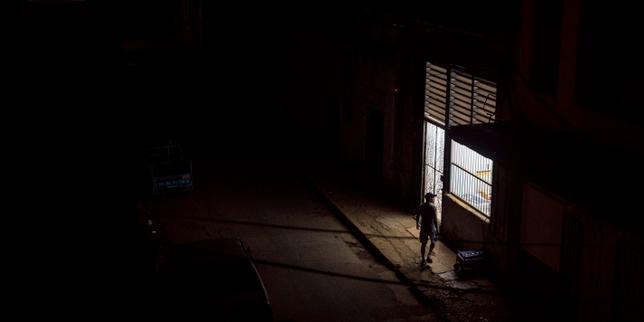
The lights flicker. Then, they vanish.
Darkness as a Daily Bread
In a small apartment in Central Havana, Maria tries to soothe her grandmother. The fan has stopped. In the Cuban heat, air is a physical weight. Without the fan, the mosquitoes arrive, and the feverish worry of Dengue or Oropouche virus follows them.
"When will it come back?" the old woman asks.
"Soon," Maria lies.
She knows the schedule—the alumbrones, or "big lights," as Cubans ironically call the brief windows of electricity. But the schedule is a ghost. It shifts. It breaks.
This isn't just about comfort. It is about the fundamental infrastructure of life. When the power goes out for twelve, fifteen, or eighteen hours, the meager food stored in the refrigerator begins to rot. In a country where a kilogram of pork can cost a week’s wages, a spoiled fridge is a domestic tragedy. It is the loss of an investment. It is the disappearance of next Tuesday's dinner.
The invisible stakes are found in the hospitals. Alejandro, the surgeon, isn't just worried about getting to work. He is worried about what happens when he gets there. While major hospitals have generators, those generators require—you guessed it—fuel.
How do you examine a patient in the dark? How do you maintain the "cold chain" for vaccines? How do you operate when the air conditioning fails and the surgeon’s sweat threatens the sterility of the field? These are the questions being asked in whispers across the island. They are questions with no easy answers.
The Ingenuity of the Exhausted
Cubans have a word for this: resolver. It means more than "to solve." It is a philosophy of survival, a way of stitching together a life from scraps.
When the buses stop running because there is no diesel, the "gazelles"—the shared yellow vans—become battlegrounds. When those fail, people turn to horses. In the countryside of Artemisa and Matanzas, the clip-clop of hooves isn't a tourist attraction; it is the sound of the morning commute.
It is a strange, jarring regression. A society that prides itself on its high literacy rates and medical breakthroughs is forced to rely on 19th-century logistics.
But there is a limit to resolver. You can fix a 1954 Buick with a boat engine and a bit of wire. You cannot "fix" a total lack of electricity with ingenuity alone. The mental toll is what the news reports often miss. It is the "blackout fatigue." It is the way the eyes of a father look when he realizes he cannot provide a cool room for his child to sleep in.
The Ghost of the Special Period
For those old enough to remember the 1990s—the "Special Period" following the collapse of the Soviet Union—this feels like a recurring nightmare. Back then, the island lost 80% of its imports overnight. People lost weight. They lost hope.
Today is different, and in some ways, more complex. The economy has been partially opened to small and medium-sized private businesses, known as pymes. You can find imported milk or Spanish olive oil now, but only if you have the currency. The divide between those with family abroad sending remittances and those relying on a state salary has become a canyon.
The fuel crisis acts as a catalyst for this inequality. If you have the money, you buy fuel on the black market at five times the official price. If you don't, you wait in the sun.
The government has attempted to manage the crisis by raising fuel prices—some by over 400%—in an effort to stabilize the economy and reduce the deficit. The logic is sound on a spreadsheet. On the street, it feels like a suffocating hand. When the cost of transport goes up, the cost of everything else follows. A tomato becomes a luxury item.
The Silence of the Sea
If you walk down the Malecón, the famous seawall that hugs the Havana coastline, you see the fishermen. They aren't there for sport. They are there because the sea is the only grocery store that doesn't have a line.
One fisherman, his skin cured by the salt and sun, looks out toward the horizon where the lights of Florida sit just ninety miles away. He doesn't talk about politics. He talks about the "nothingness."
"The hardest part isn't the hunger," he says, casting his line. "It's the waiting. You wait for the bus. You wait for the bread. You wait for the light. You spend your whole life waiting for the basics to begin."
This is the true cost of the fuel shortage. It is the theft of time. Tens of millions of human hours are being burned away in lines, not for progress, but for the mere maintenance of existence.
The Persistence of the Human Spirit
Yet, even in the deep shadows of a blackout, there is a stubborn, defiant warmth. Someone brings a battery-powered speaker into the street. A bottle of rum is shared. A game of dominoes is played by the light of a cell phone.
The Cuban people are not a tragedy; they are an epic. They are a population that has mastered the art of living in the gaps of a broken system. But even the strongest bridge eventually collapses if the weight is never lifted.
As the sun sets over Havana, the city prepares for another night of uncertainty. The streetlights remain dark. The hum of the city is replaced by the distant, rhythmic chugging of a lone generator, a mechanical heartbeat in a city that is holding its breath, waiting for the spark that will bring the world back to life.
Alejandro finally reaches the front of the line. He fills his canister. He has enough to get to the hospital for two days. He drives home through the darkened streets, his headlights cutting a small, fragile path through the gloom, a single point of light in a landscape of waiting.