In a small, windowless clinic on the outskirts of a city you have likely never visited, a nurse named Amara holds a plastic inhaler like it is a religious relic. It is empty. She knows it is empty. The child on the rusted cot in front of her knows it is empty too, though he is only six and currently preoccupied with the terrifying mechanics of his own lungs.
Air should be free. In this room, today, it costs exactly more than the world is willing to pay.
We often talk about global health in the language of spreadsheets. We use words like "funding shortfalls" and "resource allocation." We treat a billion dollars like an abstract number, a data point in a PowerPoint presentation delivered in a climate-controlled room in Geneva. But out here, where the red dust settles on everything and the electricity flickers like a dying pulse, a billion dollars isn't a statistic. It is the difference between a child walking home or being carried.
The Invisible Ledger
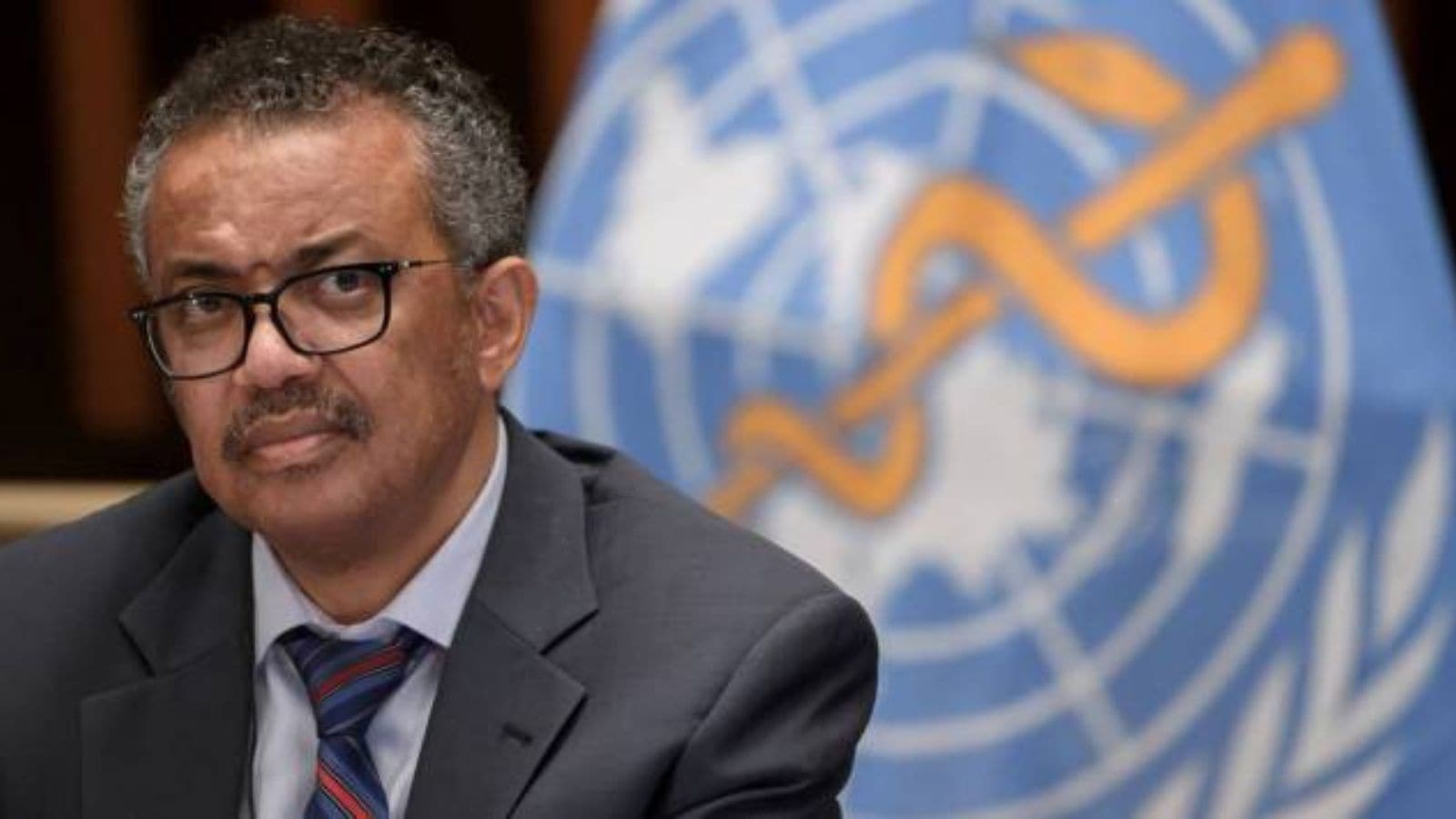
The World Health Organization (WHO) recently announced a $1.11 billion appeal. They need this money to cover the "investment gap" for the 2025–2028 period. If you are like most people, your eyes probably glazed over halfway through that sentence. Investment gap? It sounds like corporate jargon for a bad quarter at a tech firm.
It isn't.
Think of global health as a massive, intricate electrical grid. When it works, you don't notice it. You take for granted that the water from the tap won't give you cholera. You assume that if a new virus starts brewing in a remote jungle, someone, somewhere, is tracking it before it reaches your local airport. This grid is what keeps the modern world spinning.
But the grid is sparking.
The WHO is the central hub of this grid. When they say they are short a billion dollars, they aren't asking for a bonus. They are telling us that the transformers are blowing out. They are saying that the "gaps in healthcare access" are no longer just cracks; they are canyons.
The Arithmetic of Survival
To understand why a billion dollars matters, we have to look at what it actually buys. It isn't just mahogany desks and white lab coats. It is the boring, unglamorous machinery of staying alive.
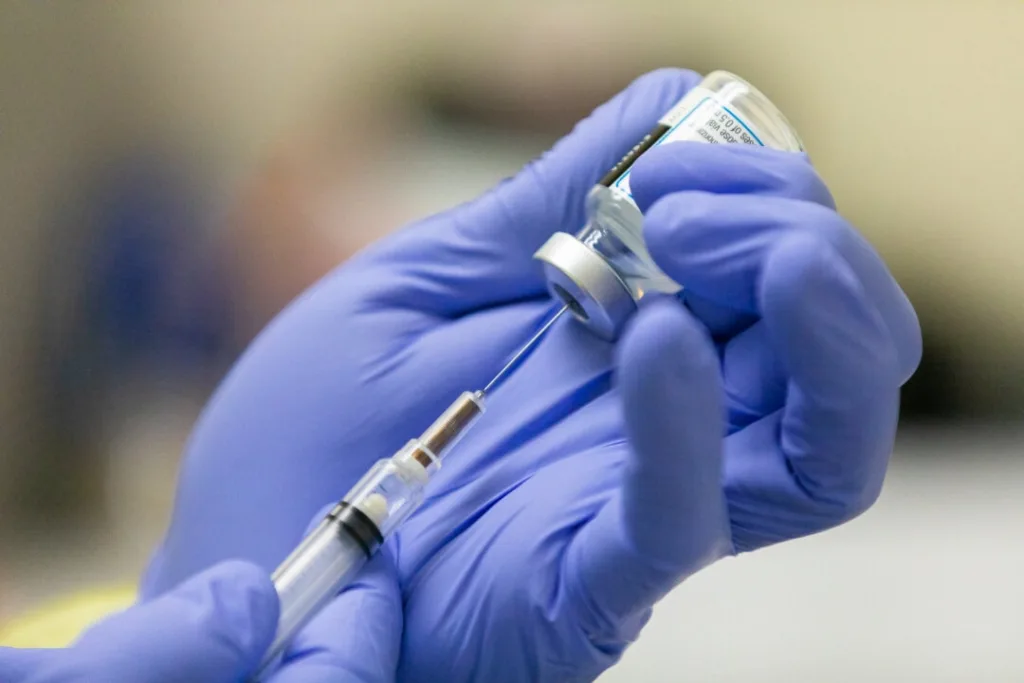
Consider the hypothetical case of "Region X." Let’s call it a collection of several dozen villages where the nearest hospital is a three-day journey by foot or a prohibitively expensive ride on a motorbike. In Region X, a simple infection can be a death sentence. Not because the medicine doesn't exist—it’s been around since the 1940s—but because the "cold chain" is broken.
- The Cold Chain: This is the invisible relay race required to keep vaccines and medicines at a specific temperature from the factory to the patient.
- The Break: If the WHO doesn't have the funds to maintain solar-powered refrigerators or pay for the fuel for the delivery trucks, the medicine spoils.
- The Result: A mother walks three days, arrives at the clinic, and is told the vials are useless.
This is the "widening gap." It is the distance between what science can do and what the world actually delivers. We have the maps. We have the formulas. We just can't seem to find the coins under the sofa cushions to finish the job.
The math is brutal. The WHO’s total budget is roughly equivalent to what a few large American hospitals spend in a year. Yet, they are tasked with being the world’s first responders, its lead scientists, and its primary healthcare architects for eight billion people.
$1.11 billion.
To put that in perspective, humans spent nearly $100 billion on bottled water last year. We are willing to pay for the convenience of plastic, but we are hesitant to fund the literal survival of our species.
The Ghost in the Machine
There is a common skepticism that follows these appeals. We wonder: Where does the money actually go? Isn't it just lost in a sea of bureaucracy?
It’s a fair question. Bureaucracy is the shadow that follows every large organization. But in the context of global health, bureaucracy is often just another word for "coordination."
Imagine a sudden outbreak of a new, highly contagious respiratory illness. Without a central body like the WHO, every country would be left to fend for itself. Rich nations would hoard masks and vaccines. Poor nations would be left to burn. We saw this play out in 2020. It wasn't a theory; it was a rehearsal.
The WHO provides the standardized protocols. They are the ones who make sure that a blood test in South Sudan uses the same metrics as a blood test in South Korea. Without that "boring" standardization, we are blind.
When the funding drops, the lights go out in the surveillance labs. We stop looking for the next threat because we are too busy trying to figure out how to pay for the lightbulbs. This is the "hidden cost" of a shortfall. It isn't just about the services we lose today; it's about the warnings we won't receive tomorrow.
The Human Geometry of a Shortfall
Let's go back to Amara in her clinic.
She isn't thinking about the "Strategic Preparedness and Response Plan." She is thinking about the fact that her gloves are running low. She is thinking about the woman in the waiting area who has been coughing for three weeks, and how she doesn't have the diagnostic kit to tell if it's common pneumonia or multi-drug-resistant tuberculosis.
If the $1 billion appeal fails, Amara’s clinic doesn't just "underperform." It retreats.
First, the outreach programs stop. The nurses no longer travel to the outlying villages to check on pregnant women. Then, the preventative screenings end. We stop catching cervical cancer in its early, treatable stages. Finally, the emergency supplies dwindle.
The gap widens.
It’s easy to feel disconnected from this if you live in a place where a pharmacy is on every corner. But global health is not a charity project; it is a biological treaty. We are all part of the same ecosystem. A virus does not care about your passport or your bank balance. An unchecked outbreak in a "funding gap" region is merely a plane ride away from your front door.
We are only as safe as the most vulnerable person in the most underfunded clinic.
The Logic of the Heart
We have spent decades perfecting the art of the "dry report." We list the numbers of malaria nets distributed. We quantify the reduction in maternal mortality. We use terms like "synergy" and "leverage" to try and make the work sound like a business transaction.
But you cannot "leverage" the grief of a father who loses his daughter to a preventable diarrheal disease. You cannot "optimize" the fear of a community watching an unidentified fever sweep through their elders.
The WHO’s appeal is a plea for us to recognize our own reflection in the eyes of people halfway across the globe. It is an acknowledgment that the "access gap" is a moral failure, not just a logistical one.
We have the resources. The world is wealthier than it has ever been. We have the technology. We can edit genes and send rovers to Mars. The only thing we seem to lack is the sustained will to ensure that a basic standard of human dignity—health—is not a luxury item.
The billion dollars isn't for the WHO. It's for the child on the cot. It's for the nurse with the empty inhaler. It's for the invisible wall we build between "us" and "them," a wall that is made of nothing but our own indifference.
The Choice at the Door
Wait.
Think about the last time you were truly sick. That moment of helplessness when your body felt like an enemy. Now, imagine that feeling combined with the knowledge that the cure exists—it’s sitting in a warehouse five hundred miles away—but you can't have it because a budget line wasn't met.
That is the reality for millions.
The WHO is holding out a hat, yes. But they are also holding out a map to a world where we don't let people die of things we already know how to fix.
The $1.11 billion is a test of our collective memory. Do we remember the lessons of the last decade? Do we understand that "global" includes everyone? Or are we going to wait until the next crisis hits our own shores to realize that the gap was always a bridge we should have built?
Amara looks at the boy. He takes a shallow, rattling breath. She reaches for a phone that may or may not have a signal, hoping to call for a transport that may or may not have fuel.
The world is currently deciding if that call gets answered.
The boy closes his eyes. He is waiting. We are all waiting. The silence in the room is heavy, filled with the weight of everything we chose not to fund. It is a quiet, devastating sound.
Would you like me to analyze the specific regional breakdowns of the WHO's current funding needs?