Foreign policy analysts love the smell of a "breakthrough" in the morning. They track back-channel messages in Muscat like they’re reading tea leaves, convinced that if we just find the right sequence of sanctions relief and enrichment caps, the Middle East will suddenly stabilize.
They are wrong. The entire premise of "mediation" between Washington and Tehran is built on a fundamental misunderstanding of what both regimes actually need to survive.
The consensus view—the one you’ll find in every dry think-tank report—suggests that both sides are exhausted and looking for an off-ramp. It assumes that Iran wants to rejoin the global economy and that the US wants to "pivot" to Asia. This is a fairy tale. In reality, the friction isn't a bug in the system; it’s a feature. For both the Islamic Republic and the American security apparatus, the "forever standoff" is far more useful than a definitive peace.
The Myth of the Rational Actor
Most "experts" treat the US and Iran like two logical business partners haggling over a contract. They list "demands" as if they are static line items.
- Iran's supposed demand: Sanctions lifting and a guarantee that the next US president won’t tear up the deal.
- The US’s supposed demand: A "longer and stronger" deal that covers ballistic missiles and regional proxies.
Here is the reality: Neither side can actually deliver what the other wants without committing political suicide.
If the Iranian leadership truly normalized relations with the "Great Satan," they would lose the primary ideological pillar that justifies their internal security crackdown. The Revolutionary Guard (IRGC) doesn't just manage missiles; they manage a massive shadow economy built on circumventing sanctions. They don't want a free market. They want a controlled, black market where they hold the keys. Peace is a direct threat to their balance sheet.
On the flip side, no US president can offer a "guarantee" that a deal stays. Our constitutional system makes it impossible unless it’s a treaty ratified by a two-thirds Senate majority—which has a zero percent chance of happening in our lifetime. Biden knows this. Tehran knows this. The mediation isn't about a deal; it’s about managing the optics of a stalemate.
Sanctions are a Failed Religion
We need to stop pretending that sanctions are a "tool" to bring Iran to the table. After forty years, the data is in: sanctions are a lifestyle, not a lever.
When the US "maximum pressure" campaign started, the goal was to collapse the Iranian rial and force a change in behavior. What actually happened? The Iranian economy adapted. They built a "resistance economy" centered on smuggling, domestic production, and selling oil to China through "dark fleets" of tankers.
I have watched DC bureaucrats pat themselves on the back for "tightening the screws" while the IRGC grows more influential because they are the only ones capable of moving money in the dark. We aren't weakening the regime; we are pruning the competition for them. By cutting off the Iranian middle class from the West, we’ve effectively handed the entire country over to the hardliners.
The "mediation" talk about "sanctions for enrichment" is a hollow exchange. Iran has already mastered the nuclear fuel cycle. You can't un-learn how to build a centrifuge. You can't sanction away physics.
The Proxy Trap
The most frequent "People Also Ask" query is: Can a deal stop Iran’s proxies? The answer is a brutal, resounding no.
The "Axis of Resistance"—Hezbollah in Lebanon, the Houthis in Yemen, various militias in Iraq—is not a collection of mercenaries that Tehran can just switch off. These are deep-seated ideological alliances. More importantly, they provide Iran with "strategic depth." Since Iran lacks a modern air force, their "air force" is a network of thousands of cheap drones and missiles scattered across the Levant.
Expecting Iran to trade away its proxies for a few billion dollars in frozen assets is like asking the US to trade away its aircraft carriers for a slight reduction in the price of steel. It’s a non-starter. Any mediator who puts "regional behavior" on the table is either naive or lying to their donors.
The China Factor No One Admits
The competitor article probably mentions China as a "potential mediator." This is a fundamental misunderstanding of Beijing's strategy.
China doesn't want peace in the Middle East. They want stability without resolution.
- Energy Security: China needs Iranian oil (at a steep discount, thanks to US sanctions).
- Strategic Distraction: Every carrier group the US keeps in the Persian Gulf to watch Iran is one less carrier group in the South China Sea.
Beijing’s mediation in the Saudi-Iran normalization was a masterstroke of PR, but it changed very little on the ground. It was a "cold peace." China is perfectly happy to let the US and Iran bleed each other’s resources and attention indefinitely. Why would they help the US solve its biggest headache?
The Nuclear "Threshold" is the New Reality
We need to address the elephant in the room: Iran is already a threshold nuclear state. They have the 60% enriched uranium. They have the delivery systems. The only thing they haven't done is "turn the screw" and assemble a warhead.
The current mediation efforts are focused on preventing them from crossing that final line. But here’s the contrarian truth: The ambiguity of being a threshold state is more powerful for Iran than actually having the bomb.
If they test a weapon, they trigger a regional arms race and a potential preemptive strike from Israel. If they stay exactly where they are—at the threshold—they get the deterrent benefits without the immediate kinetic consequences.
The US knows this. We have shifted from "prevention" to "containment." Every time a diplomat says we won't allow Iran to get a weapon, they are quietly adding the word "today" to the end of that sentence.
The High Cost of the "Middle Path"
The downside of my perspective is that it offers no easy wins. If you accept that mediation is a performance and a deal is impossible, the only remaining options are total capitulation or total escalation. Neither is palatable.
So, we choose the "middle path"—a series of unwritten "understandings." We don't enforce some oil sanctions; they don't kill too many of our contractors. We release some frozen funds; they slow down their enrichment by a few percentage points.
It is a low-level, high-stakes game of chicken that costs billions and stabilizes nothing.
Stop Asking if a Deal is Possible
You are asking the wrong question. The question isn't "is a deal possible?" The question is: "What does the US do when the status quo finally breaks?"
Because it will break. Eventually, an Iranian drone will hit a target it wasn't supposed to, or a domestic uprising in Iran will be so brutal that the West can no longer ignore it for the sake of "diplomatic channels."
When that happens, the years we spent chasing the ghost of the 2015 JCPOA will look like a catastrophic waste of time. We aren't mediating a peace; we are managing a slow-motion car crash and calling it diplomacy.
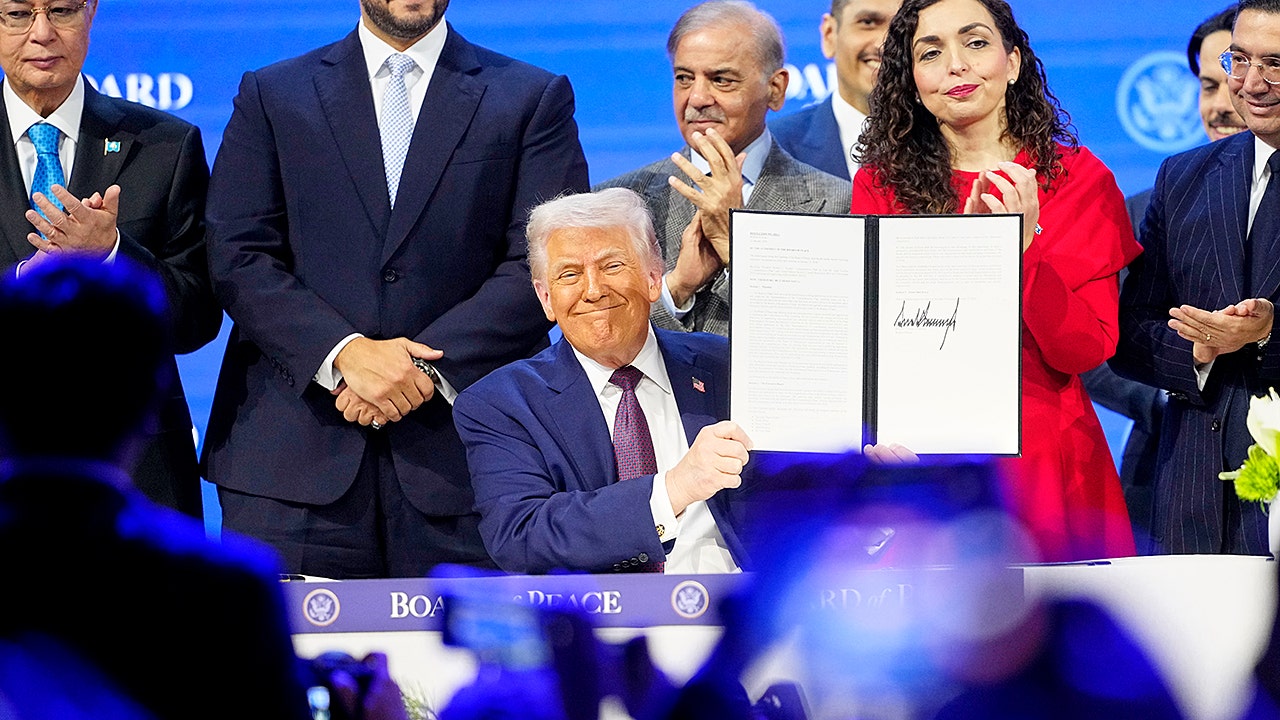
If you want to understand the Middle East, stop looking at the signatures on the documents and start looking at the incentives of the men holding the pens. They aren't looking for a way out. They are looking for a way to stay in.
The standoff is the solution. Accept that, and the rest of the news starts to make sense.