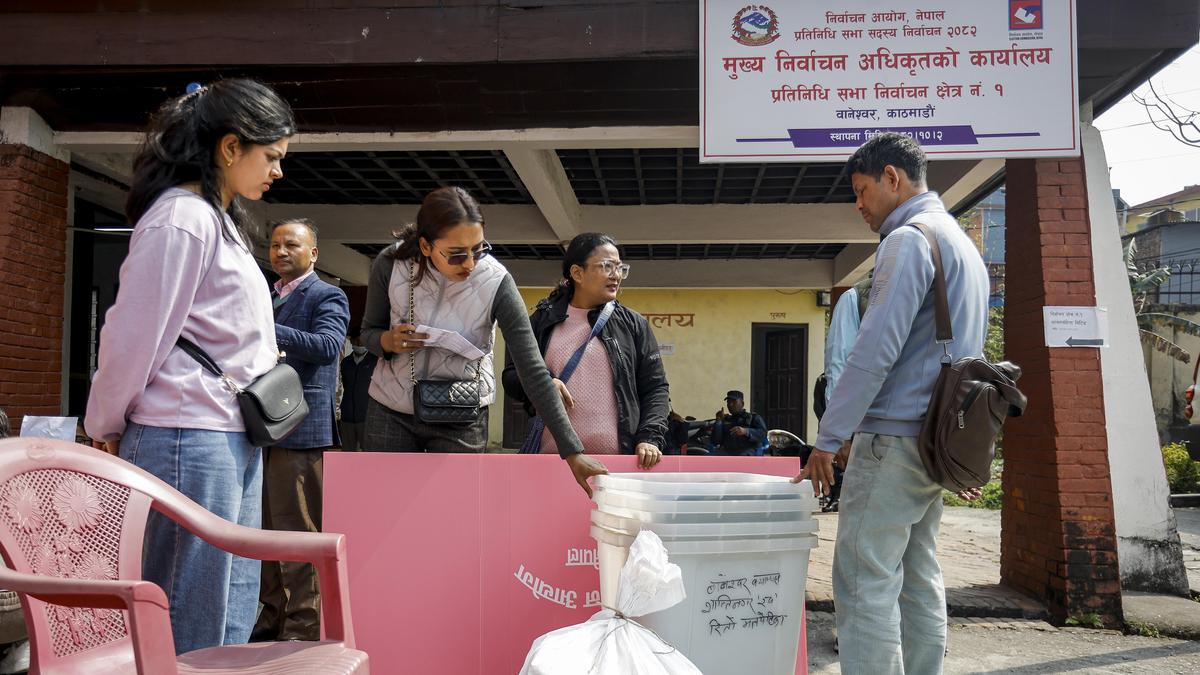
Western analysts love a good tragedy, and Nepal is their favorite recurring character. Every time a ballot box opens in Kathmandu, the international press corps dusts off the same tired script: "A young democracy on the brink," "The tug-of-war between India and China," or my personal favorite, "Political instability threatens the Himalayan kingdom."
They are looking at the wrong map.
What the "consensus" calls instability is actually a highly sophisticated, hyper-competitive marketplace of political interests. While the World Bank and the IMF wring their hands over the frequent change of Prime Ministers, they miss the reality on the ground: Nepal’s political churn is not a bug; it is a feature. It is the only thing preventing the country from sliding into the kind of rigid, authoritarian capture seen in its neighbors.
The "domestic upheaval" everyone is mourning is actually the sound of a system working exactly as intended—to prevent any single strongman from holding the keys for too long.
The Myth of the "Buffer State"
Stop calling Nepal a buffer state. It’s an insult to the agency of 30 million people and a fundamental misunderstanding of 21st-century geopolitics. In the old-school realist view, Nepal is a passive slab of rock caught between the Indian elephant and the Chinese dragon.
I’ve sat in rooms with Kathmandu’s power brokers. They aren't "caught." They are arbitrageurs.
Nepal’s leadership has mastered the art of the geopolitical bidding war. When New Delhi squeezes the fuel supply, Kathmandu signs a transit agreement with Beijing. When Beijing gets too pushy with Belt and Road Initiative (BRI) debt traps, Kathmandu pivots back to Washington’s Millennium Challenge Corporation (MCC) grants. This isn't "power plays" victimizing a small nation; it’s a masterclass in playing two superpowers against each other to extract maximum infrastructure with minimum sovereignty loss.
The "instability" that journalists decry is the very thing that keeps this leverage alive. A stable, long-term government would eventually have to pick a side. A rotating door of coalitions ensures that no single foreign power can "buy" the country permanently.
Why Five-Year Terms are for Sucker States
The standard critique is that Nepal needs a stable, five-year government to achieve economic growth. This is the "Lazy Consensus" at its peak. It assumes that "stability" equals "efficiency."
Look at the region. Stability in Myanmar led to a military junta. Stability in Sri Lanka led to the Rajapaksa family driving the economy into a literal ditch. Stability in Bangladesh, until recently, meant the systematic erasure of the opposition.
In Nepal, the fact that a Prime Minister knows they might be out in 18 months creates a desperate, frantic need to deliver visible results—or at least distribute patronage wide enough to survive the next round of horse-trading.
The Calculus of Coalitions
The parliamentary system in Nepal is a brutal, high-stakes game of musical chairs.
- The Maoist Center (CPN-MC) plays the kingmaker.
- The Nepali Congress (NC) represents the old-guard establishment.
- The CPN-UML acts as the ideological counterbalance.
When these groups swap partners, the West screams "chaos." In reality, this constant realignment prevents the "Winner-Take-All" pathology that has paralyzed American and British politics. In Nepal, your enemy today is your deputy prime minister tomorrow. This forced pragmatism is the only reason the 2015 Constitution—one of the most progressive in Asia regarding LGBTQ+ rights and secularism—hasn't been shredded by a populist demagogue.
The Poverty Porn Narrative
If you read the mainstream reports, you’d think Nepal was a medieval fiefdom. They cite the GDP per capita and the reliance on remittances.
Yes, 25-30% of Nepal’s GDP comes from workers in the Gulf and Malaysia. The "experts" call this a "brain drain" and a sign of economic failure. I call it a diversified global labor strategy. These workers aren't just sending back cash; they are importing skills, global perspectives, and a middle-class aspiration that is currently bypassing the traditional state structures.
The real economy of Nepal isn't happening in the halls of the Ministry of Finance. It’s happening in the "informal" sector and the tech hubs of Patan. While the government bickers, the private sector has built a hydro-power ecosystem that is starting to export electricity to India. That didn't happen because of "political stability." It happened because the private sector learned to navigate around the state.
Dismantling the "People Also Ask" Nonsense
Is Nepal safe for foreign investment?
The "safe" answer is usually a cautious "maybe." The real answer is: Yes, if you stop waiting for a Western-style regulatory environment. You don't invest in the government; you invest in the bottlenecks. If you can solve a logistics or energy problem in Nepal, you have a captive market that is immune to the political theater in Kathmandu.
Who is winning the influence war: India or China?
Neither. And that’s the point. India has the cultural and geographic proximity (the "Roti-Beti" relationship), while China has the deep pockets for "prestige" projects like the Pokhara International Airport. But Nepal’s elite are cynical. They take the Indian fuel and the Chinese cement, then use American aid to pay for the engineers. The winner is the Nepali state, which remains un-colonized by either.
The Revolutionary Reality of the Youth Vote
The 2022 elections saw the rise of the Rastriya Swatantra Party (RSP). This was the moment the "instability" narrative actually broke. A bunch of former journalists and professionals won big, not by promising a Marxist utopia or a Hindu state, but by talking about service delivery and corruption.
The old guard didn't crush them. They were forced to bring them into the fold. This is the "nuance" the competitor articles miss: Nepal’s system is highly absorbent. It takes radical energy and forces it into the parliamentary grind. It’s messy, it’s loud, and it’s occasionally violent, but it is fundamentally inclusive.
The High Cost of the "Strongman" Fallacy
There is a growing, dangerous sentiment in certain circles that Nepal needs a "King" again or a "Strong Leader" to fix the mess.
This is the ultimate trap.
The moment Nepal gets a "strong" leader is the moment the foreign debt-traps actually close. A strong leader is easy to bribe. A strong leader can be pressured by New Delhi or Beijing. A fractured, bickering, 27-party coalition is a nightmare to influence because there is no single point of failure.
You cannot buy a country that can't even agree on who owns the receipt.
The Strategy for the Future
If you want to understand where Nepal is going, stop reading the election results and start looking at the transmission lines. The real story is the 400kV cross-border lines.
Economic sovereignty will not come from a "stable" government. It will come from the $10 billion hydropower potential that turns Nepal from a landlocked dependent into a regional energy broker. The political theater is just the noise we have to endure while the plumbing gets fixed.
Stop waiting for Nepal to "mature" into a boring, Western-style democracy. It has bypassed that stage entirely. It is a post-modern, high-frequency political environment where the only constant is change—and that change is exactly what is keeping the country alive.
The next time you see a headline about "Nepal in Turmoil," ignore it. The turmoil is the heartbeat.
Bet on the chaos. It’s the only thing in the Himalayas that actually works.
Go find a local entrepreneur in a Kathmandu coffee shop. Ask them about the "government crisis." They’ll laugh, check their phone for the latest exchange rate, and get back to building the future. They stopped waiting for "stability" a decade ago. You should too.