The collapse of Iranian deterrence did not happen overnight, but the surgical dismantling of its integrated air defense network over the last seventy-two hours has exposed a terminal reality. Tehran’s "Ring of Fire" strategy, a decades-long project designed to make any direct strike on the Iranian heartland too costly to contemplate, has effectively evaporated. By the morning of March 3, 2026, the combined aerial campaign known as Operation Epic Fury had achieved what many analysts once deemed impossible: total air superiority over the most heavily defended corridors of the Islamic Republic.
The primary objective of these strikes was never just to "hit" targets; it was to systematically blind the regime. While previous skirmishes in 2024 and 2025 chipped away at the edges of Iranian capability, the current intervention has liquidated the very foundation of their resistance. Long-range surface-to-air missile (SAM) batteries, specifically the Russian-origin S-300 and the domestic Bavar-373, have been rendered non-functional in the western and central provinces. This is not a temporary setback. It is a structural failure of the regime's survival mechanism.
The Architecture of a Blinded State
To understand why the Iranian defense failed so spectacularly, one must look at the "kill chain" rather than just the hardware. Iran’s defense doctrine relied on a mix of high-altitude interceptors and a massive, overlapping radar grid. The US and Israel did not simply fly through this grid; they dismantled it from the outside in using advanced electromagnetic spectrum operations.
Early reports from the field confirm that the first wave of strikes on February 28 targeted the Ghadir and Bashir radar sites near Ahvaz and Ilam. These are the eyes of the IRGC. Without them, the sophisticated S-300 batteries became expensive, stationary targets. By the time F-35I "Adir" and F-22 Raptor forces entered the airspace, the "integrated" part of the Integrated Air Defense System (IADS) was gone. What remained were isolated batteries operating in "manual" mode, easily picked off by stand-off munitions like the AGM-158 JASSM.
The result is a lopsided air war. Iran’s Air Force, a "ghost fleet" of 1970s-era F-14 Tomcats and F-4 Phantoms, has remained almost entirely grounded. Attempting to scramble these relics against fifth-generation networked fighters would be less of a dogfight and more of an execution.
The Liquidated Naval Threat
For years, the Strait of Hormuz was the regime’s ultimate trump card. The threat of closing the world’s most vital oil chokepoint kept Western powers at bay. That card has been played, and it was beaten.
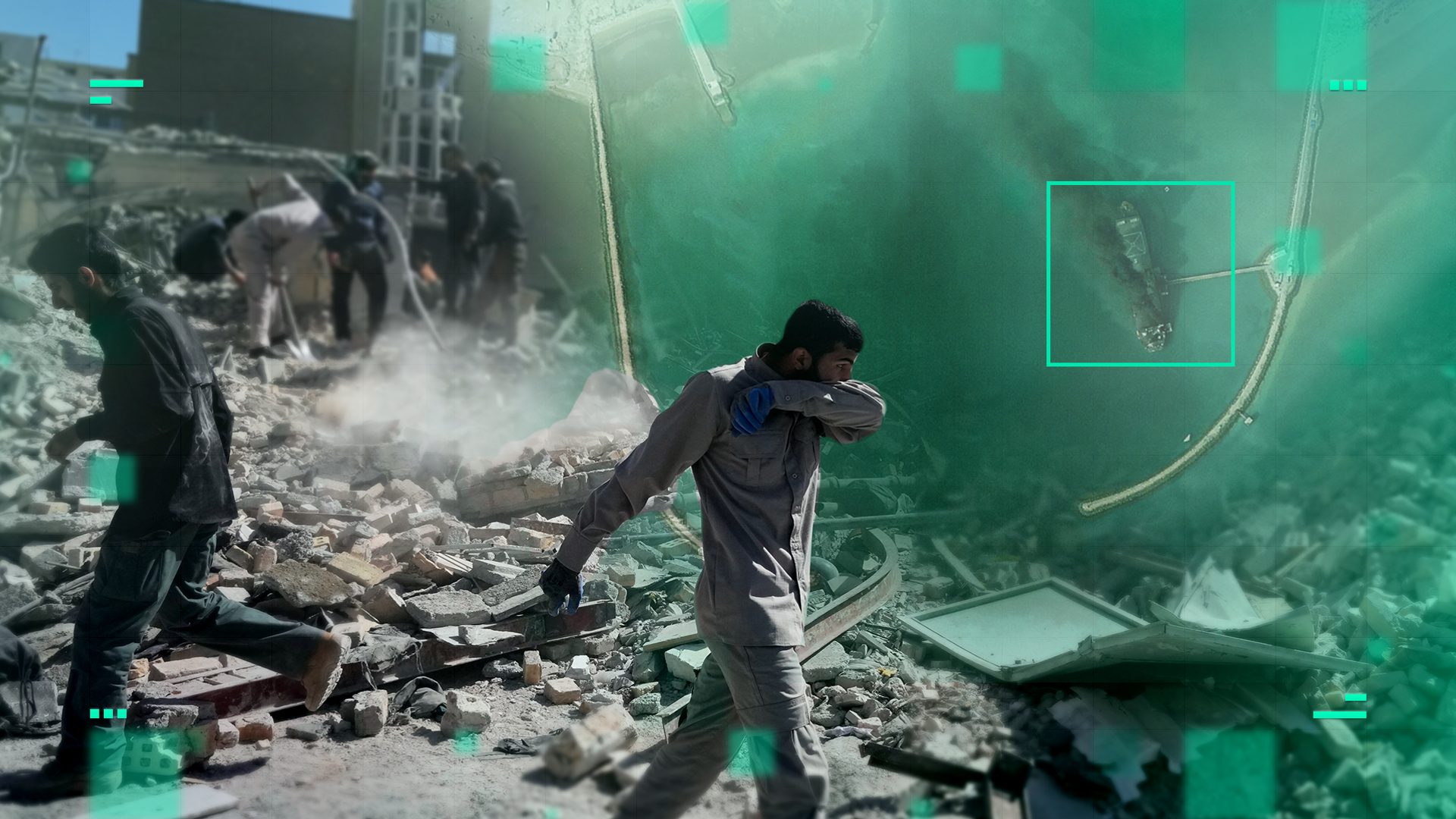
Iranian naval assets are currently being liquidated at a rate that suggests the IRGC Navy (IRGCN) will cease to exist as a organized force within the week. Satellite imagery from the Bandar Abbas port shows catastrophic damage to the IRIS Kurdistan and multiple fast-attack craft docks. While the regime has attempted to use sea mines and sporadic anti-ship missile fire to harass maritime traffic, their ability to maintain a sustained blockade is gone.
Strategic Asset Attrition Table
| Asset Category | Pre-Strike Estimated Strength | Current Status (March 3, 2026) |
|---|---|---|
| S-300 / Bavar-373 | 32+ Batteries | 85% Non-Functional / Destroyed |
| Mobile TELs (Missiles) | 400+ Units | ~200 Units Remaining (Heavily Degraded) |
| Drones (Shahed-series) | Thousands | High Usage; Manufacturing Sites Targeted |
| Major Surface Vessels | 12 Frigates/Corvettes | 4 Sunk or Combat Ineffective |
The "asymmetric" naval strategy—using swarms of small boats to overwhelm larger destroyers—requires a level of command and control that has been severed. US B-1B Lancer bombers are now operating in corridors previously considered high-threat, a move that signals the Pentagon's total confidence that the Iranian SAM umbrella has folded.
The Fall of the Proxy Anchor
Beyond the borders of Iran, the "Axis of Resistance" is undergoing a violent decoupling. For decades, Tehran used Hezbollah in Lebanon, the Houthis in Yemen, and various militias in Iraq as forward defense outposts. The logic was simple: if you strike Tehran, Tel Aviv and Riyadh will burn.
However, the internal decapitation of the IRGC leadership—including the reported deaths of the Army Chief of Staff and several high-ranking IRGC commanders in the opening days of March—has left these proxies without a central nervous system. Hezbollah, already reeling from the loss of Hassan Nasrallah in 2024 and subsequent Israeli incursions into Southern Lebanon, is no longer the disciplined military organization it once was. It is now a localized insurgency with a broken supply line.
The Houthis remain the most active "outlier," continuing to launch drones toward US assets in the Red Sea and Djibouti. Yet, even here, the lack of Iranian intelligence and targeting data has turned their "precision" strikes into blind volleys. The activation of Israel’s Iron Beam laser system has further neutralized the cost-benefit ratio of these drone swarms, destroying low-cost projectiles with even lower-cost light pulses.
Hardened Sites and the Nuclear Reality
While the surface-level military assets are being swept away, the regime's "crown jewels"—the nuclear facilities at Natanz and Fordow—remain the most complex challenge. These are not just buildings; they are subterranean fortresses carved into mountains.
Recent strikes have focused on the Taleghan 2 facility in Parchin, a site long suspected of housing nuclear-related high-explosive testing. While Israel has historically been pressured to avoid these sites, the "gloves off" nature of Operation Epic Fury suggests a shift in policy. The goal appears to be the destruction of the planetary mixers and specialized equipment required for solid-propellant ballistic missiles and nuclear warhead development.
Taking out a mountain-shielded enrichment hall requires a sustained campaign of "bunker buster" munitions, a task the US Air Force is currently undertaking. This is not a "one and done" raid like the 1981 strike on Osirak. This is a siege.
The Domestic Reckoning
The most overlooked factor in this conflict is not a missile system, but the Iranian people. The regime is fighting a two-front war: one against the F-35s overhead, and another against a population that has reached a breaking point.
Economic collapse, combined with the visible failure of the IRGC to protect the nation's sovereignty, has created a vacuum. In January 2026, the regime reportedly killed 40,000 protesters in a desperate bid to maintain order. Now, as the security apparatus is targeted from the air, that grip is slipping. The IRGC Sarallah Headquarters in Tehran, responsible for the security of the capital, was struck on March 1. When the men tasked with suppressing the people are themselves hiding in bunkers, the dynamic of the street changes.
The leadership council formed to replace the Supreme Leader is a fragile coalition of hardliners who are already blaming each other for the military catastrophe. This internal friction is perhaps the most "lethal" weapon currently deployed against the Islamic Republic.
The military mapping of this war shows more than just craters and wreckage. It shows the end of an era of Iranian regional hegemony. The "shield" was largely a facade of aging Russian tech and proxy bravado. Once the veneer of invincibility was pierced, the entire structure began to collapse with shocking speed. The question is no longer if the regime will lose its military teeth, but what will be left of the state when the smoke finally clears over Tehran.
Would you like me to analyze the specific impact of the Iron Beam laser system on the Houthi drone campaign in the Red Sea?


