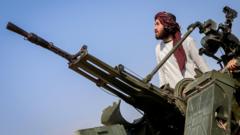
The ink on the map was dry long before the blood on the ground ever began to spill. To understand why two neighbors, bound by faith and a shared mountain range, find themselves locked in a cycle of skirmishes and bitter rhetoric, you have to look at a map drawn by a man who didn't plan on staying.
In 1893, Sir Mortimer Durand sat across from Emir Abdur Rahman Khan. With a few strokes of a pen, he sliced through the heart of the Pashtun homelands, creating a 2,640-kilometer border known as the Durand Line. It was a colonial convenience, a "buffer zone" designed to protect British India from Russian expansion. But for the people living there, it was an amputation. Families found their grazing lands in one country and their wells in another. Brothers became citizens of different flags overnight.
The British eventually left. The line remained.
The Ghost of 1893
Today, the Durand Line is the primary fracture point between Afghanistan and Pakistan. For Kabul, the line has never been an official border. They view it as a temporary colonial imposition that expired decades ago. For Islamabad, it is a sovereign, non-negotiable frontier. This isn't just a legal disagreement; it is an identity crisis.
Imagine a man named Gul. He is a hypothetical merchant in the border town of Chaman. For generations, his family moved freely between Kandahar and Quetta. To Gul, the border is a nuisance, a fence that grew out of the dirt to stop him from visiting his cousins. When Pakistan began a massive project to fence the entire length of the border—complete with surveillance tech and forts—they weren't just securing a perimeter. They were slicing through Gul’s reality.
Pakistan argues the fence is a necessity for national security. They point to the porous nature of the mountains, which has allowed militants to slide back and forth like shadows. From Islamabad’s perspective, the "open" border is a sieve through which instability pours. They want a hard stop. A clear wall. A definitive "this is us, and that is you."
The Shelter That Became a Shadow
The relationship isn't just about geography; it’s about a complex, often toxic, interdependence. During the Soviet-Afghan War in the 1980s, Pakistan became the staging ground for the Mujahideen. Millions of Afghan refugees fled across the line, seeking safety in Peshawar and beyond. Pakistan provided the soil; the world provided the weapons.
But hospitality has a shelf life.
Over the decades, the "strategic depth" Pakistan sought—a friendly government in Kabul that wouldn't align with India—turned into a strategic nightmare. The groups that were once assets became liabilities. The rise of the Tehrik-i-Taliban Pakistan (TTP), a militant group that fights the Pakistani state while seeking shelter in Afghan territory, has brought the two nations to the brink of a larger conflict.
When the Taliban retook Kabul in 2021, many in Islamabad breathed a sigh of relief, expecting a grateful ally. Instead, they found a neighbor that remained fiercely independent. The Afghan Taliban may share an ideology with their Pakistani counterparts, but they share a bloodline and a history with the land. They have refused to recognize the Durand Line just as stubbornly as any secular Afghan government before them.
The Weight of Three Million Lives
The tension isn't just felt in the halls of power or the mountain outposts. It is felt in the camps. Recently, Pakistan initiated a massive campaign to deport "undocumented" Afghans—people who have lived in Karachi or Lahore for forty years.
Consider a young woman, let's call her Laila. She was born in a dusty camp outside Islamabad. She speaks Urdu better than Pashto. She has never seen the jagged peaks of the Hindu Kush. Suddenly, she is told she is an "illegal." She is loaded onto a truck and sent toward a "home" she does not know, a country currently grappling with a shattered economy and severe restrictions on women's rights.
The deportation is a lever. Pakistan uses the refugees as a pressure point to force the Afghan government to crack down on militants. Kabul responds with defiance, or silence. Meanwhile, Laila sits in the back of a truck, watching the only home she has ever known disappear in a cloud of exhaust.
The numbers are staggering. Over half a million people were pushed back across the border in the final months of 2023 alone. These aren't just statistics; they are human beings used as currency in a geopolitical poker game.
The India Factor
If the Durand Line is the wound, India is the salt. Pakistan’s foreign policy is often a mirror held up to its rivalry with New Delhi. The fear of being caught in a "nutcracker" between a hostile India to the east and a pro-India Afghanistan to the west has driven decades of Pakistani intervention in Afghan affairs.
When an Afghan official visits New Delhi, alarm bells ring in Islamabad. When Pakistan builds a new fort on the border, Kabul cries foul, claiming an invasion of sovereignty. It is a three-way psychological war where the stakes are measured in nuclear capabilities and regional hegemony.
The Sound of the Gate Closing
The skirmishes at the crossings—places like Torkham and Chaman—often start over small things. A disagreement over a visa. A shovel hit against a fence post. But within minutes, the heavy artillery comes out. The gates close.
When the gates close, the tomatoes rot in the trucks. The medicine doesn't reach the clinics. The student misses her exam. The border isn't just a line on a map; it is a valve that controls the lifeblood of the region.
The tragedy is that the people on both sides of the wire share almost everything. They share the same poets. They eat the same naan. They pray toward the same Kaaba. Yet, they are separated by a ghost. Sir Mortimer Durand is long dead, his empire a memory, but his ink has turned into a wall of iron and suspicion.
There is no easy fix because the dispute isn't about where the border should be. It is about what the border represents. To one, it is the definition of a nation. To the other, it is the denial of a people.
As long as that line is viewed as a scar rather than a bridge, the mountains will continue to echo with the sound of gunfire. The dust will settle on the trucks, the refugees will wait in the cold, and the map will remain a lie that everyone is forced to live.
The sun sets over the Khyber Pass, casting long, jagged shadows that ignore the fences and the guards. The light doesn't see the border. It only sees the land, indifferent to the men who try to own it with ink and lead.