The global energy market currently operates under a "conflict premium" that is fundamentally mispriced because it relies on historical templates of state-on-state conventional war rather than the modern reality of iterative, asymmetric infrastructure attrition. When Israel and Iran shift from proxy engagements to direct kinetic strikes on energy assets, they are not merely destroying physical barrels; they are reconfiguring the risk-weighted cost of every British Thermal Unit (BTU) moving through the Strait of Hormuz and the Eastern Mediterranean. This analysis deconstructs the structural mechanics of this escalation, moving beyond headlines to examine the specific cost functions, supply chain vulnerabilities, and the technological delta between offensive precision and defensive saturation.
The Triad of Infrastructure Vulnerability
To quantify the impact of the current escalation, one must categorize energy infrastructure into three distinct layers of vulnerability. Each layer carries a different recovery time objective (RTO) and a different impact on global spot prices.
1. Extraction and Upstream Assets
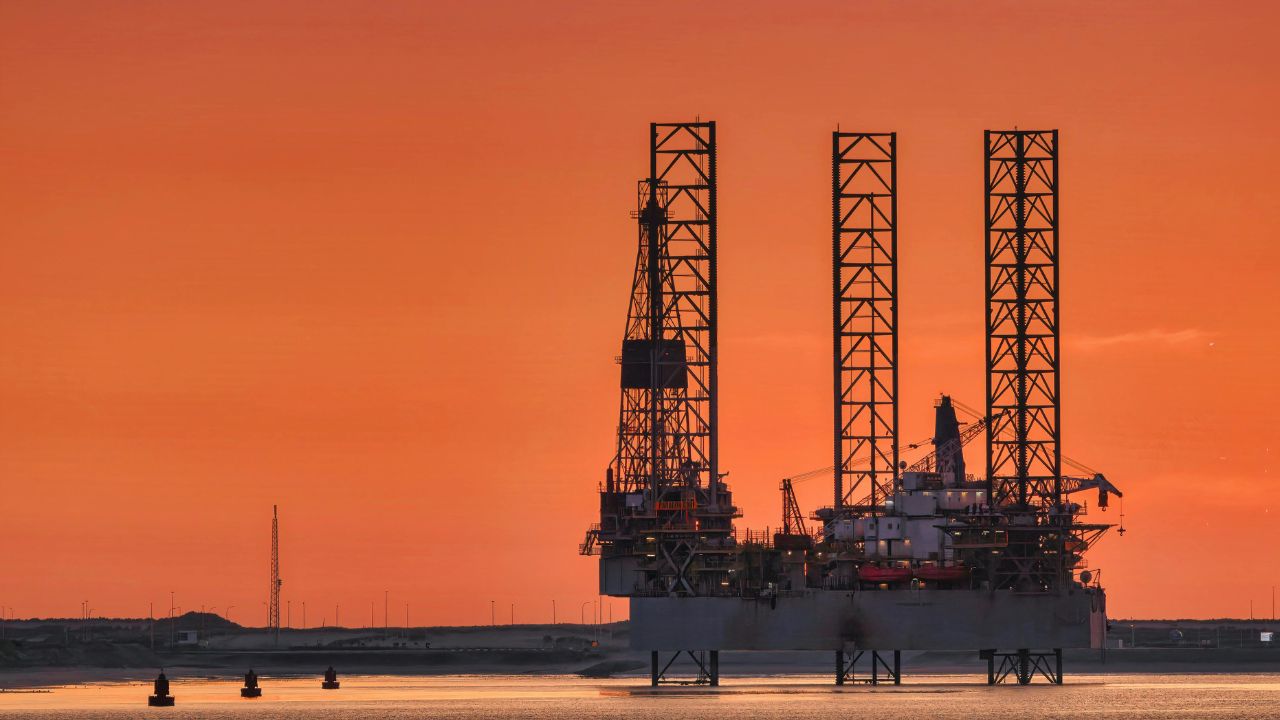
These include offshore gas platforms like Israel’s Leviathan and Karish fields, or Iran’s South Pars complex. These are high-value, fixed-coordinate targets. A single successful strike here does not just stop flow; it introduces a "reinsurance vacuum." When an offshore rig is hit, the cost of insuring nearby assets in the same basin rises exponentially, often reaching a threshold where operation becomes economically non-viable regardless of physical damage.
2. Processing and Midstream Bottlenecks
Refineries and desalination plants—which are critical for oil injection and local stability—represent the highest complexity in the system. Replacing a custom-engineered hydrocracker or a massive distillation column is a multi-year procurement challenge. Iran’s Abadan refinery or Israel’s Bazan Group facilities are nodes where a relatively low-cost loitering munition can cause a multi-billion dollar disruption in value-added product output (diesel, jet fuel, gasoline).
3. Distribution and Transit Choke Points
This is the most sensitive layer for global price discovery. The Strait of Hormuz facilitates the passage of approximately 20% of the world's liquid petroleum consumption. The escalation logic here is not about total closure—which would be an act of economic suicide for the region—but about "friction-based deterrence." By increasing the perceived risk of transit, actors force a rerouting of tankers, adding 10 to 15 days to voyage times and spiking Worldscale shipping rates.
The Economics of Asymmetric Attrition
The core of the current Israel-Iran friction is an imbalance in the "Cost-per-Kill" ratio. This ratio determines the long-term sustainability of a defensive posture.
Israel utilizes a multi-tiered defense system (Iron Dome, David’s Sling, Arrow). The interceptor missiles for these systems cost between $50,000 and $3.5 million per unit. Conversely, the Iranian-made Shahed-series loitering munitions or basic cruise missiles often cost between $20,000 and $150,000.
This creates a Negative Attrition Loop:
- The Aggressor wins by forcing the defender to deplete expensive, limited inventories of interceptors.
- The Defender wins tactically by preventing the hit, but loses strategically through fiscal exhaustion and industrial lead-time constraints for interceptor replenishment.
- The Market reacts to the depletion of the defender's "magazine depth." Once a defender’s interceptor stocks drop below a certain threshold, the probability of a "leaking" strike on a refinery increases, causing a non-linear jump in oil volatility indices (VIX).
The Brent-WTI Spread and Geopolitical Decoupling
The escalation impacts different benchmarks with varying intensity. Brent crude, as the international waterborne benchmark, absorbs the "Hormuz Risk" immediately. WTI (West Texas Intermediate) remains somewhat insulated due to US domestic production, but the decoupling is limited by the global arbitrage mechanism.
If Iranian exports (roughly 1.5 to 1.8 million barrels per day) are removed from the market via strikes on the Kharg Island terminal, the immediate deficit is not the primary driver of the price spike. The driver is the Preemptive Replacement Cost. If China, the primary buyer of Iranian crude, is forced to compete for Iraqi or Saudi barrels on the open market to replace lost Iranian supply, the resulting bidding war creates a price floor that persists long after the physical fire is extinguished.
Precision Engineering vs. Saturation Tactics
The shift in energy warfare is defined by the transition from "dumb" carpet bombing to "surgical" disruption. An analyst must look at the specific components targeted:
- SCADA Systems and Cyber-Kinetic Integration: Strikes are increasingly preceded by cyber-attacks on Supervisory Control and Data Acquisition (SCADA) systems. By disabling the pressure sensors or emergency shut-off valves via code, a physical strike can cause maximum "cascading failure" within a pipeline network.
- Electricity-Water-Energy Nexus: In the Middle East, energy is required to produce water (desalination). A strike on an Iranian power plant or an Israeli desalination facility creates a secondary humanitarian and economic crisis that forces the state to divert oil and gas from export markets to domestic survival, effectively tightening global supply without hitting a single oil well.
The Strategic Failure of "Maximum Pressure" via Kinetic Means
History suggests that kinetic strikes on energy infrastructure rarely achieve the intended political capitulation. Instead, they trigger a "Hardening Response."
Iran has spent decades decentralizing its energy grid and developing "ghost fleet" logistics to bypass sanctions and physical blockades. Israel has accelerated its "Gas-to-Power" transition, moving toward redundant subsea infrastructure. The result is a region where the energy infrastructure is becoming more resilient, but the cost of maintaining that resilience is being passed directly to the global consumer.
The Liquefied Natural Gas (LNG) Variable
While oil dominates the headlines, the vulnerability of the LNG supply chain is arguably more critical for European and Asian energy security. The Eastern Mediterranean gas fields are interconnected via a complex web of pipelines involving Egypt, Jordan, and Cyprus.
A "Kinetic Interruption" in this region doesn't just affect local power; it disrupts the EU's strategy to diversify away from Russian molecules. If the Leviathan field goes offline, Egypt loses the ability to liquefy and export gas to Europe. This creates a supply-side shock in the Dutch TTF (Title Transfer Facility) market, which is far more sensitive to marginal disruptions than the global oil market.
Calculation of the Escalation Premium
To value a company or a commodity in this environment, one must apply a Geopolitical Probability Weighting ($P_g$) to the standard discounted cash flow (DCF) models.
$$Value = \sum \frac{CF_t \times (1 - P_g)}{(1 + r)^t}$$
In this formula, $P_g$ is no longer a static "tail risk" but a dynamic variable tied to the frequency of drone incursions and the rhetorical escalation between Jerusalem and Tehran. When $P_g$ increases, the discount rate ($r$) must also rise to account for the increased cost of capital in a high-risk zone.
Current market data suggests that for every 10% increase in regional kinetic activity, Brent crude carries an additional $3 to $5 "security tax" per barrel. This is not driven by scarcity—global inventories are currently adequate—but by the cost of hedging against a "Black Swan" event, such as a successful hit on the Abqaiq processing facility or the closure of the Bab el-Mandeb strait.
The Operational Pivot for Global Energy Firms
Energy majors and institutional investors must move beyond simple "geopolitical monitoring" and toward active "infrastructure hardening" and "supply-chain elasticity."
The second-order effect of the Israel-Iran escalation is the rapid "onshoring" of energy security. Nations are no longer prioritizing the cheapest BTU; they are prioritizing the most defensible BTU. This means:
- Investment in Small Modular Reactors (SMRs): Reducing the footprint of power generation to make it harder to target.
- Floating LNG (FLNG): Utilizing mobile liquefaction units that can be moved out of the range of shore-based missiles.
- Hardened Subsea Storage: Moving storage tanks from the surface to the seabed to mitigate the impact of aerial drone strikes.
The strategic play is to identify the entities providing these "hardening" technologies. The conflict between Israel and Iran has proven that the era of "peace-time energy efficiency" is over. We have entered the era of "fortress energy economics," where the value of an asset is determined as much by its anti-access/area denial (A2/AD) capabilities as by its geological reserves. Investors must reallocate capital toward midstream providers with redundant routing and toward defense contractors specializing in "point-defense" systems for industrial clusters. The volatility is not a temporary spike; it is the new baseline for an energy market decoupled from stable geography.
Would you like me to analyze the specific impact of these infrastructure strikes on the Mediterranean LNG sub-sector?