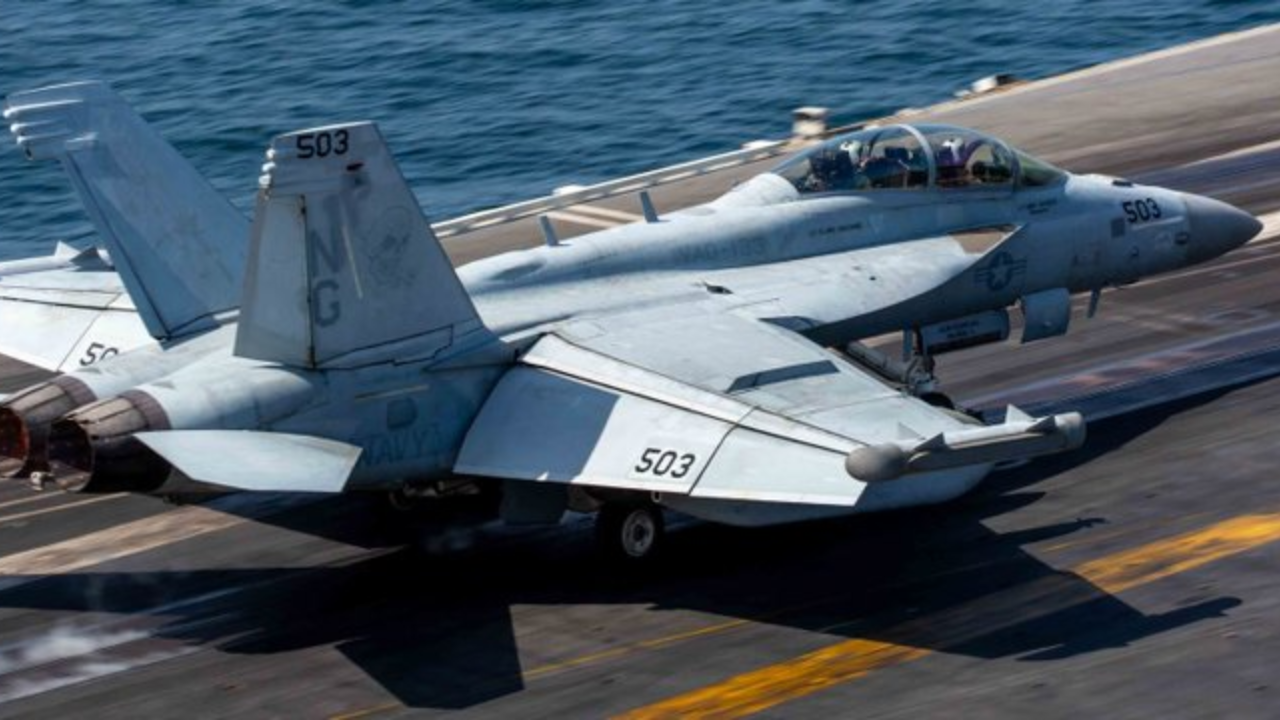
The transition from shadow warfare to direct kinetic exchange between Israel and Iran has redefined the cost-benefit analysis of Middle Eastern escalation. While media narratives often focus on the spectacle of explosions, the strategic reality is dictated by a specific hierarchy of aerospace technology: the integration of low-cost attrition systems with high-end precision standoff munitions. This engagement was not a singular event but a stress test for two competing military philosophies: Iran’s "Mass Over Precision" saturation doctrine and the Western-Israeli "Layered Interception" model.
To understand the mechanics of these strikes, one must deconstruct the ordnance used not as individual weapons, but as components of a multi-stage kill chain.
The Triad of Offensive Architecture
Modern long-range strikes against integrated air defense systems (IADS) operate on a three-tier logic. Each tier serves a distinct functional purpose within the mission profile.
1. The Attrition Layer: Shahed-Series One-Way Attack UAVs
The Iranian Shahed-131 and 136 serve as "active decoys" or "saturation agents." These are not meant to strike high-value targets with high probability. Their primary function is the exhaustion of the defender’s interceptor inventory.
- Unit Cost vs. Interception Cost: A Shahed-136 costs approximately $20,000 to $50,000. The Tamir interceptors of Israel’s Iron Dome cost roughly $50,000, while the Stunner (David’s Sling) or Arrow missiles cost between $1 million and $3.5 million per shot.
- Cognitive Overload: By launching hundreds of slow-moving drones, the attacker forces the defender’s C4I (Command, Control, Communications, Computers, and Intelligence) systems to track and categorize hundreds of tracks, creating "noise" that masks more dangerous incoming threats.
2. The Compression Layer: Paveh and Soumar Cruise Missiles
Cruise missiles represent the second tier. Unlike the drones, these are jet-powered and travel at high subsonic speeds. They utilize low-altitude flight paths to stay below the radar horizon, hugging terrain to minimize the detection window. In the April and October exchanges, these were utilized to "compress" the defender's reaction time. While the drones provided the volume, the cruise missiles provided the technical challenge of low-observable, high-speed approach.
3. The Precision Standoff Layer: Rampage and Blue Sparrow
The Israeli response utilized air-launched ballistic missiles (ALBMs), specifically the "Rampage" and the "Blue Sparrow" (a target missile modified for kinetic strikes). This is where the technical gap becomes most apparent. Unlike ground-launched missiles, ALBMs are released from fighter jets (F-15I or F-16I) already at high altitude and velocity.
- Kinetic Energy Advantage: Starting at Mach 0.9 and 30,000 feet gives the missile a massive energy boost, extending range and terminal velocity.
- The S-300 Radar Target: Reports indicate that the Israeli strike on Isfahan specifically targeted the 30N6E "Flap Lid" engagement radar of an S-300PMU2 battery. By neutralizing the "eyes" of the system with a long-range standoff weapon (likely fired from outside Iranian airspace), the entire battery was rendered combat-ineffective without the need for a massive bomber formation.
Defensive Calculus: The Physics of Interception
The success of the Israeli-led coalition (including the US, UK, and regional partners) in neutralizing 99% of the April 13th Iranian barrage was not solely a matter of better technology. It was a triumph of Geospatial Depth.
The Geography of Early Warning
Iran and Israel are separated by roughly 1,000 kilometers of third-party airspace (Iraq, Jordan, Saudi Arabia). This distance is the defender’s greatest asset.
- Detection Window: A Shahed drone taking 6–9 hours to transit this distance allows for an optimized "Engagement Sequence."
- The Outer Ring: US and UK fighter jets, supported by E-3 Sentry AWACS, can intercept drones over Iraq and Syria using AIM-120 AMRAAMs or even internal cannons. This thins the herd before the targets reach the "Inner Ring" of Israel's specialized missile defenses.
The Arrow-3 and Exo-atmospheric Engagement
The most technically rigorous aspect of these exchanges is the use of the Arrow-3 system. This is one of the few systems globally capable of "exo-atmospheric" interception.
- The Mechanism: Instead of using a blast-fragmentation warhead, the Arrow-3 uses a "hit-to-kill" kinetic interceptor. It leaves the Earth's atmosphere to collide directly with an incoming Medium-Range Ballistic Missile (MRBM) during its mid-course phase.
- The Benefit: By hitting the missile in space, any chemical or nuclear payload is dispersed far above the biosphere, and the debris is subjected to atmospheric re-entry burn-up.
The Strategic Bottleneck: Logistics and Reload Rates
A critical flaw in the analysis of these strikes is the assumption that defensive success is sustainable. The primary constraint is not technology, but Industrial Capacity.
The "Magazine Depth" problem is the most significant vulnerability for the Israel-US alliance.
- Production Lead Times: A sophisticated interceptor like the SM-3 (used by US Navy Aegis destroyers) or the Arrow-2/3 takes months, if not years, to manufacture.
- The Depletion Variable: If Iran can produce 1,000 Shahed drones for the price of one or two Arrow interceptors, they are winning the economic war of attrition even if 100% of their drones are shot down. The defender eventually runs out of "silver bullets" before the attacker runs out of "cheap arrows."
Precision vs. Mass: The Isfahan Case Study
The Israeli strike on the Isfahan airbase serves as a masterclass in "Economic Precision." While Iran launched over 300 assets to achieve minimal damage to the Nevatim airbase, Israel reportedly used a very small number of missiles to disable a critical radar node for Iran's most advanced air defense system.
This illustrates the Surgical Asymmetry of the conflict:
- Iran's Objective: To demonstrate the ability to penetrate Israeli airspace through sheer volume, forcing a massive expenditure of defensive resources and proving the "Iron Dome" is not a magic shield.
- Israel's Objective: To demonstrate that no Iranian asset is "unreachable" and that they can blind Iran's defenses with a fraction of the effort, signaling that a follow-up strike could be catastrophic.
The Electronic Warfare (EW) Dimension
Beyond kinetic impact, the "Invisible Front" of GPS spoofing and jamming dictated the flight paths of these weapons.
- GNSS Interference: During the strikes, widespread GPS jamming was reported across the Levant. Most modern drones rely on GPS for mid-course navigation.
- INS Redundancy: High-end systems like the Tomahawk or the Israeli Popeye use Inertial Navigation Systems (INS) and Terrain Contour Matching (TERCOM). These systems do not rely on satellites; they "read" the ground beneath them or use internal gyroscopes to calculate position. Cheap drones lacking these systems often veer off course or become easy prey for electronic "soft kill" measures that trick the drone into thinking it is elsewhere.
Structural Limitations of the Engagement
The current escalation cycle reveals three hard truths that both sides must now integrate into their doctrine:
- No Stealth is Absolute: While F-35I "Adir" jets provide a massive advantage, the saturation of the battlespace with high-frequency and passive radar makes "total invisibility" a myth. Stealth must be used in conjunction with standoff munitions.
- Proxies as Force Multipliers: The role of Hezbollah and the Houthis is to shorten the "Detection Window." A drone launched from Yemen or Lebanon gives the defender minutes, not hours, to react, nullifying the advantage of geographic depth.
- The Hypersonic Question: While Iran claimed the use of "Fattah" hypersonic missiles, evidence suggests these were likely high-speed maneuvering ballistic missiles. True hypersonic flight (sustained Mach 5+ with maneuverability) remains the next threshold that would fundamentally break current interception logic.
The immediate requirement for any regional actor is the transition from "Point Defense" (protecting specific bases) to "Area Denial" through the integration of Directed Energy Weapons. Systems like Israel's "Iron Beam" laser must move from testing to deployment to solve the cost-asymmetry of drone swarms. Until a photon-based defense (where the cost per shot is essentially the cost of electricity) is operational, the advantage remains with the side willing to manufacture the most low-cost "attrition" flight hours.
The strategic play now is not the acquisition of more interceptors, but the hardening of the industrial supply chain to ensure that magazine depth can withstand a multi-front saturation campaign lasting weeks rather than days.
Would you like me to analyze the specific supply chain bottlenecks for the production of the Arrow-3 interceptor compared to the Shahed-series drones?


