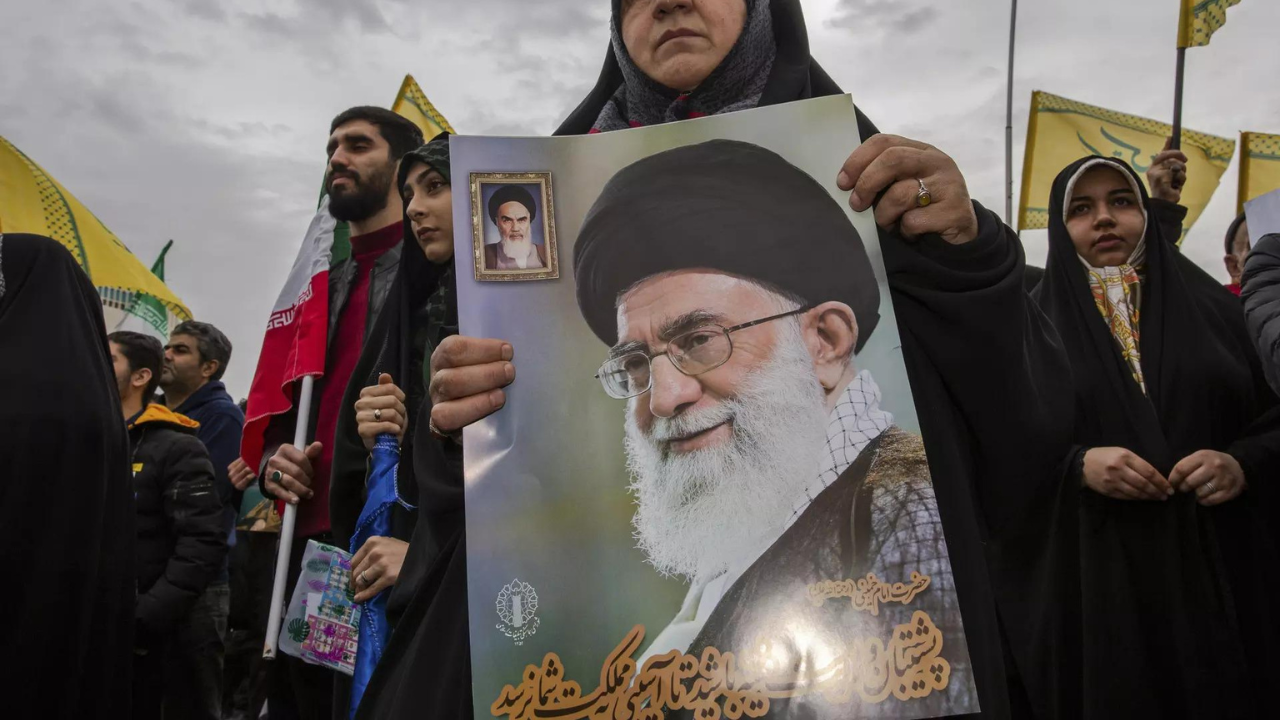
The death of Ayatollah Ali Khamenei isn't just a personnel change. It's a foundational shock to the Islamic Republic. For nearly 37 years, the man sitting at the top of the pyramid was the ultimate arbiter of all things Iranian. Now that he’s gone, the country is staring down a power vacuum that nobody really has a map for. You might hear people talk about "constitutional processes" or "legal procedures," but honestly? Those are just polite fictions used to dress up a brutal fight for survival behind closed doors.
When the dust settled on February 28, 2026, after the airstrikes, the regime didn't just lose its figurehead. It lost the only person capable of holding the disparate, warring factions of the state in a unified grip. Right now, there is an interim leadership council in charge—President Masoud Pezeshkian, Chief Justice Gholam-Hossein Mohseni-Ejei, and the cleric Alireza Arafi. Don't be fooled. This is a stopgap, not a solution. It’s a placeholder meant to keep the lights on while the real sharks decide who gets to inherit the throne.
The myth of the constitutional process
If you look at the Iranian constitution, it sounds straightforward. Article 111 says the Assembly of Experts should meet "as soon as possible" to pick a successor. This 88-member body is supposed to be the clerical engine room that vets and selects the Supreme Leader.
But let’s be real. The Assembly is a rubber-stamp institution. Its members are all vetted by the Guardian Council, which is itself controlled by the Supreme Leader’s office. You don't get a seat at that table unless you’re already part of the regime’s approved ideology. The idea that these 88 clerics are going to engage in a spirited, open debate about the best candidate for the nation is laughable. They’re scared, they’re exposed, and they’re looking for a signal from the only people who actually hold the keys: the Islamic Revolutionary Guard Corps.
The Assembly might hold the legal authority, but the IRGC holds the physical power. The Guards have spent decades building an economic and military empire that operates outside the reach of the elected government. They don't want a "reformer" who might try to dismantle their business interests, and they don't necessarily want a weak figurehead who can't keep the country from falling apart during a war. They want someone who understands that the survival of the regime depends on them.
The contenders in a crowded, dangerous room
Before we even talk about names, you have to realize that anyone who steps up is essentially putting a target on their own back. The succession list has been a closely guarded secret for years, a list of names drafted by a tiny committee of insiders who weren't even sure if they'd be alive to see the transition.
Mojtaba Khamenei
The son of the late leader. He’s the most obvious name that comes up in every conversation. He’s got the name, he’s got the institutional ties to the security apparatus, and he’s been in the inner circle his entire adult life. Critics point out he has never held high public office. In a normal country, that’s a disqualifier. In a theocratic autocracy, it might not matter. The fear here is that picking him looks too much like a monarchy, which is ironic considering the 1979 revolution was fought, at least in theory, to end one.
Alireza Arafi
A senior cleric who sits on the Guardian Council and heads the seminary system. If the regime wants to prioritize "clerical continuity"—basically signaling that the old system is still in charge—Arafi is their guy. He’s institutional, he’s predictable, and he’s deeply embedded in the religious establishment. But does he have the stomach for a fight with the military side of the house? Unlikely.
Gholam-Hossein Mohseni-Ejei
The judiciary chief and a current member of the interim council. He is the ultimate establishment insider. He’s been involved in the machinery of the state for decades. He knows where the bodies are buried. The problem? He’s a hardliner who embodies everything that protesters have been fighting against since 2022. If the goal is to stabilize the country, he might be seen as too radioactive to gain any legitimacy from the street.
The dark horses
There are names like Mohsen Qomi, who’s been an adviser to the late leader for years and understands the international relations side of the job better than most. Then there’s the wildcard: Hassan Khomeini, the grandson of the founder. He’s been pushed out of the inner circles, largely because he’s viewed as too moderate. If the regime ever reaches a point of total collapse and needs a "reconciliation" candidate to save the whole structure, he might be the only one they can turn to. It’s a long shot, but history is full of desperate turns like that.
Why the IRGC is the actual decider
You need to stop thinking about this as a religious decision. That was the dream of 1979. It’s not the reality of 2026. The IRGC has become a state within a state. They control the missile programs, the regional proxy network, and a massive portion of the domestic economy. Whoever gets the title of Supreme Leader is going to need the IRGC’s blessing to get anything done.
If the IRGC decides they want a certain candidate, they will get that candidate. They can threaten, bribe, or intimidate the members of the Assembly of Experts into voting the "right" way. The real question isn't "who is the best candidate?" It’s "who does the IRGC trust to keep them in power?" If they think a specific cleric will go soft on the West or cut a deal that hurts their bottom line, that person is finished before they even start.
The stability trap
The regime is currently playing a very dangerous game. They’re trying to look normal. They’re running the interim council, they’re talking about "constitutional paths," and they’re projecting an image of calm. But this is brittle. The moment they announce a successor, every faction that lost out in that process is going to start looking for a way to undermine the new guy.
If they pick someone weak, the IRGC might just bypass them and run the country directly. If they pick someone too strong, they risk a civil war within the clerical ranks. The "ideal" candidate doesn't exist. There is only the least dangerous choice for the survival of the current elite.
Dealing with the reality of the aftermath
So, what does this mean for the future? Don't expect a smooth handover. Expect a period of intense, opaque infighting. We’re likely to see more purges. We’re likely to see the interim council get squeezed by military commanders.
If you're watching this from the outside, look for who the state media starts boosting. Look for which clerics start making public appearances with the top military brass. These are the signals that the deal has been cut. Everything else is just noise.
The survival of the Islamic Republic as we know it depends on this transition. They’ve managed to hold it together for nearly 40 years through crises, wars, and sanctions. But they’ve never done this without the man who created the current system. They are flying blind, the cockpit is on fire, and they’re arguing over who gets to sit in the pilot’s seat.
Keep your eyes on the Assembly of Experts and listen for the silence from the IRGC. If you hear nothing, that’s when you know the fight is actually happening. When they finally announce a name, don't ask if the people like him. Ask who he owes. The answer to that question will tell you everything you need to know about where Iran is heading next.
Actionable steps if you're trying to track the fallout:
- Monitor state-affiliated media in Tehran for changes in the framing of key figures.
- Pay attention to who is granted the right to hold Friday prayers in major cities, as this remains a key indicator of who has the backing of the supreme office.
- Watch the stock market and local currency fluctuations for signs of internal panic among the regime’s business class.
- Follow the official statements from the Assembly of Experts for any language shifts regarding the interim council’s timeline; a delay here is a major red flag for internal friction.
The transition is a process of survival, and right now, the only certainty is that the old rules no longer apply.


