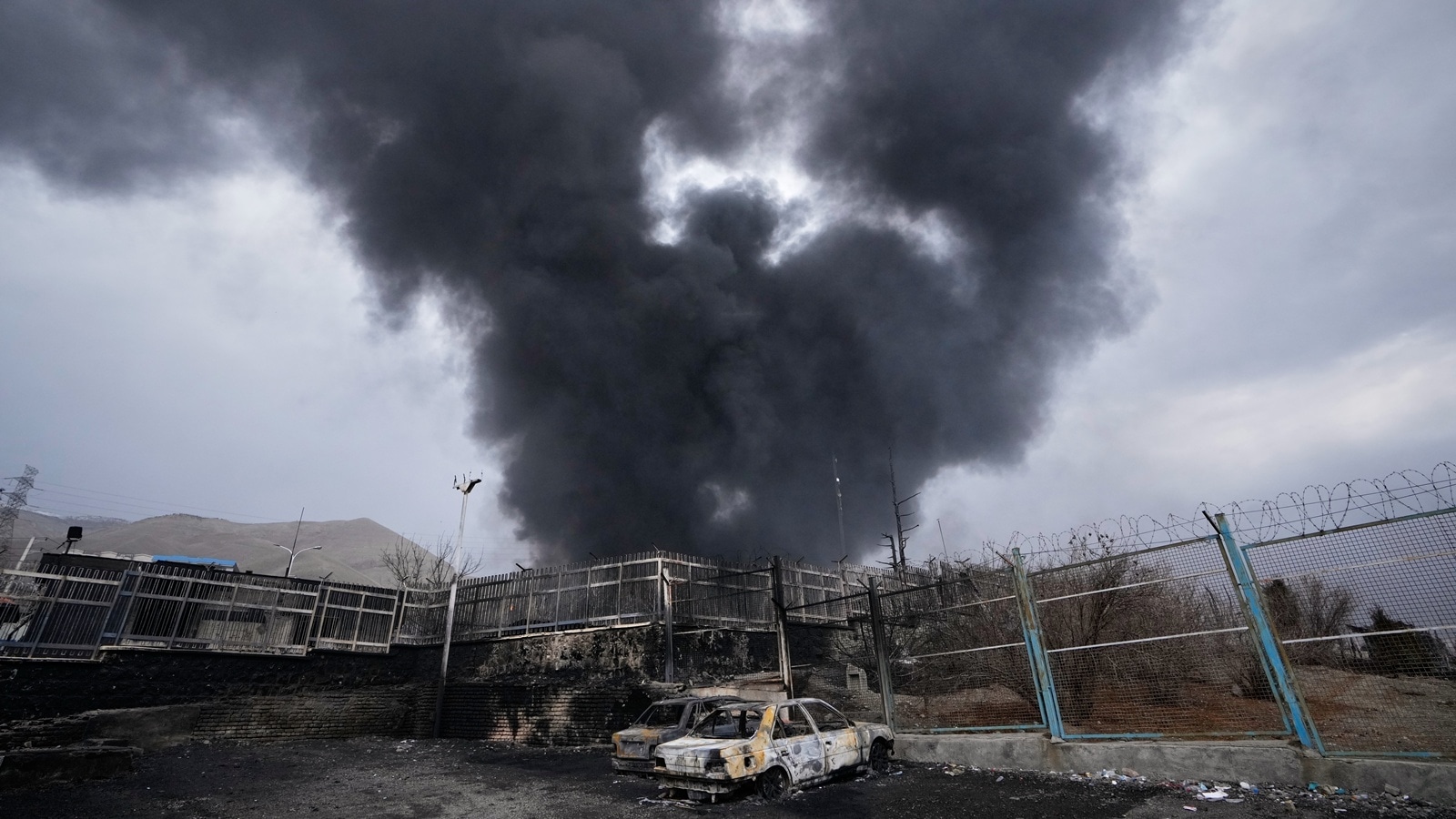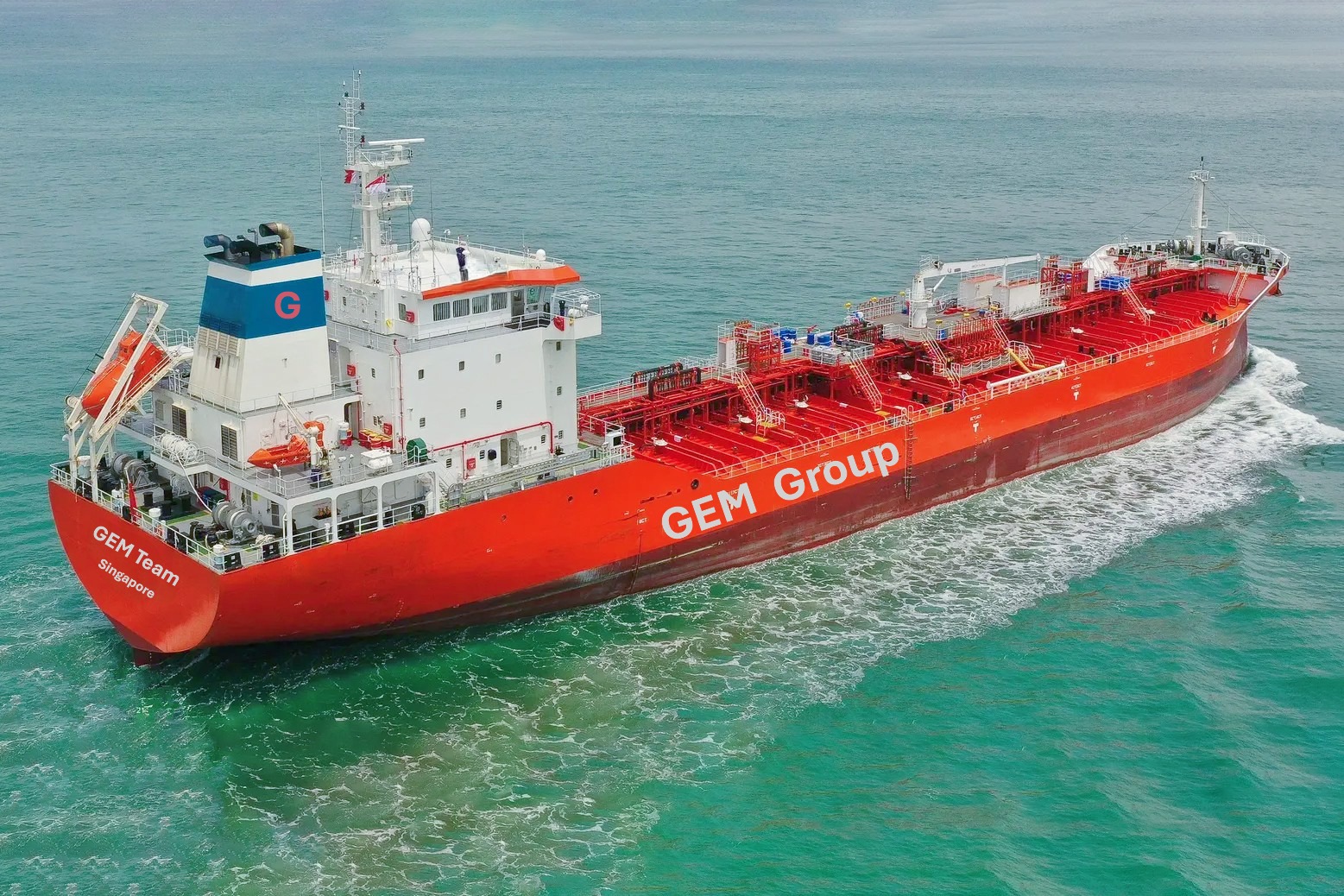
The headlines are bleeding with the standard narrative. A missile hits a tanker. A sailor dies. The world gasps at the "senseless violence" in the Persian Gulf. Politicians issue stern condemnations while the media pivots to the human interest angle of a grieving family in India. It is a predictable, hollow cycle that completely ignores the cold mechanics of global trade.
If you think this is a story about a "random attack" or a "security failure," you are missing the point entirely. This isn't a tragedy. It is a line item.
The maritime industry has operated on a logic of calculated risk for centuries, yet every time a hull is breached near the Strait of Hormuz, we pretend the rules of the game have changed. They haven't. We are simply seeing the physical manifestation of a digital and geopolitical ledger. To understand why these attacks keep happening—and why "securing" the seas is a fool’s errand—you have to stop looking at the flags on the ships and start looking at the insurance premiums on the desk.
The Myth of the Innocent Bystander
Mainstream reporting loves the "innocent vessel" trope. They paint a picture of a US-owned tanker minding its own business before being targeted by "bad actors." This perspective is intellectually lazy.
In the shipping world, there is no such thing as an innocent bystander. Every vessel moving through a high-risk area (HRA) is a participant in a high-stakes financial gamble. When a company sails a tanker through the Gulf of Oman, they aren't hoping for safety; they are betting on the statistical probability of transit against the skyrocketing cost of War Risk Insurance.
I have watched logistics firms burn through seven-figure budgets just to shave forty-eight hours off a transit time. They know the risks. They calculate the "Expected Value" of a dead crew member or a ruptured hull. If the math says the profit exceeds the insurance deductible plus the reputational damage, the ship sails.
The Indian crew member who lost his life wasn't a victim of a "security lapse." He was a casualty of a business model that treats human capital as a recurring expense. If we actually cared about maritime safety, we would stop talking about "patrols" and start talking about the fundamental flaws in how we flag and protect commercial assets.
Flags of Convenience are the Original Ghosting
Everyone points at the US ownership of the tanker as the reason for the attack. That is a surface-level take. The real rot lies in the "Flag of Convenience" (FOC) system. Most of these tankers fly the flags of Panama, Liberia, or the Marshall Islands to dodge taxes, labor laws, and safety regulations.
You cannot demand the protection of a superpower's navy while hiding your profits in a Panamanian shell company.
This creates a massive "Security Freelifting" problem. The US Navy and its allies spend billions of taxpayer dollars to protect ships that contribute zero to the national treasury and actively circumvent national labor standards. When an attack happens, the owners scream for "intervention," but when the tax bill comes, they are nowhere to be found.
The contrarian truth? If you want protection, you should fly the flag of the nation you expect to bleed for you. If you choose a flag of convenience for the profit, you should accept the risk as part of your overhead. The current system subsidizes corporate recklessness with the lives of sailors from developing nations.
Maritime Security is a Tech Grift
The "People Also Ask" sections of the internet are flooded with queries about why we can't just use more drones or better AI to protect these ships.
As someone who has sat through countless pitches for "automated maritime defense suites," I can tell you: it's mostly theater. You can bolt all the 360-degree thermal cameras and AI-driven threat detection software you want onto a 300-meter VLCC (Very Large Crude Carrier). It doesn't matter.
A $50,000 drone or a $200,000 anti-ship missile will always win the cost-curve war against a $100 million tanker.
The industry is currently obsessed with "Digital Twins" and "Real-time Risk Assessment." These are buzzwords sold to boardrooms to make them feel like they are doing something. In reality, a missile doesn't care about your data visualization dashboard. Kinetic warfare is the ultimate disruptor of digital arrogance. We are trying to solve a 13th-century problem—piracy and privateering—with 21st-century software, and we are losing because we refuse to acknowledge that some problems only have physical solutions.
The Insurance Paradox
We are told that these attacks threaten the global economy. "Oil prices will spike!" the pundits scream.
Look at the data. The market has become remarkably resilient to these "shocks." Why? Because the volatility is already baked into the price of the barrel.
The real winners here aren't the oil companies or the "terrorists." It’s the London insurance market. Every time a tanker is hit, premiums for the entire region reset at a higher floor.
- Stage 1: Attack occurs.
- Stage 2: Media creates a frenzy.
- Stage 3: Underwriters declare a "Joint War Committee" (JWC) area expansion.
- Stage 4: Every ship in the region pays a "war risk" surcharge.
The attack near Iraq isn't an existential threat to trade; it’s a massive revenue generator for the financial institutions that "manage" the risk. If the seas were perfectly safe, the maritime insurance industry would shrink by 40%. There is a perverse incentive to maintain a baseline level of "controlled chaos."
Stop Trying to "Secure" the Seas
The common consensus is that we need more "multilateral cooperation" and "increased naval presence." This is the wrong question. We shouldn't be asking how to make the seas safer; we should be asking why we are still using 20th-century supply chains in a post-globalization world.
The reliance on narrow chokepoints like the Strait of Hormuz is a choice. We have the technology to build pipelines that bypass these areas. We have the ability to decentralize energy production. But we don't, because the current "fragile" system allows for massive speculative profits.
If you want to protect sailors, you don't send a destroyer. You move the oil through a pipe buried in the sand. But there’s no "trading volatility" in a pipeline. There’s no "war risk premium" in a fixed asset.
The Brutal Reality of the Merchant Mariner
We treat the crew like heroes in death and like "resources" in life. The 15 rescued sailors in this attack will likely be back on another hull within three months. They have to be. The global maritime labor market is designed to exploit the economic desperation of the Global South.
I’ve stood on the decks of these ships. They are floating warehouses, often poorly maintained and staffed by men who are overworked and underskilled for the technical demands of modern electronic warfare. To expect them to "defend" a vessel against a state-sponsored drone strike is absurd.
We are sending 19th-century labor to fight 21st-century proxy wars.
The Failure of Deterrence
Western military doctrine is obsessed with "deterrence." The idea is that if you hit back hard enough, the attacks will stop.
History proves this is a lie in the maritime domain. For every ship escorted, ten sail unprotected. For every missile battery destroyed on land, three more are hidden in the mountains. You cannot deter an adversary who is fighting an asymmetric war with zero-cost weapons.
The "status quo" of sending billion-dollar carrier groups to play cat-and-mouse with fiberglass speedboats is a massive misallocation of capital. It is the military equivalent of using a Ferrari to herd goats.
The Nuance of Ownership
The "US-owned" label is another distraction. In the age of private equity, "ownership" is a fluid concept. A ship might be owned by a Greek holding company, managed by a Singaporean firm, crewed by Indians and Filipinos, and chartered by a Chinese state-owned enterprise.
When the US media focuses on the "US-owned" aspect, they are trying to manufacture a nationalistic outrage that doesn't exist in the boardroom. The owners don't care about the American flag; they care about the American taxpayer-funded protection.
If this tanker were owned by a company that had to pay for its own private naval escorts, it wouldn't have been there. The "tragedy" only happens because we have socialized the risk of global shipping while privatizing the rewards.
Reject the Narrative
The next time you see a headline about a tanker attack, ignore the "breaking news" banners. Ignore the "security experts" on cable news who haven't stepped on a gangway in twenty years.
Instead, ask three questions:
- Who is collecting the insurance premium today?
- What flag was that ship flying three years ago?
- Why is a human being from a non-combatant nation dying for a barrel of oil that was hedged three months ago?
The "international community" isn't failing to protect the seas. It is succeeding at maintaining a profitable level of instability. The sailor who died wasn't a casualty of war. He was a casualty of an accounting error.
Accept the world as it is: a series of cold, hard transactions disguised as "geopolitical crises." The sea is not a highway; it is a casino. And the house always wins, whether the ship sinks or sails.
Stop mourning the "loss of security" and start questioning the "necessity of the risk."
Shipowners don't need your prayers. They need your silence so they can keep the premiums high and the taxes low.
Don't give it to them.