Stop calling every dark room with a strobe light "immersive."
The recent obsession with "The Arctic" or whatever campy, disturbing wilderness simulation currently occupying a converted warehouse in the Arts District isn't art. It’s a high-priced escape room for adults who have forgotten how to use their imaginations. Critics are tripping over themselves to praise the "bizarre" and "unsettling" nature of these shows, claiming they tap into some primal, frozen part of the human psyche.
They don't. They tap into your credit card and your desperate need for a new Instagram post that doesn't involve a brunch plate.
I’ve spent fifteen years inside the machinery of live production, from the grit of off-Broadway experimentalism to the bloated budgets of Las Vegas residencies. I’ve seen millions of dollars poured into "sensory experiences" that have the emotional depth of a puddle. The industry has fallen into a trap: substituting set dressing for substance.
The Myth of Presence
The current consensus is that "immersive" equals "better." The logic suggests that if you can touch the props and smell the fake pine needles, you are somehow more engaged with the narrative.
This is a fundamental misunderstanding of how human psychology interacts with story. Real immersion doesn't happen in the hands; it happens in the head. When you watch a masterclass performance in a traditional proscenium theater, you lose yourself because the emotional truth is so piercing that the physical world falls away.
In these sprawling L.A. Arctic spectacles, the physical world is all you have. You are constantly reminded of your own body as you shuffle through fake snow made of shredded plastic, trying not to bump into a stranger named Gary who is also wearing a parka he didn't need. You aren't "tapping into the wild." You are navigating a crowded hallway with better-than-average lighting.
The Cost of Camp
Critics love to use the word "campy" as a shield. If a performance is awkward, wooden, or nonsensical, they call it "camp" to signal they’re in on the joke.
But in the context of high-ticket immersive theater, camp is often just a lazy pivot for a lack of coherent direction. True camp, as defined by Susan Sontag, requires a certain "failed seriousness." It’s an aesthetic that loves the unnatural.
The "Arctic" trend in L.A. isn't failing at seriousness; it’s succeeding at marketing. It uses the "disturbing" label to create a false sense of edge. If you put a man in a polar bear mask and have him whisper nonsense in your ear, that isn't a deep dive into the subconscious. It’s a haunted house for people who think they’re too sophisticated for Knott’s Scary Farm.
Why Interaction is Actually Alienating
The biggest lie in the industry is that "audience agency" enhances the show.
"Choose your own path!" the brochures scream.
Here is the reality: when you give the audience the power to move, you destroy the creator's power to pace. Narrative is a controlled release of information. If I can wander off to look at a bookshelf while the main conflict is happening in the other room, I haven’t gained agency. I’ve lost the plot.
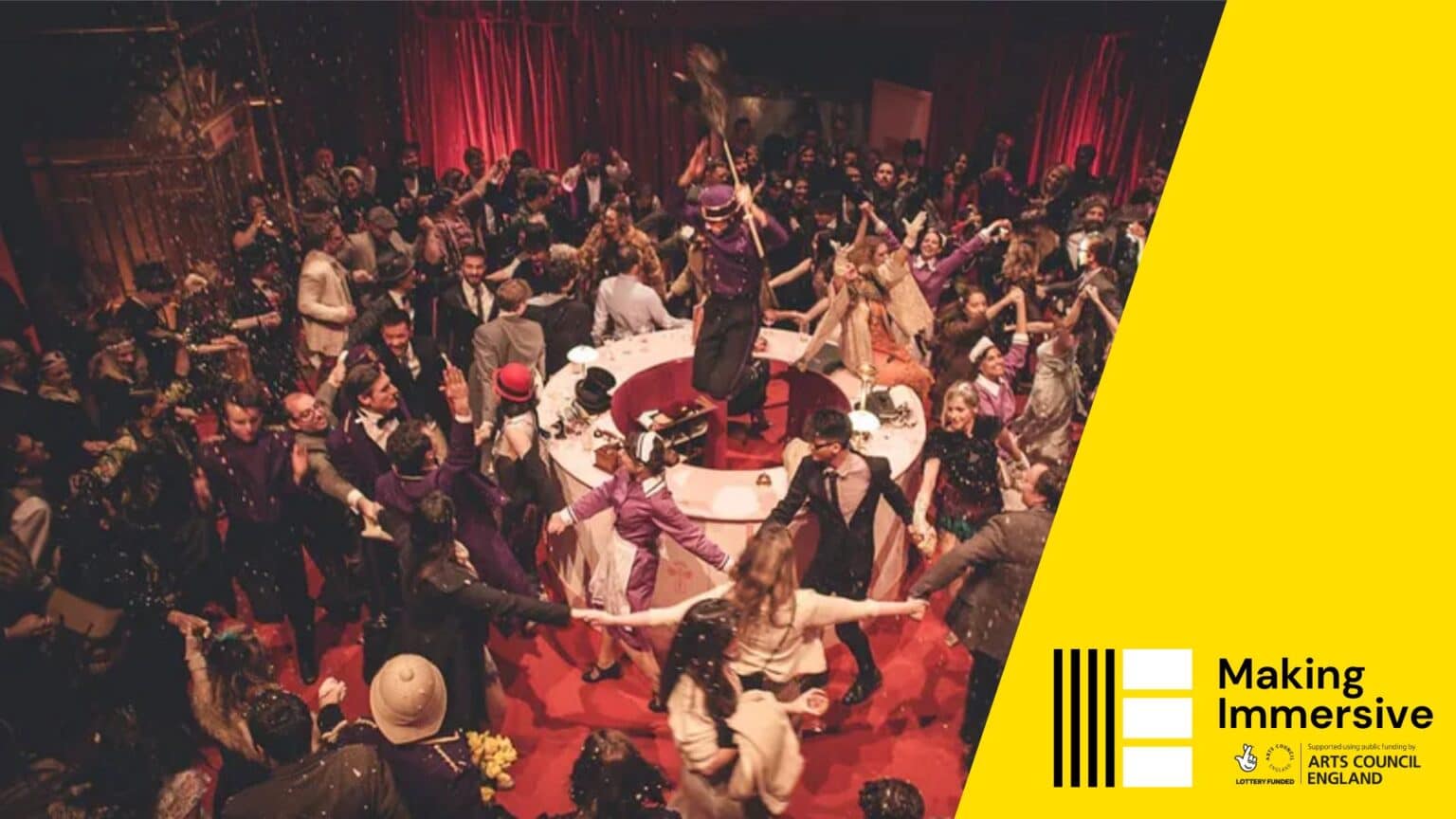
I’ve sat in production meetings where directors agonize over "guest flow." They aren't talking about the emotional journey. They are talking about how to move 200 bodies through a narrow door without a fire code violation. The logistics of the crowd always—always—compromise the integrity of the performance.
The "Instagrammable" Anchor
Let’s be brutally honest about why these shows are booming in Los Angeles specifically. L.A. is the global capital of the "Experience Economy," a term coined by Pine and Gilmore that has since been weaponized by every pop-up museum and "immersive" show in the city.
The goal isn't to leave you changed. The goal is to provide a backdrop.
If a show is too dark, too fast, or too genuinely disturbing, you can't take a photo. Therefore, the "disturbing" elements are always carefully calibrated to be aesthetically pleasing. It’s "safe" danger. It’s "clean" dirt. It’s a simulation of an experience designed to be viewed through a smartphone screen three hours later.
The Narrative Void
When you strip away the fog machines and the temperature-controlled rooms, what is left?
Usually, a thin allegory about climate change or "the isolation of the modern soul." These shows use the Arctic setting because it’s a convenient visual shorthand for "desolation." It’s easy. White walls, blue lights, wind sounds.
Compare this to a play like The Terror or even a minimalist production of Waiting for Godot. Those works use language and silence to build a world. The current crop of immersive L.A. shows uses 40,000 watts of power and a massive HVAC bill to hide the fact that they have nothing to say.
The Economic Delusion
Producers will tell you that the high ticket prices—often north of $100—are necessary to cover the overhead of "the world-building."
I have seen the line items. You are paying for the real estate.
In a city where square footage is king, these shows are essentially real estate plays masquerading as art. They take underutilized industrial spaces, throw in some "atmospheric" lighting, and charge a 400% markup on the entry fee. The "art" is the lubricant for the transaction.
A Better Way Forward
If you actually want to feel something, stop looking for "immersion" in a warehouse.
- Seek out Intimacy over Scale: The best immersive work I’ve ever seen happened in a car with two actors and one audience member. When you can’t hide behind a $50,000 set, the acting actually has to be good.
- Prioritize Sound over Sight: Our ears are much harder to fool than our eyes. A high-quality binaural audio play can create a more "disturbing" and "wild" environment than any physical set ever could.
- Demand a Script: Ask yourself: if the lights went out and the actors just read the lines, would I still care? If the answer is no, you aren't at a show. You’re at a theme park.
The industry is currently obsessed with the "Arctic wild" because it’s a trend. Next year it will be the "Subterranean Jungle" or the "Lunar Colony." The settings change, but the emptiness remains the same.
Stop being a tourist in someone else's expensive mood board.
The most disturbing, bizarre, and campy places aren't found in a $150 ticketed event in Glendale. They’re found in the stories that don't need a fog machine to breathe.
Go find a story that doesn't care if you're standing in the room or not. That’s where the real wild lives.