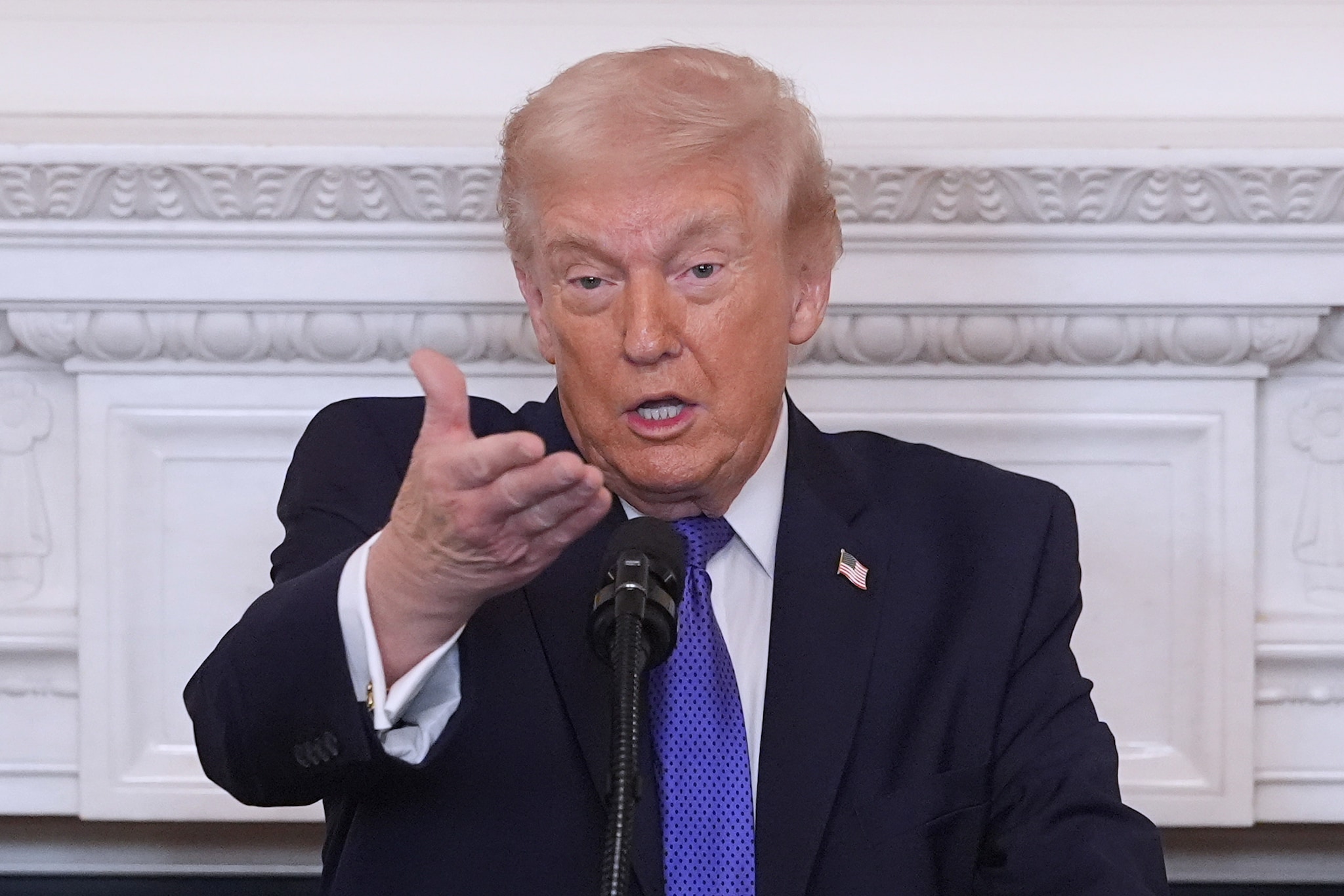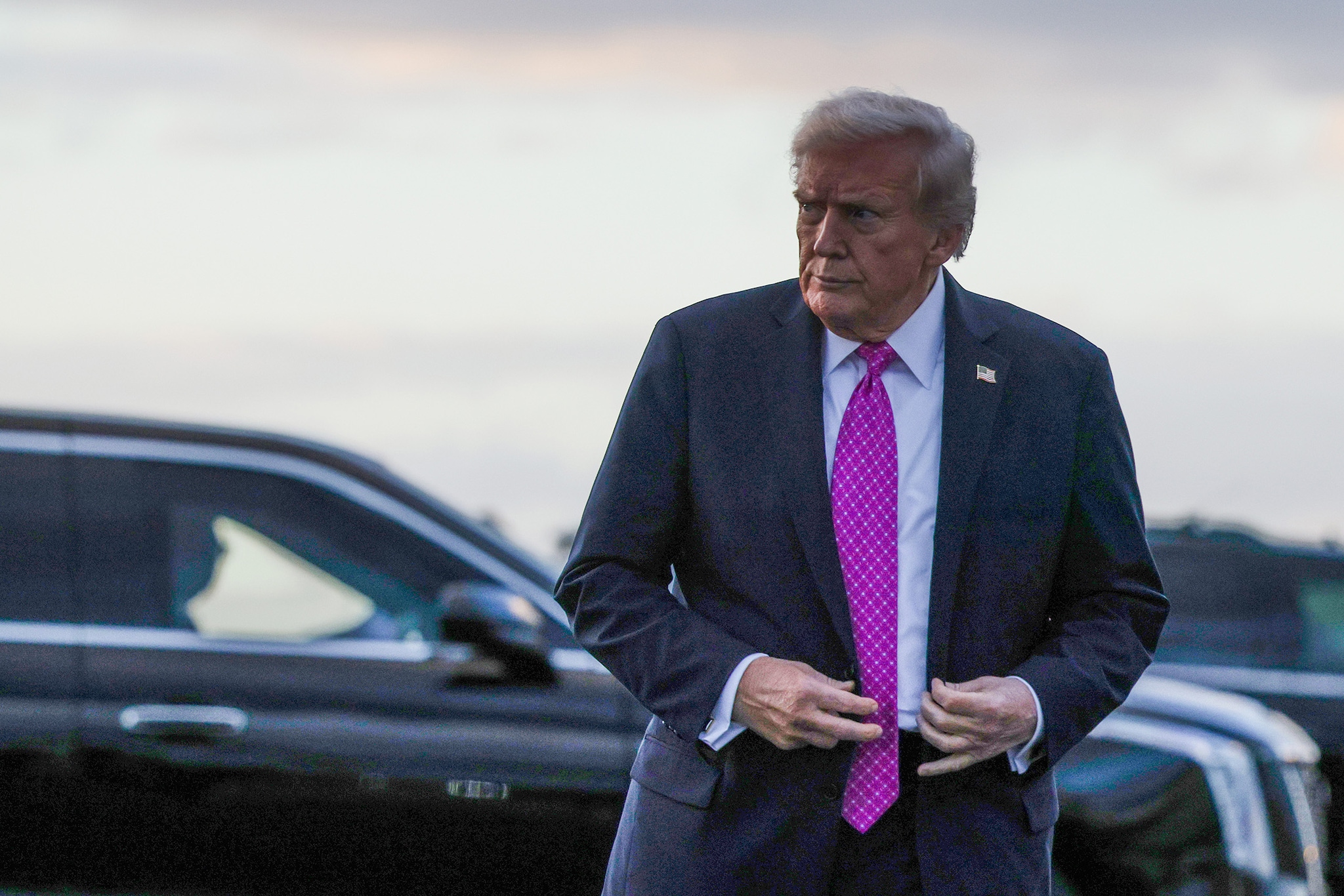
Donald Trump stood before a fractured Congress last Tuesday to declare a "turnaround for the ages," painting a picture of an American economy "roaring like never before" and a border so secure it has become a "fortress of steel." It was a classic performance, a 108-minute marathon of populist triumph that leaned heavily on the optics of victory while playing fast and loose with the underlying math. The primary query for every American watching was simple: Is the country actually as prosperous as the President claims? The answer is a messy, complicated tapestry of genuine successes, recycled trends, and some of the most audacious statistical fabrications ever uttered from the House rostrum.
While the President took credit for "plummeting" inflation and a "record-breaking" decline in crime, a closer look at the Department of Labor and FBI data reveals a more nuanced reality. He didn’t mention that the downward trend in violent crime began years before his second term, or that the "lowest gas prices in history" he touted are actually higher than the national average at almost every pump in the country. To understand the current state of the union, one must look past the teleprompter and into the ledger of a nation that is indeed changing, but perhaps not in the ways the White House wants you to believe.
The Eighteen Trillion Dollar Ghost
The most staggering figure of the night was the claim that the administration has secured $18 trillion in new investment commitments from around the globe. To put that in perspective, that amount represents roughly 60% of the entire U.S. Gross Domestic Product. If $18 trillion were actually pouring into the American economy, every crane in the world would be stationed between the Hudson and the Pacific.
In reality, the White House’s own website tracks roughly $9.7 trillion in "pledges"—many of which are non-binding letters of intent or projects slated for the next decade. Some of these, like a $600 billion commitment from the European Union, are essentially diplomatic fluff with no legal mechanism for enforcement. The President is counting "maybe" as "definitely" and "someday" as "right now." It is a grand projection designed to signal global confidence, but the actual foreign direct investment for the last fiscal year sat closer to **$151 billion**. The gap between the boast and the bank account is wide enough to sail a carrier strike group through.
The Arithmetic of the Gas Pump
"Gasoline is now below $2.30 a gallon in most states," the President declared, a line that drew thunderous applause from the Republican side of the aisle. It is a powerful narrative—the idea that the "Drill, Baby, Drill" mantra has directly slashed the cost of a morning commute.
However, the American Automobile Association (AAA) paints a different picture. As of late February, not a single state maintained a statewide average below $2.30. While a handful of stations in Oklahoma and Kansas flirted with the $1.99 mark, the national average remains closer to **$2.92**. The President’s anecdote about seeing $1.85 gas in Iowa was even checked in real-time by attendees; the station outside his own venue was charging $2.69.
Prices have indeed dropped about 6% since he took office, but the "Golden Age" of cheap energy is currently more of a "Silver Age" of modest relief. This distinction matters because the administration is using these perceived savings to justify the gutting of the Low Income Home Energy Assistance Program (LIHEAP), a move that could leave six million low-income Americans out in the cold if the energy market shifts unexpectedly.
Border Optics vs. Border Reality
The President’s rhetoric on immigration has reached a fever pitch, punctuated by the claim that "zero illegal aliens have been admitted to the United States" in the last nine months. This is a masterful piece of semantic engineering.
What the administration is actually referring to is the number of migrants released by the Border Patrol into the interior of the country. Under a strict new "detain and deport" policy, the "catch and release" practices of the previous decade have effectively ended. Border Patrol encounters have indeed plummeted to the lowest levels since the 1970s, dropping from 61,000 in January 2025 to roughly 6,000 in January 2026.
But "zero admitted" does not mean "zero crossed." Thousands continue to cross unlawfully every month, and the humanitarian cost is mounting. The President’s boast ignored the recent controversies surrounding the deaths of two U.S. citizens in crossfire involving immigration agents, a grim reminder that a "secure" border is often a violent one.
The Myth of the Somali Fraud
In one of the most controversial segments of the speech, the President alleged that the Somali community in Minnesota had "pillaged" $19 billion from taxpayers. It was a line designed to provoke, but it lacks any foundation in the Justice Department’s own filings. Former U.S. Attorney Joe Thompson noted that the total billings for the programs under investigation—not the fraud, but the total billings—amounted to $18 billion over six years. Even if every single penny spent on those programs since 2018 was fraudulent, it still wouldn't reach the $19 billion figure the President cited.
The Tariff Trap
The President doubled down on his plan to eventually replace the federal income tax with revenue from tariffs. He claimed that "foreign countries are paying hundreds of billions" into the U.S. Treasury. This is perhaps the most significant economic "gray area" of the second term.
While the U.S. collected $287 billion in tariffs in 2025—a massive increase from previous years—the Congressional Budget Office (CBO) and the Federal Reserve Bank of New York have both issued warnings that the burden isn't falling on foreign exporters. Their analysis found that 94% of tariff costs are actually paid by U.S. importers and passed directly to consumers.
Who Actually Pays?
- The Claim: Foreign nations pay the tax to access the U.S. market.
- The Reality: American companies pay the duty at the port of entry, then raise prices on everything from washing machines to construction steel.
- The Deficit: Even at $287 billion, tariff revenue accounts for less than 4% of federal revenue. To replace the income tax, which funds 84% of the government, tariffs would have to increase to levels that would effectively end global trade as we know it.
The Murder Rate Paradox
"Last year, the murder rate saw its single largest decline in recorded history," the President said. On this point, he is largely correct, though he conveniently leaves out the timeline. Preliminary data suggests a 20% drop in homicides in 2025, a historic shift that may bring the rate to its lowest point in 125 years.
However, criminologists at the Council on Criminal Justice note that this decline began in 2022. The "law and order" policies of the current administration may be sustaining the trend, but they did not ignite it. By claiming sole credit for a multi-year cooling of urban violence, the President is effectively spiking the ball at the five-yard line of a game that started before he returned to the locker room.
The War on Fraud and the Vance Factor
A new pillar of the administration was unveiled: a "War on Fraud" to be led by Vice President JD Vance. The President claimed the federal budget could be balanced simply by eliminating waste and "plundering."
This is a recurring populist trope that rarely survives contact with the Congressional Budget Office. The current federal deficit sits at $1.8 trillion. Even the most aggressive estimates of annual government fraud and improper payments top out at around $600 billion. You cannot balance a $1.8 trillion hole by fixing a $600 billion problem. The "War on Fraud" is a potent political slogan, but it is not a fiscal strategy.
The Prescription for Hyperbole
The launch of TrumpRx.gov was presented as a revolutionary strike against "Big Pharma," with the President claiming price drops of "300% to 600%."
Mathematically, a 100% price drop makes a drug free. A 300% drop would imply that the pharmacy pays the patient to take the medicine. Beyond the linguistic flair, the savings on the site are largely restricted to "cash-paying" patients for specific lifestyle drugs like Wegovy (for weight loss) and Cetrotide (for fertility). For the millions of Americans on Medicare or private insurance, the site currently offers little more than a comparison tool for prices they can already find on generic-heavy platforms like GoodRx.
The President’s State of the Union was a masterclass in the "Big Picture" over the "Fine Print." He accurately identified the anxieties of the American public—cost of living, safety, and national sovereignty—but offered a version of reality where every problem is already solved and every victory is "the greatest in history."
The American people are currently living in a split-screen reality. On one side is a President declaring a new "Golden Age." On the other is a nation where the cost of housing is up 3.4%, electricity is up 6.3%, and the "War on Fraud" has yet to find the trillions it needs to balance the books. The union may be stable, but it is far from the utopia described under the Capitol dome.
Watch the interest rates and the grocery receipts, not just the applause.