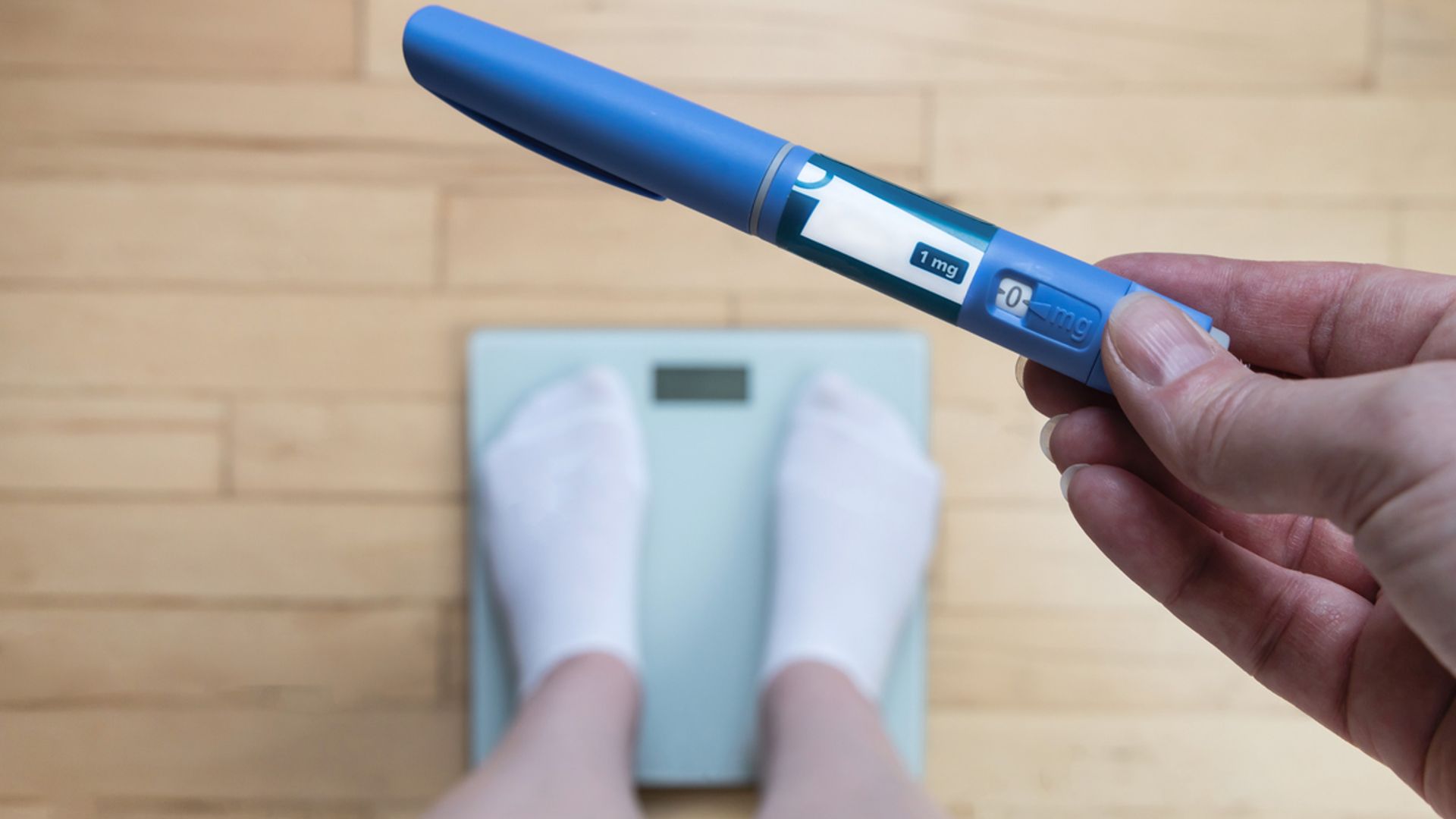
Sarah stands in front of her refrigerator at 11:15 PM, the blue light casting a clinical glow over her kitchen. Six months ago, this scene would have been impossible. Back then, she was on a weekly injection that turned the volume down on the world. The "food noise"—that constant, nagging internal monologue debating the merits of a snack versus the guilt of a calorie—had simply vanished. For the first time in her adult life, Sarah felt like a person who could take or leave a slice of cake. She lost forty pounds. She felt like she had finally solved the riddle of her own biology.
Then the insurance coverage shifted. The out-of-pocket cost spiked to over a thousand dollars a month. Sarah stopped the injections.
Now, the silence is gone. It has been replaced by a roar. It isn’t just that her appetite returned; it came back with a physical intensity that feels like a debt being collected. This is the hidden reality of the weight-loss drug revolution. We were told these shots were a miracle. We weren’t told that for many, stopping them is like slamming a car into reverse while doing sixty on the highway.
The science behind this isn't a mystery, though we often treat it like one. Drugs like semaglutide and tirzepatide work by mimicking a hormone called GLP-1. In a natural state, your body produces this after you eat to tell your brain you are full. It slows down your stomach. It makes you satisfied. But when you introduce a synthetic, high-dose version of this signal, you aren't just "fixing" a craving. You are rewiring the thermostat.
Consider a hypothetical house where the heater is broken. You bring in a high-powered external furnace to keep the rooms at a perfect 72 degrees. It works beautifully. You stop shivering. You feel great. But while that furnace is running, your body’s own internal heating system—the natural metabolic processes and hormonal signaling—goes into a deep sleep. Why work when the machine is doing it for you? The moment you switch off that external furnace, the house doesn't just stay warm. It freezes. And because the internal heater has been dormant, it takes a long time to kick back in. Sometimes, it never quite reaches the same temperature again.
Statistics from clinical trials, including the STEP 1 trial extension, paint a sobering picture. Participants who stopped taking a 2.4 mg dose of semaglutide regained two-thirds of their lost weight within one year. Even more concerning is the composition of that weight. When Sarah lost forty pounds, she didn't just lose fat. She lost muscle mass and bone density, which is a common byproduct of rapid weight loss. When the weight returned, it didn't bring the muscle back with it. It returned almost entirely as adipose tissue.
She is now roughly the same weight she was a year ago, but her body composition has shifted. She has less muscle to burn calories at rest. Her metabolism is slower than it was before she ever touched a needle. She is, quite literally, worse off than when she started.
This is the biological "rebound effect." When you suppress appetite so aggressively, the body perceives a state of famine. It becomes incredibly efficient at storing energy. The moment the drug's grip on the brain's receptors loosens, the body begins a frantic campaign to restore its previous "set point." It screams for calorie-dense foods. It makes you move less. It holds onto every gram of glucose with a death grip.
The emotional fallout is perhaps even more devastating than the metabolic one. There is a specific kind of grief that comes with watching a version of yourself disappear. Sarah looks at the jeans she bought three months ago—the "goal" jeans—and feels a sense of profound betrayal. Not by the drug, but by her own body. The narrative we’ve built around these medications suggests that they provide a "jump start" or a "helping hand." That language is dangerously misleading. A jump start implies the engine will eventually run on its own. For many, these drugs are more like a pacemaker. If you take the batteries out, the heart of the weight loss effort stops beating.
We have medicalized a struggle that was once seen as a matter of willpower, which is a massive step forward in reducing stigma. Obesity is a chronic disease, not a character flaw. However, by treating it as a chronic disease, we must accept the terms of that definition. You wouldn't tell a person with Type 1 diabetes to take insulin for six months to "get their levels right" and then stop. You wouldn't tell someone with high blood pressure to use medication until they hit a target number and then hope for the best.
Yet, because of cost, side effects, or a desire to "do it on my own," thousands of people are cycling off these medications every month. They are stepping off a cliff without a parachute.
The physical sensation of the return is what people describe as the most jarring. It isn't just "being hungry." It is a primal, urgent, and all-consuming drive. It is the body’s survival mechanism overcorrecting for months of perceived starvation. If you have ever held your breath underwater until your lungs burned, you know that the first breath you take when you surface isn't a calm, measured inhale. It is a desperate, gasping gulp. That is what the metabolism does after a GLP-1 cycle.
The solution isn't as simple as "just stay on it forever," though that is currently the medical recommendation for many. Not everyone can afford the price tag. Not everyone can tolerate the nausea or the fatigue that can accompany the treatment. The real issue is the lack of a bridge. We are handing people a high-tech tool without a manual for what to do when the battery dies.
To mitigate the crash, some practitioners are experimenting with "tapering"—slowly reducing the dose rather than quitting cold turkey. They are pairing the medication with intensive resistance training to protect muscle mass, ensuring that the metabolic engine stays as large as possible. They are focusing on protein intake to an obsessive degree. But even with these safeguards, the pull of the body’s original set point is like the pull of gravity.
Sarah sits at her table and eats a piece of toast. She isn't hungry anymore, but her brain is telling her she is. She knows the science. She knows her hormones are currently a chaotic mess of signals. But knowing the physics of a car crash doesn't make the impact hurt any less.
We are currently in the "honeymoon phase" of this medical era. We are seeing the success stories, the red carpet transformations, and the staggering quarterly profits of pharmaceutical giants. But the shadows are growing. The shadows are the millions of people who will eventually stop the shots and find themselves trapped in a body that feels more foreign, more hungry, and more exhausted than the one they started with.
The miracle was never in the weight loss itself. The miracle was the quiet. Now that the noise has returned, it’s louder than it ever was before, and there are no more needles left in the box.
Sarah turns off the kitchen light and walks upstairs, the stairs feeling just a little bit steeper than they did last week.