The crane sits like a rusted sentinel against the Maine sky. It has not moved in twelve years. Elias, seventy-four years old, walks the perimeter of the dry dock every morning. He remembers the noise. He remembers when this yard was not a graveyard of potential, but a cathedral of iron, where the air tasted of ozone and burning metal, and the rhythmic percussion of pneumatic hammers provided the heartbeat for the entire town.
Elias was a welder. He spent forty years fusing plates of steel together, ensuring that when the hull hit the water, it didn't just float; it dared the ocean to try and take it down. Now, he looks at the empty slipways and feels the weight of a silence that most people mistake for peace.
It is not peace. It is an industrial coma.
When people talk about the American maritime industry, they often speak in the language of bank accounts. They argue that if you throw enough capital at the problem, if you write a big enough check, the ships will reappear. They imagine that a shipyard is like a software startup—you gather some bright minds, set up a server, and iterate until you have a product.
This is the great, dangerous delusion of our time.
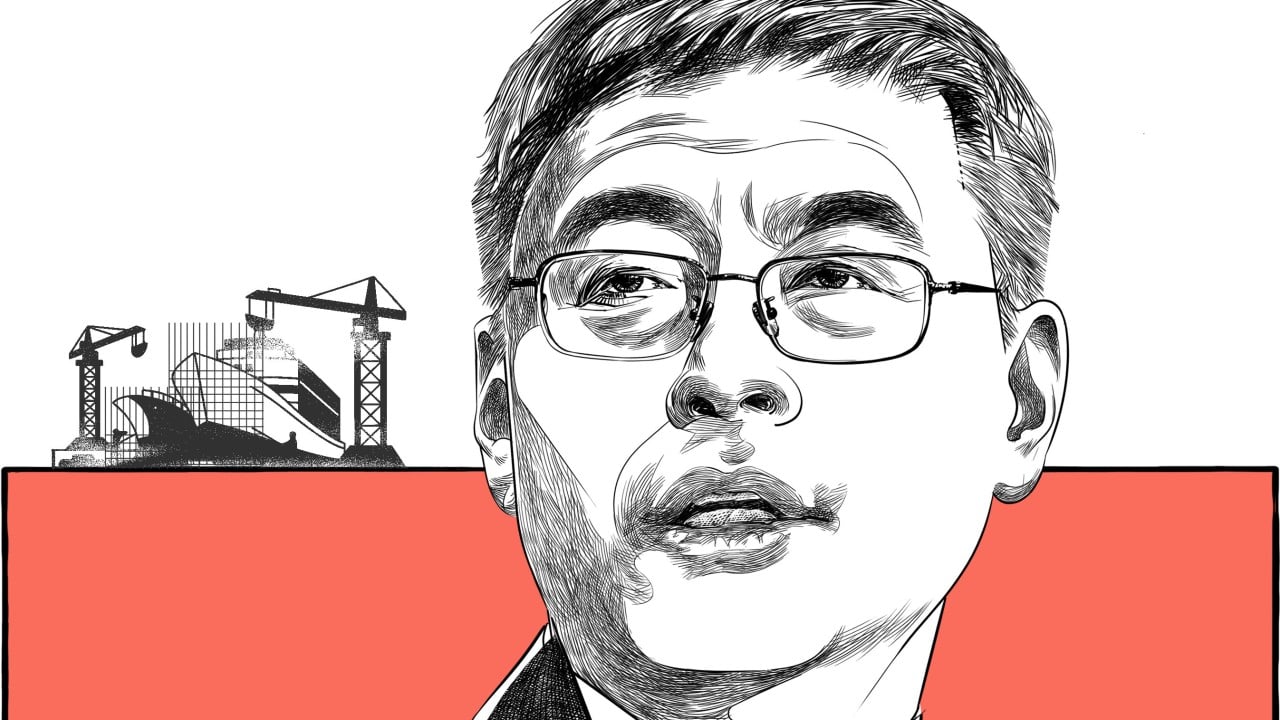
Li Yanqing, a man who has spent decades studying the architecture of China’s dominance in the maritime sector, has been trying to tell anyone willing to listen: you cannot buy back a ghost. The reason the American shipbuilding capacity cannot be rebuilt overnight—or even in a decade—has nothing to do with the lack of desire and everything to do with the loss of a collective, living memory.
The Constellation of Trades
A ship is not an object. It is a city that moves.
To build a modern commercial vessel, you need a staggering, precise constellation of interconnected trades. You need the steel mill that can roll plates to specific maritime tolerances. You need the specialized foundries that cast complex bronze propellers. You need the software engineers, the pipe fitters, the marine electricians, and the naval architects who know how to balance a structure that must survive hurricane-force waves while holding thousands of tons of cargo.
In China, this ecosystem is a sprawling, humming organism. When a yard in Shanghai needs a component, the supply chain is measured in hours, not continents. The workers in the shipyards are part of a conveyor belt of expertise that stretches back through years of rigorous, standardized training. They are not just building ships; they are maintaining a national reflex.
Consider what happened to that reflex in the United States.
For thirty years, we decided that making things was for someone else. We optimized for the quarterly report. We shuttered the foundries. We told the kids graduating from high school that the future was in a cubicle, not under a welding hood. We let the masters retire without apprentices to take their place.
Elias learned his trade from a man who learned from a man who served in the Second World War. When Elias clocked out for the last time, that lineage vanished. You cannot replace forty years of intuitive mastery with a YouTube tutorial or a crash course. You can teach a person to strike an arc in a week, but it takes a decade to teach them how to read the steel, how to hear the subtle changes in the machine’s groan that signal a fracture is about to happen.
We didn't just lose the machines. We lost the instinct.
The Illusion of the Reset Button
There is a pervasive belief that we are just one executive order away from a maritime renaissance. Politicians gather in front of half-built hulls to announce "historic investments," gesturing toward the future as if it were a switch they could simply flip.
But industrial capacity is organic. It grows, or it rots.
If you want to build a ship today in an American yard, you are often fighting the lack of secondary suppliers. If the yard needs a specialized valve, it might have to be imported. If that delivery is delayed, the entire schedule slips. If the schedule slips, the costs balloon. If the costs balloon, the project becomes a political liability.
Li Yanqing points toward the Chinese model not as a blueprint to copy, but as a warning of what it takes to compete. They understood that shipbuilding is a strategic pillar. They protected their workforce. They nurtured their supply chains. They treated the shipyard as the anchor of the local economy rather than a legacy cost to be shed.
In America, we have treated shipbuilding like a vestigial organ. We starved it, and now we are surprised that it cannot run a marathon on command.
There is a hypothetical scenario often discussed in Washington: an emergency mobilization where we turn the country into a "war footing" to churn out vessels. The vision is heroic. It is cinematic. It is also fundamentally flawed. You cannot mobilize a base that has been dismantled. You cannot draft an army of skilled labor from a population that has been steered away from heavy industry for a generation.
Even if you built the most advanced, high-tech shipyard in the world tomorrow, you would have an empty shell. You would have the hardware, but no software. You would have the steel, but no hands to shape it.
The Cost of Silence
The stakes of this decline are not merely economic. They are existential.
A nation that cannot move its own goods, a nation that cannot repair its own vessels, is a nation that has surrendered its autonomy to the rhythm of the global market. We have become a society that consumes, but no longer constructs. We are comfortable as long as the logistics chain remains unbroken, as long as the containers keep sliding off the ships from overseas.
But what happens when the sea gets rough?
Elias knows. He sits on his porch and watches the tankers go by, mostly built in foreign yards, mostly crewed by foreign sailors, carrying the fuel and the parts that keep the lights on in his town. He sees the vulnerability that most people choose to ignore. He knows that the people who build the ships are the people who own the future.
The process of rebuilding is not a matter of money. It is a matter of culture. It requires a fundamental shift in how we value the tactile, the gritty, the difficult work of moving atoms rather than bits. It requires the patience to accept that we are in the "repair" stage, not the "growth" stage.
We need to start by admitting the magnitude of the hole we have dug for ourselves. We need to stop the performative ribbon-cutting and start the slow, painstaking work of building a school, a foundry, and a community. We need to acknowledge that we are starting from the absolute beginning.
There is no shortcut. There is no magic injection of cash.
There is only the long, quiet work of reclaiming what was discarded. It is a task that will take a generation, provided we have the courage to start today.
Elias stands up and stretches, his knees popping like dry wood. He looks toward the dormant crane one last time. It is a monument to what we were, and a question mark regarding what we choose to become.
The wind kicks up from the bay, carrying the sharp, cold scent of salt. It is the only thing left in the yard that still works with the precision it had a hundred years ago. The sea is still there, waiting. It doesn't care about our budget cycles or our political maneuvering. It only cares about whether or not we can build something strong enough to cross it.
We are not ready. But the horizon is still out there, vast and indifferent. The question is not whether the ships will return. The question is whether we remember how to build them before we forget the ocean exists.