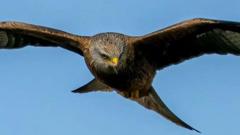
Nature is supposed to be majestic. We’re taught to look at a red-tailed hawk and see a stoic, apex predator circling the thermals with lethal intent. Then, someone snaps a photo of that same majestic bird clutching a pepperoni slice like it’s a prized rodent, and the whole illusion falls apart.
If you saw the recent viral "weekly quiz" photo of a hawk in Connecticut, you know exactly what I’m talking about. The bird wasn't carrying a field mouse or a garter snake. It was carrying a thick, doughy piece of pizza. It’s funny, sure. It’s also a weirdly perfect snapshot of how wildlife is changing right under our noses.
Most people think of "urban wildlife" as just pigeons and rats. They’re wrong. Large raptors have moved into our cities and suburbs in massive numbers over the last decade. They’ve adapted. And apparently, their palate has expanded to include Italian-American cuisine.
Why Raptors Are Turning Into Trash Birds
You might wonder why a bird with 20/2 vision and talons that can crush bone would bother with a cold slice of crust. It’s about the "easy meal" principle. Every animal on earth is a caloric accountant. If a hawk can expend five calories picking up a discarded slice of New York style thin-crust from a parking lot, or five hundred calories chasing a squirrel that might actually fight back, the pizza wins every time.
Ornithologists call this opportunistic scavenging. We see it constantly with gulls and crows, but seeing it in high-level predators like red-tailed hawks or Cooper’s hawks is a bit more jarring. It’s a sign of high intelligence, not laziness. These birds have figured out that humans are messy, and our mess is nutrient-dense.
The Hidden Danger of the Pizza Diet
While the photo is a 10/10 for the "nature is healing" meme economy, it’s actually pretty bad for the bird. Raptors have highly specialized digestive systems. They need the calcium from the bones of their prey and the protein from raw meat.
Processed flour, high-sodium tomato sauce, and fatty cheese aren't just "junk food" for a hawk—they're borderline toxic in large amounts. Salt is a major issue. A single slice of pizza contains more sodium than a hawk would naturally consume in a month. This can lead to dehydration or kidney issues if they make a habit of it.
Then there's the rodenticide problem. This is something most people ignore. When we see a hawk eating "human food," it often means they are hunting in areas heavily populated by people. These areas are usually crawling with bait stations meant to kill rats. If a hawk eats a rat that just ate poison, the hawk dies too. It's a brutal cycle called secondary poisoning.
How to Tell Your Raptors Apart
If you’re looking at a bird of prey in your backyard and trying to figure out if it's the pizza-eating type, you’re likely looking at one of three usual suspects.
The Red-Tailed Hawk is the big one. They’re chunky. They have those broad, rounded wings and, if they’re adults, that iconic brick-red tail. They love sitting on light poles above highways, waiting for something to move in the grass—or for someone to drop a sandwich.
The Cooper’s Hawk is the agile "stealth fighter." If you see a medium-sized hawk terrorizing the songbirds at your feeder, this is it. They have long tails and shorter, rounded wings for darting through trees. They're less likely to eat your pizza, but they're definitely watching your patio.
The American Kestrel is the tiny, colorful one. They’re about the size of a mourning dove but way more aggressive. They mostly stick to grasshoppers and small mice, keeping things traditional.
The Suburban Safari Is Real
We’ve created an accidental buffet. By planting manicured lawns (which mice love) and putting out birdseed (which attracts squirrels and small birds), we’ve turned our suburbs into the highest-density hunting grounds these raptors have ever seen.
The pizza incident isn't an isolated event. There are documented cases of hawks in New York City living almost entirely on "unconventional" urban protein. It’s a testament to their resilience. It also means we have a responsibility to keep our neighborhoods a bit cleaner.
If you want to support these birds, the best thing you can do isn't "leaving out a treat." It’s keeping your trash bins sealed and ditching the chemical pesticides and rodent poisons. Let them hunt the way they were meant to. A squirrel is much better for a hawk’s heart than a slice of stuffed crust.
What You Should Do When You See a Raptor Nearby
Don't panic if a hawk sets up shop on your fence. They aren't interested in your golden retriever, despite the urban legends. They want the chipmunks under your shed.
- Observe from a distance. Use binoculars. If the bird is staring at you and screaming, you're too close to a nest.
- Keep the cat inside. This isn't just for the cat's safety. Outdoor cats kill billions of birds every year and compete with hawks for the same food sources.
- Report sightings. Use apps like eBird. This data helps scientists track how these birds are moving into urban environments and what they're eating.
- Clean up the food waste. Don't be the reason there's a "Pizza Hawk" in your town.
Next time you’re outside and see a shadow pass over, look up. You might see a miracle of evolution—or you might see a bird that just robbed a Domino's delivery driver. Either way, it's a reminder that nature doesn't just exist in national parks. It's right here, adapting to our weird, messy world one slice at a time. Put your bird feeders in a spot where there’s nearby cover like a bush or a thicket so the small birds have a fighting chance when the local red-tail decides it’s lunchtime.