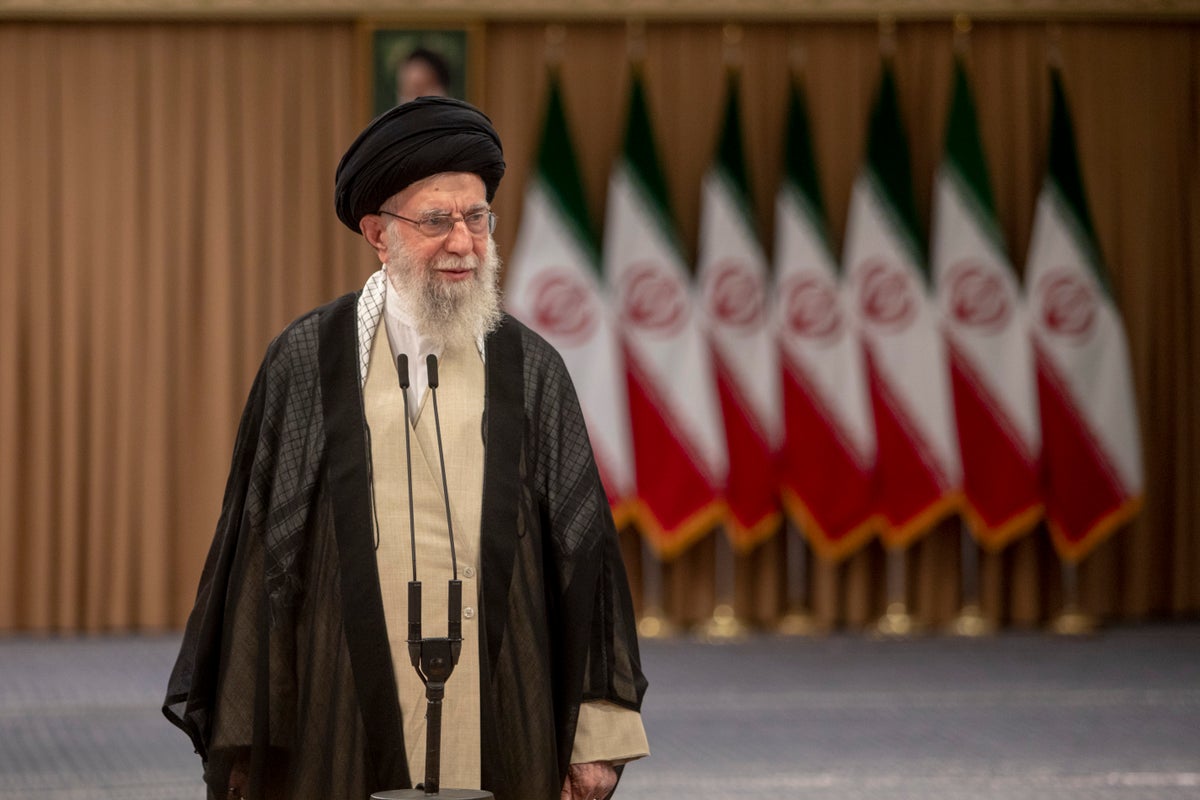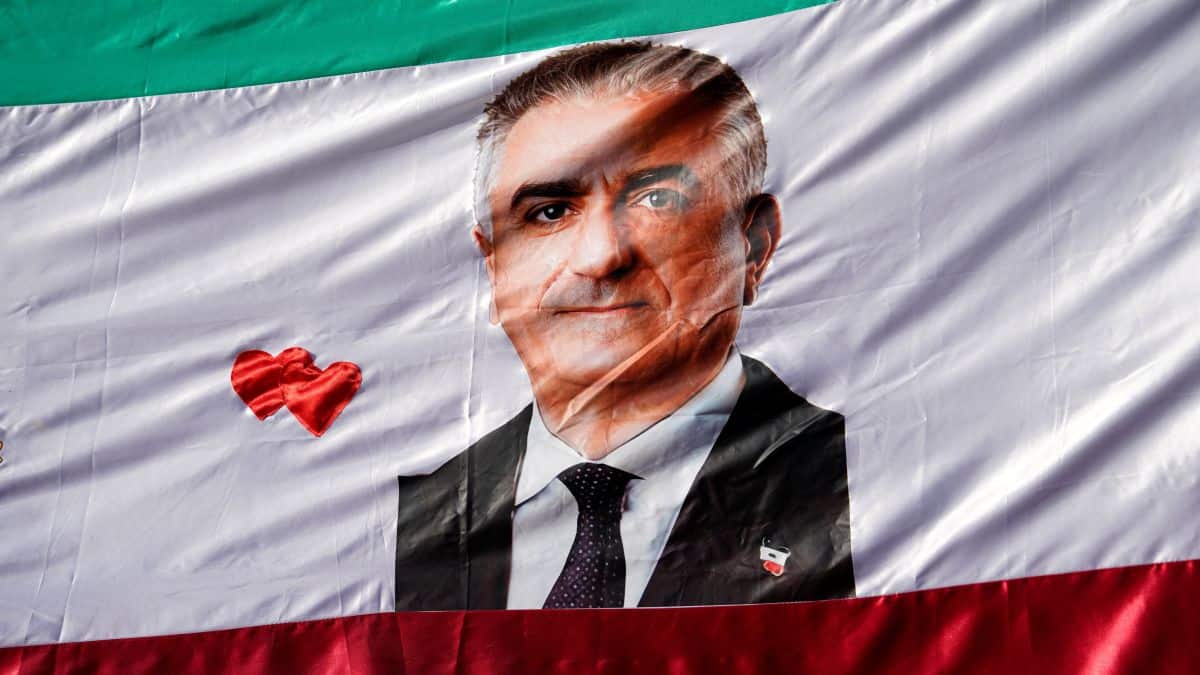
The death of Supreme Leader Ali Khamenei will trigger the most volatile constitutional and security vacuum in the history of the Islamic Republic. While international discourse often treats the potential return of Reza Pahlavi, the son of the last Shah, as a matter of nostalgic sentiment or binary "regime change," his viability as a political successor depends on a cold calculation of three structural variables: internal security apparatus fragmentation, the cohesion of the secular opposition, and the strategic realignment of regional powers. To assess the probability of a Pahlavi restoration, we must look past the "King of Hearts" narrative and examine the mechanical requirements for a transition of power in a high-surveillance, praetorian state.
The Power Vacuum Mechanics: The Dual-Succession Crisis
The Iranian political structure is currently braced for a collision between two incompatible systems of succession. On one side is the Assembly of Experts, tasked with the clerical selection of a new Rahbar (Leader). On the other is the Islamic Revolutionary Guard Corps (IRGC), which has spent the last two decades evolving from a military wing into a sprawling economic and political conglomerate.
The IRGC's primary objective is the preservation of its asset base. Any transition that threatens their control over roughly 30% to 50% of the Iranian economy—spanning telecommunications, construction, and energy—will be met with kinetic force. Reza Pahlavi’s potential entry into this equation is not as a revolutionary leader leading a frontal assault, but as a "Legitimacy Bridge."
The Legitimacy Bridge Hypothesis
In a scenario where the clerical establishment loses its grip, a faction of the "Gray IRGC"—technocrats and middle-ranking officers who are not ideologically committed to theocracy—may seek a way to preserve national stability while shedding the pariah status of the current regime. Pahlavi represents a known quantity that could, in theory, preside over a transitional council. This would allow the security apparatus to pivot from defending a divine mandate to defending a "nationalist" mandate, thereby avoiding a total purge of the military-industrial complex.
The Three Pillars of Pahlavi’s Political Capital
For any exiled figure to successfully re-enter a domestic political theater after four decades, they must possess specific forms of leverage that cannot be synthesized by local actors under duress.
1. The Secular Nationalist Brand
Decades of theocratic rule have produced a documented "secular shift" in the Iranian demographic, particularly among those under 30. Pahlavi’s brand is rooted in the pre-1979 era of modernization and global integration. This is not merely nostalgia; it is a functional desire for a return to "normalcy." His advocacy for a secular, democratic system—while maintaining the symbolic weight of the monarchy—appeals to a broad spectrum that includes both traditional monarchists and liberal democrats who view the crown as a stabilizing, non-executive "umpire" similar to the Spanish model post-Franco.
2. Diplomatic Intermediation
Pahlavi’s primary value to the Iranian street is his access to Western capitals. The Iranian economy is currently strangled by a "Sanctions-Inflation Loop."
$$Inflation_{total} = f(Sanctions, Currency Depreciation, Productivity Collapse)$$
Pahlavi is one of the few opposition figures capable of negotiating a "Grand Bargain" that could freeze sanctions in exchange for a managed transition. This capacity to provide immediate economic relief via international recognition is a potent weapon that domestic dissidents lack.
3. Institutional Continuity
The "Pahlavi" name provides a historical link to the era of Iranian state-building. For the older generation of bureaucrats and the children of the 1979 generation who feel the revolution failed its promises, the Pahlavi era represents an aspirational baseline for Iranian regional hegemony.
Structural Impediments: The Cost Function of Restoration
The path to restoration is not a linear progression; it is a series of high-stakes bottlenecks. The probability of Pahlavi’s return ($P_{r}$) is inversely proportional to the cohesion of the IRGC and the presence of a viable domestic "Third Way" candidate.
The Fragmented Opposition Bottleneck
The Iranian opposition is notoriously atomized. Pahlavi faces significant friction from:
- The Ethnic Peripheral Groups: Kurds, Baluchis, and Azeris who fear that a return to a centralized nationalist monarchy would repeat the assimilationist policies of the past.
- The Republican Left: Those who view the monarchy as an inherently regressive institution, regardless of Pahlavi’s personal democratic rhetoric.
- The MEK (Mujahedin-e-Khalq): An organized, cult-like opposition group with deep pockets but virtually zero domestic popularity, which actively works to undermine Pahlavi’s leadership claims.
The "Stay-Behind" Factor
The current regime has spent 45 years building a "Deep State" specifically designed to survive the death of its leader. The Basij paramilitary, numbering in the millions, represents a grassroots defense layer. Unlike the Shah’s army in 1979, which eventually declared neutrality, the Basij and the IRGC have no "safe harbor" in a Pahlavi-led Iran. Unless Pahlavi can provide a credible guarantee of amnesty—a "National Reconciliation" framework—the cost of surrender for the current elite will remain higher than the cost of a civil war.
The Geopolitical Chessboard: Regional Alignments
The external environment has shifted significantly since the 1970s. The regional view of a Pahlavi return is dictated by realpolitik, not ideology.
The Arab Axis (Saudi Arabia and the UAE)
While Riyadh has historically viewed the Islamic Republic as a destabilizing force, a Pahlavi restoration brings its own set of risks. A strong, secular, nationalist Iran would likely re-assert its claims to regional dominance, potentially challenging the Gulf states over maritime rights and oil quotas. However, compared to the "Export of Revolution" doctrine, a Pahlavi-led Iran is a predictable actor. The Abraham Accords framework provides a ready-made template for a restored Iran to rejoin a regional security architecture.
The Russian and Chinese Variables
Moscow and Beijing have invested heavily in the current Iranian leadership as a "Non-Western" pillar. A Pahlavi return, viewed through the lens of a Western-backed regime change, would be seen as a strategic defeat for the Eurasian axis.
- Russia fears the loss of a key military partner and the opening of Iranian gas corridors to Europe.
- China seeks to protect its 25-year strategic investment deal, which requires a stable, albeit compliant, partner in Tehran.
Pahlavi would need to convince these powers that a transition would not result in the immediate cancellation of existing infrastructure and energy contracts.
The Constitutional Transition Model
If Pahlavi were to return, it would likely follow the "Reinaissance Logic" of the Spanish transition ($La$ $Transición$). This requires a specific sequence of operations:
- The Trigger: Khamenei's death leads to an impasse in the Assembly of Experts, followed by widespread civil unrest that the IRGC cannot contain without mass desertions.
- The Invitation: A faction of the military or a coalition of domestic labor unions and student groups calls for Pahlavi to return as a "Temporary Custodian of Sovereignty."
- The Referendum: Rather than a direct restoration of the throne, a national plebiscite is held to determine the form of the new government (Republic vs. Constitutional Monarchy).
- The Truth and Reconciliation Commission: A mechanism to address the crimes of the Islamic Republic while offering a path for mid-level officials to integrate into the new state.
Quantifying the Probability of Success
We can model the likelihood of a Pahlavi-led transition using a modified SWOT analysis focused on operational readiness.
| Variable | Current State | Impact on Transition |
|---|---|---|
| Domestic Recognition | High (Top cited opposition figure) | Essential for initial mobilization. |
| Organizational Infrastructure | Low (Lack of a "shadow cabinet" or party) | Critical weakness; prevents immediate governance. |
| Military Defection Potential | Moderate (Linked to economic collapse) | The "Kingmaker" variable. |
| International Backing | Fragmented (Warm words, no policy shifts) | Limits the ability to provide immediate "Day 1" aid. |
The primary obstacle is the lack of an institutionalized "Pahlavi Party" within Iran. Revolutions are won by those who can manage the logistics of bread, water, and electricity during the chaos. As of now, Pahlavi remains a symbolic figurehead without the bureaucratic machinery required to displace the IRGC's managerial class.
Strategic Play: The Controlled Implosion
The most likely scenario for a Pahlavi return is not a triumphant flight into Mehrabad Airport amidst cheering crowds, but a clandestine negotiation between the Pahlavi circle and the pragmatic wing of the Iranian military.
To achieve this, Pahlavi must pivot from "Advocate" to "Executive-in-Waiting." This involves:
- Drafting a Shadow Constitution: Providing a concrete legal framework that clarifies the limits of monarchical power before the transition begins.
- The Amnesty Protocol: Explicitly defining who will be prosecuted and who will be protected within the current security services to encourage defections.
- The "Day Zero" Economic Plan: Partnering with international financial institutions to guarantee the immediate stabilization of the Iranian Rial upon his return.
Without these mechanical preparations, the death of Khamenei will lead not to a restoration, but to a "Military Junte" led by the IRGC, which would simply swap the turban for the beret while maintaining the same extractive economic systems. The Pahlavi option is the only viable path to reintegrating Iran into the global economy, but its success hinges entirely on his ability to provide the IRGC an "exit ramp" that is more attractive than the "bunker" they currently inhabit.