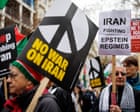
The survival of the Commonwealth of Nations as a relevant geopolitical entity depends on its ability to transition from a legacy of historical sentiment to a functional framework of crisis mitigation. While traditional narratives focus on the "pressures of conflict" as an external threat to unity, a structural analysis reveals that these pressures are the primary stress tests for the organization’s collective security and economic integration. The current state of the Commonwealth is defined by a tension between its foundational voluntary nature and the increasing demand for high-stakes multilateral intervention in regional disputes.
The Triple Constraint of Commonwealth Diplomacy
The efficacy of the Commonwealth's influence is restricted by three specific variables: the lack of a formal defense treaty, the wide disparity in GDP per capita among member states, and the principle of non-interference in domestic affairs. These constraints create a bottleneck when the organization attempts to address modern conflicts. Unlike NATO, which operates on collective defense, or the European Union, which operates on economic integration, the Commonwealth functions as a diplomatic consultative body. Meanwhile, you can read other events here: The Calculated Silence Behind the June Strikes on Iran.
- The Sovereignty Paradox: Members value the Commonwealth because it does not impose binding legislative requirements, yet they critique it for failing to enforce peace or democratic standards during internal upheavals.
- Economic Asymmetry: The wealth gap between the "G7 members" (UK, Canada) and the developing island nations (SIDS) dictates the priority of the agenda. Conflict for a developed member is often a matter of ideological alignment; for a developing member, it is an existential threat to supply chains and food security.
- The Soft Power Ceiling: Influence is exerted through peer pressure and suspension of membership (as seen historically with Zimbabwe or Fiji). This mechanism loses its bite when a member state finds more lucrative or secure alliances with non-Commonwealth regional powers.
The Cost Function of Regional Instability
Conflict within or adjacent to Commonwealth territories creates a measurable drag on the "Commonwealth Advantage"—the statistical 21% lower cost of trade between member states due to shared legal systems and language. When regional violence occurs, this advantage is negated by three primary factors:
Risk Premium Inflation
Insurers and investors do not distinguish between a "Commonwealth democracy" and a "non-member autocracy" when both share a volatile border. The cost of capital for infrastructure projects in conflict-prone member states rises as the perceived stability of the legal framework—traditionally the Commonwealth’s strongest asset—is questioned. To understand the full picture, check out the excellent report by The Guardian.
Human Capital Flight
Conflict accelerates the "brain drain" from developing Commonwealth nations to the UK, Canada, and Australia. While this provides a short-term labor boost to the receiving nations, it hollows out the tax base and institutional memory of the departing nations, creating a feedback loop of state weakness and further instability.
Supply Chain Fragmentation
The Commonwealth includes some of the world’s most critical maritime chokepoints. Disruption in these areas requires a coordinated naval and diplomatic response that the Commonwealth is currently unequipped to provide independently. This forces members to rely on external security umbrellas, further diluting the organization's internal cohesion.
Structural Vulnerabilities in Multi-Polar Aligments
The rise of competing blocs—specifically the expansion of BRICS+ and the deepening reach of the Belt and Road Initiative—presents a strategic challenge to the Commonwealth’s role as a primary forum for its members. The "pressures of conflict" are often exacerbated by these competing interests.
Member states are increasingly practicing "strategic hedging." They remain in the Commonwealth for the cultural and legal benefits but look elsewhere for hard security and massive infrastructure financing. This creates a diluted loyalty where the Commonwealth is viewed as a "nice-to-have" diplomatic social club rather than a "must-have" strategic alliance.
The mechanism of decay is subtle:
- Decision Paralysis: When two members or their allies are on opposite sides of a geopolitical divide, the Commonwealth’s "consensus-based" model ensures that no meaningful action is taken.
- Resource Divergence: Funding for Commonwealth Secretariat initiatives is often the first to be cut when member states face domestic austerity or need to reallocate budgets to more immediate regional security threats.
Defining the Value Proposition of Modern Monarchy
The transition of leadership within the Commonwealth has moved from the era of personal loyalty to the late Queen to a more transactional relationship with the current Crown. The "pressures" cited are not merely about war, but about the pressure to justify the institution's existence in a post-colonial, data-driven world.
The monarchy serves as the "Constitutional Glues," providing a non-political point of contact that survives changes in government. However, this is a diminishing asset if it is not backed by tangible outputs. The "masterclass" of leadership in this context requires moving beyond the rhetoric of shared history and toward the metrics of shared survival. This includes:
- Climate Resiliency Metrics: Developing a unified Commonwealth insurance pool for climate-related disasters, which disproportionately affect member states.
- Digital Jurisprudence: Standardizing cross-border data laws to facilitate the "Commonwealth Advantage" in the digital services sector.
- Conflict Mediation Frameworks: Establishing a standing committee for rapid-response mediation that moves beyond the "Good Offices" of the Secretary-General into more proactive, data-informed intervention.
The Pivot to Functional Multilateralism
To survive the current century, the Commonwealth must stop viewing itself as a family of nations and start viewing itself as a specialized service provider for its members. The "pressures of conflict" should be categorized not as tragedies to be lamented, but as systemic failures to be diagnosed and corrected through institutional reform.
The first limitation to address is the "Consensus Rule." A shift toward "Weighted Consensus" or "Coalitions of the Willing" within the Commonwealth would allow subgroups of nations to move forward on security or economic initiatives without being blocked by a single dissenting member. This would create a more modular, agile organization.
The second bottleneck is the lack of a dedicated crisis fund. Moral support does not rebuild ports or secure borders. A Commonwealth-wide levy, scaled by GDP, dedicated specifically to conflict mitigation and post-conflict reconstruction would transform the body from a talk-shop into a functional player on the world stage.
Strategic Realignment Strategy
The Commonwealth must double down on its unique structural advantage: the common law system. In an era of global instability, the predictability of legal outcomes is the highest-value commodity. By focusing on "Legal Interoperability," the Commonwealth can create a frictionless economic zone that thrives even when the surrounding geopolitical landscape is in turmoil.
- Audit of Legal Frameworks: Member states should undergo a triennial review of their judicial independence and commercial law transparency, with "Commonwealth Certification" serving as a gold standard for foreign direct investment.
- Security Intelligence Sharing: Establishing a Commonwealth-specific intelligence-sharing hub for non-kinetic threats, such as cyberattacks on financial infrastructure and disinformation campaigns.
- Youth Demographic Dividend: With 60% of the Commonwealth population under the age of 30, the organization must pivot its "conflict" narrative to address the primary driver of domestic unrest: youth unemployment. This requires a shift from vocational training to high-end tech integration and digital trade agreements.
The organization’s future is not guaranteed by its history. It is a precarious construct that requires a shift from "Legacy Diplomacy" to "Functional Integration." If the Commonwealth fails to provide a measurable return on the sovereignty its members invest in it, the pressures of conflict will not just stress the organization—they will dissolve it.
The strategic play for the next decade is the formalization of the Commonwealth’s "Soft Power" into "Smart Power." This involves the creation of a Commonwealth Digital Identity and a unified commercial arbitration system that bypasses the slow and often corrupt local courts in high-risk zones. By focusing on the infrastructure of commerce and law, the Commonwealth can maintain relevance even as the traditional global order fractures.