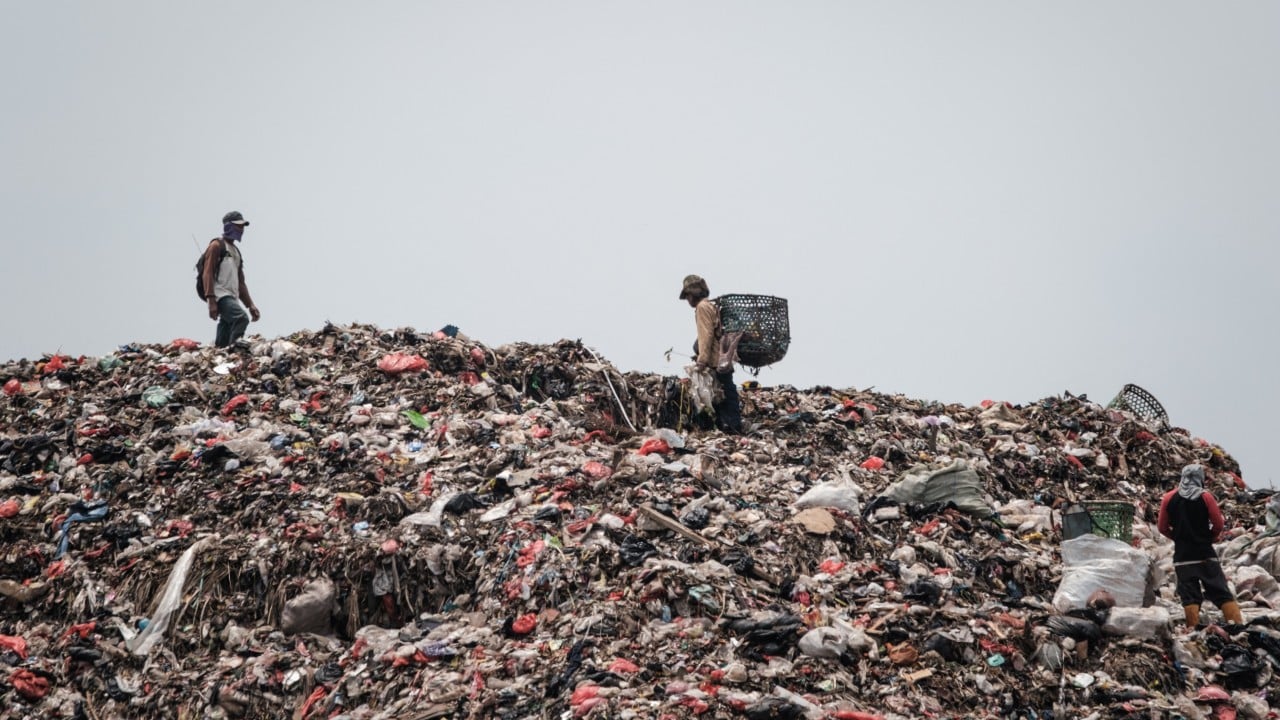
The smell of sizzling garlic and fermented chili usually signals the start of the golden hour in Bangkok’s Huai Khwang district. For Sunee, a third-generation street food vendor, this is when the world makes sense. But lately, the rhythm is off. The plastic stools remain empty longer. The fluorescent lights overhead seem to flicker with a new kind of anxiety.
Sunee doesn't track global crude oil benchmarks on a Bloomberg terminal. She doesn't need to. She feels the shockwaves of the Middle East and Eastern Europe in the price of the palm oil she pours into her wok and the cost of the motorbike taxi that delivers her ingredients. When global oil prices spike, the impact doesn't hit the skyscrapers of Singapore first. It hits the pavement.
Small and medium-sized enterprises (SMEs) are the undisputed backbone of Southeast Asia. They account for nearly 99% of all businesses in the region and employ upwards of 80% of the workforce. They are the neighborhood laundries in Jakarta, the family-owned textile workshops in Vietnam, and the independent logistics firms in Manila. They are also the most vulnerable link in the global economic chain. When the energy market convulses, these businesses don't just feel a pinch. They face an existential threat.
The Invisible Tax on Everything
Energy is the silent ingredient in every product on a shelf. To understand why a local bakery in Kuala Lumpur is suddenly struggling, you have to trace the heat. The flour was milled in a factory powered by a grid sensitive to fuel costs. It was transported in a truck burning diesel that costs 20% more than it did last quarter. The ovens run on gas that is pegged to international rates.
For a massive multinational, these are line items to be hedged or absorbed by vast cash reserves. For a small firm, they are a direct raid on the dinner table.
The math is brutal and unforgiving. Most small firms in the region operate on razor-thin margins, often less than 5% or 10%. A sustained 20% increase in energy costs can wipe out their entire profit margin overnight. They are trapped in a pincer movement. On one side, their operating costs are skyrocketing. On the other, their customers—mostly local residents also reeling from high gas prices—have less disposable income to spend.
Consider a hypothetical courier named Adi in Jakarta. He owns a small fleet of three vans. He is the definition of the "gig-adjacent" small business owner. When fuel prices rise, Adi faces a choice that has no right answer. If he raises his delivery fees, his clients—online sellers who are also struggling—will look for someone cheaper. If he keeps his prices the same, he is essentially paying for the privilege of working. He isn't just "bearing the brunt." He is being squeezed out of his own life.
The Subsidy Trap
Governments across Southeast Asia know this. To prevent social unrest and total economic collapse, countries like Malaysia and Indonesia have historically relied on heavy fuel subsidies. These are meant to be a shield. They keep the price at the pump artificially low so that Sunee and Adi can keep moving.
But shields break.
Maintaining these subsidies costs billions of dollars—money that is being diverted from healthcare, education, and infrastructure. When oil prices stay high for too long, the fiscal pressure becomes unbearable. Governments are eventually forced to cut the subsidies. This creates a "double shock." First, the indirect inflation of goods, followed by the sudden, sharp reality of the true market price at the pump.
The volatility is what kills. A business can plan for high costs. It cannot plan for chaos. When a small manufacturer in Thailand cannot predict what their electricity bill will look like in three months, they stop hiring. They stop investing in new equipment. They go into a defensive crouch. This collective hesitation creates a drag on the entire regional economy, slowing down the very engine that was supposed to drive the "Asian Century."
The Tech Gap and the Energy Transition
There is a cruel irony in the push for green energy. While the long-term solution to oil shocks is a transition to renewables, the "entry fee" for that transition is far too high for most SMEs.
A large garment factory in Phnom Penh might have the capital to install solar panels or upgrade to high-efficiency machinery that reduces energy dependence. They can weather the storm by evolving. The family-run workshop down the street, however, is using machinery that was second-hand twenty years ago. They are locked into an old, inefficient, oil-dependent way of working because they cannot afford the cost of the future.
This creates a widening chasm. The energy shock doesn't just hurt small firms; it accelerates a consolidation of wealth and power. Large corporations grow more resilient while the small, diverse ecosystem of local businesses withers.
We often talk about "resilience" as if it is a character trait. In the world of business, resilience is just another word for "cash on hand." Southeast Asia’s small firms are incredibly resourceful. They have survived coups, tsunamis, and a global pandemic. But they are tired. Their reserves are depleted.
Beyond the Numbers
The true cost of an oil shock isn't found in the GDP growth figures. It is found in the quiet conversations between a shop owner and their spouse after the shutters are pulled down. It is in the decision to pull a child out of a private tutoring session to save on transport costs. It is in the gray hair that appears too early on the heads of entrepreneurs who are doing everything right and still falling behind.
The "latest oil shock" is a sterile phrase. It sounds like a temporary weather pattern. But for the millions of people who run the small firms of Southeast Asia, it is a flood. They are treading water, holding their businesses above the surface, waiting for the tide to turn.
But the tide is controlled by forces thousands of miles away, by geopolitics and production quotas and pipeline disputes. The disconnect is staggering. A decision made in a boardroom in Vienna or a bunker in Eastern Europe can effectively shut down a neighborhood cafe in Manila.
The real question isn't whether these firms will "bear the brunt." They always do. The question is how much more weight the backbone of the region can take before it finally snaps.
Sunee turns off her wok. The gas cylinder is lighter than it was yesterday, and replacing it tomorrow will cost more than she made in the last three hours. She counts her bills under the dim light, the math never quite settling, while the distant roar of traffic—the sound of burning oil—continues unabated into the humid night.