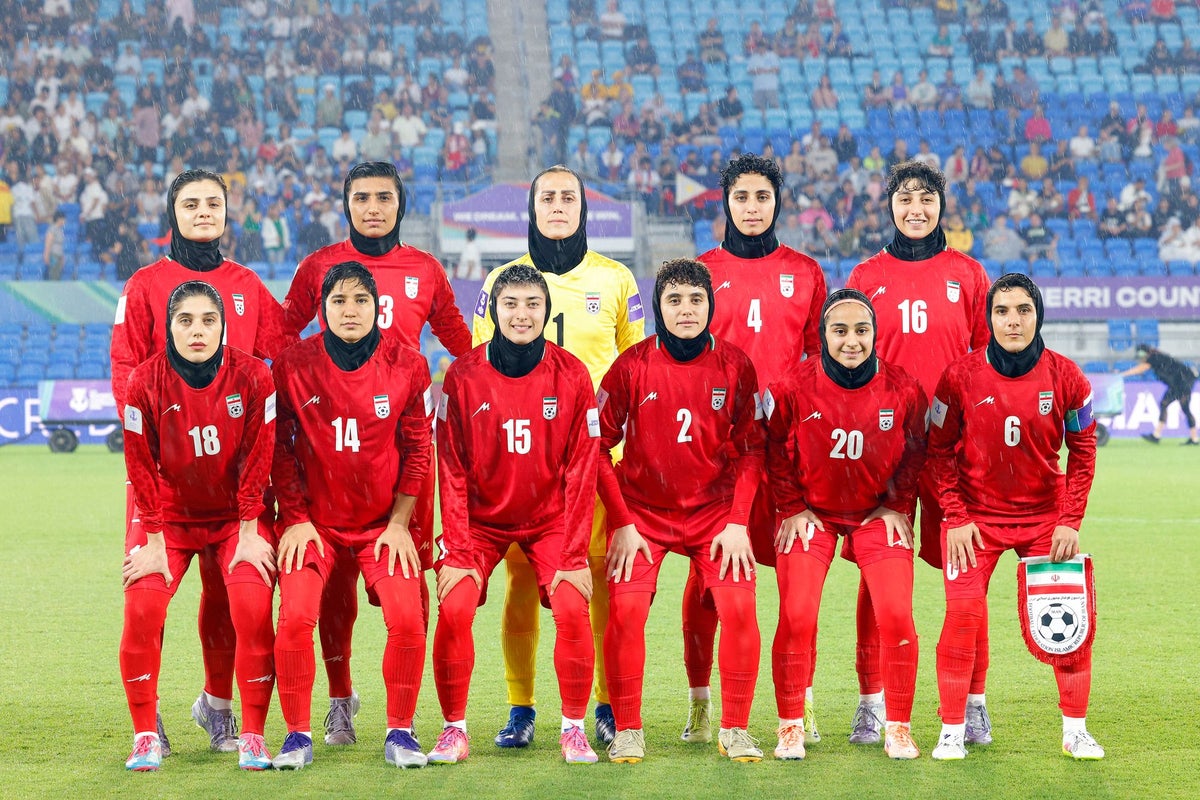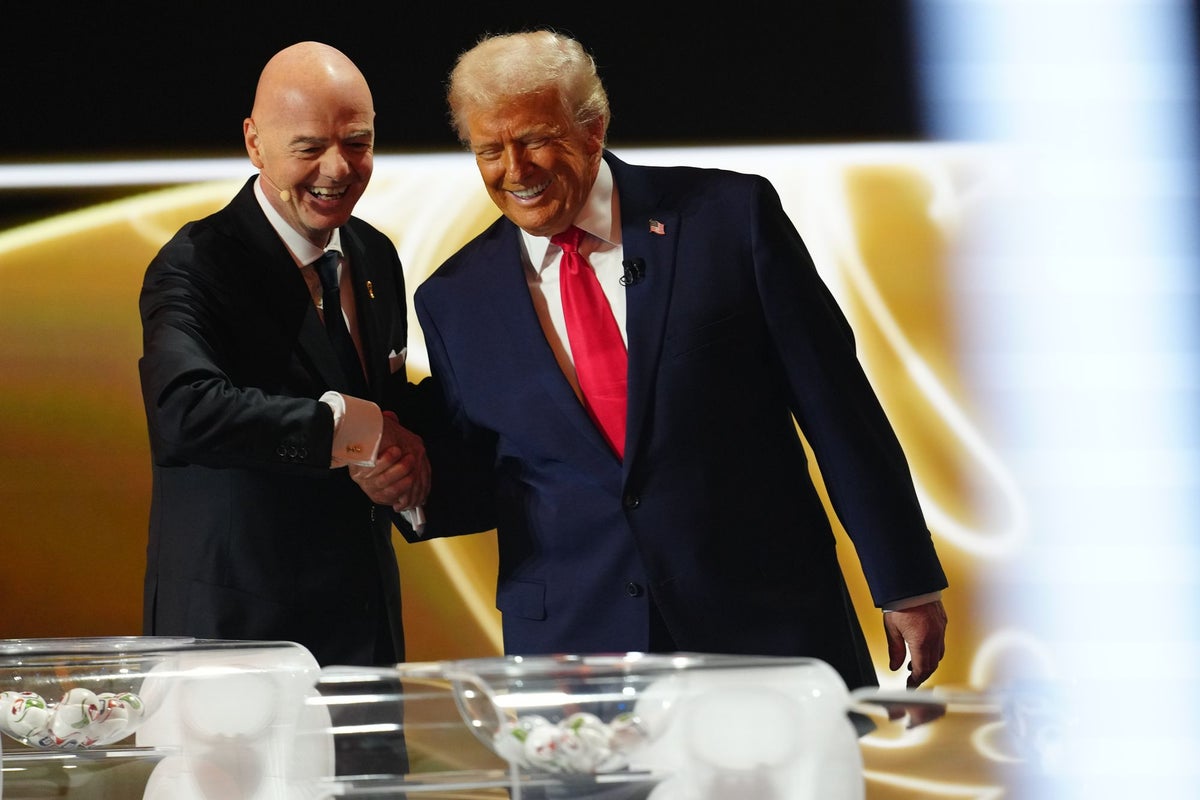
Gianni Infantino is selling a fantasy. After a meeting at the White House, the FIFA President skipped out to tell the press that Donald Trump personally assured him that Iranian fans, players, and officials are "welcome" at the 2026 World Cup. The media swallowed it whole, framing it as a moment of sporting diplomacy or a softening of a hardline stance. They missed the point entirely.
This isn’t about hospitality. It’s about the fundamental misunderstanding of how American borders work, how FIFA operates as a shadow state, and why a "welcome" from a President is functionally useless in the face of federal law.
The Myth of the Presidential Pass
The narrative suggests that because the President says you’re invited, the red carpet is rolled out. I’ve spent years watching the intersection of international trade and federal regulation; the reality is far more bureaucratic and far less romantic.
Under the Immigration and Nationality Act, the President has broad powers to restrict entry—as seen with Executive Order 13769—but he has remarkably little power to force a visa through for a specific individual if the State Department’s consular officers flag them for security or ideological reasons. Iran is a designated State Sponsor of Terrorism. That designation isn't a political "mood" that shifts over a lunch with Infantino; it is a legal framework that triggers mandatory vetting, background checks, and extreme scrutiny.
If an Iranian official has ties to the IRGC—even if they are a kit manager for the national team—Trump’s "assurance" doesn't override the automated triggers in the Consular Electronic Application Center. FIFA wants you to believe the World Cup exists in a vacuum. It doesn't. It exists inside the Department of Homeland Security's database.
FIFA’s Desperate Pursuit of Neutrality
Infantino is obsessed with the idea that football is a "neutral" space. This is a strategic lie. By getting a public assurance from Trump, Infantino is attempting to insulate FIFA from the inevitable PR nightmare when an Iranian player is detained at JFK or a group of fans are denied entry due to "administrative processing."
He’s pre-shifting the blame.
When the 2026 World Cup kicks off and the inevitable visa denials happen, Infantino will point to this moment and say, "We had the assurance; the failure is with the host government." It’s a classic corporate hedge. FIFA has a long history of demanding that host nations waive their own laws—specifically regarding tax and entry—to accommodate the tournament. In 2014, they forced Brazil to change its laws regarding beer sales in stadiums (the "Budweiser Bill").
But while you can bully a developing nation into selling booze, you cannot bully the U.S. security apparatus into ignoring its own watchlists. Infantino knows this. The "assurance" is theater for the Iranian Football Federation (FFIRI) to keep them from protesting the North American venue.
The Infrastructure of Exclusion
Let’s look at the numbers. The U.S. doesn't have a formal embassy in Tehran. Every single Iranian fan wanting to attend the 2026 World Cup has to travel to a third country—Turkey, Armenia, the UAE—just for an interview.
- Wait times: In 2024, visa interview wait times in some of these locations exceeded 300 days.
- Refusal rates: Iran consistently sits in the high-percentile brackets for B-visa refusals.
- The "Social Media" Rule: Visa applicants must provide five years of social media history. For a population as politically active as Iran's, this is a minefield.
Trump’s verbal "welcome" does nothing to shorten those lines or change the criteria for "strong ties to the home country." The 2026 World Cup is being marketed as the most inclusive ever, yet it is being held in a country with some of the most restrictive entry requirements for the very nations FIFA claims to be welcoming.
Why the "Sports Diplomacy" Angle is Dead
The "people-to-people" exchange is the laziest trope in sports journalism. The idea is that 90 minutes of football will somehow bridge the gap between Washington and Tehran.
It’s nonsense.
History shows that high-stakes sports matches between geopolitical rivals actually tend to harden nationalistic sentiment. Look at the 1998 US-Iran match. It was a beautiful moment of sportsmanship on the pitch, but it changed exactly zero pages of the sanctions playbook. In fact, sanctions only intensified in the years following.
By framing this as a diplomatic win, the media is ignoring the "Maximum Pressure" campaign that defined Trump's first term. There is no evidence—none—that a soccer tournament would cause a shift in the fundamental policy of containment regarding Iran’s nuclear program or regional influence. Trump is a dealmaker who understands the value of a photo op. He gave Infantino the soundbite because it costs him nothing and buys him a quiet FIFA for a few months.
The Inevitable Crisis of the 2026 World Cup
Imagine a scenario where the Iranian national team qualifies (which they likely will, given the expanded 48-team format). They are drawn to play a match in Los Angeles—home to the largest Iranian diaspora in the world.
The security logistics alone are a nightmare. You have:
- State Department security for the team.
- Local law enforcement managing massive protests and counter-protests outside the stadium.
- The FFIRI attempting to monitor their own players for potential defections.
Infantino’s "assurance" doesn't cover the cost of the snipers on the roof or the inevitable lawsuits when fans are pepper-sprayed during a political demonstration in the stands. FIFA’s own statutes (Article 4) prohibit political demonstrations, but the U.S. First Amendment explicitly protects them. FIFA is on a collision course with the U.S. Constitution, and no amount of presidential handshaking can solve that conflict of laws.
Stop Asking if They are "Welcome"
The question isn't whether they are welcome. The question is whether they can physically and legally get there.
We need to stop reporting on "assurances" as if they are policy. They are vibes. And vibes don't grant entry to a country with a 1,000-page border manual. If you want to know if Iran is actually welcome at the World Cup, don’t look at the President’s Twitter feed or Infantino’s press releases. Look at the "Section 212(f)" waivers. Unless the administration starts issuing blanket national security waivers for every single fan with an Iranian passport, the "welcome" is a lie.
FIFA is a billion-dollar entity that operates like a traveling circus. It moves into a town, demands the laws be suspended, and leaves before the bill comes due. But the United States isn’t Qatar or Russia. You can’t just bribe or "agree" your way past the deep-state security protocols that have been baked in since 2001.
Infantino is playing a game of chicken with reality. He’s gambling that by the time 2026 rolls around, everyone will have forgotten this conversation, or he’ll have found a way to blame the "complexity of the global situation" for the half-empty Iranian sections in the stadiums.
Don't buy the "football brings the world together" brochure. The 2026 World Cup will be a masterclass in bureaucratic exclusion, no matter what the guy in the Oval Office tells a guy with a FIFA badge.
Go check the visa wait times in Dubai. That’s your real World Cup update.