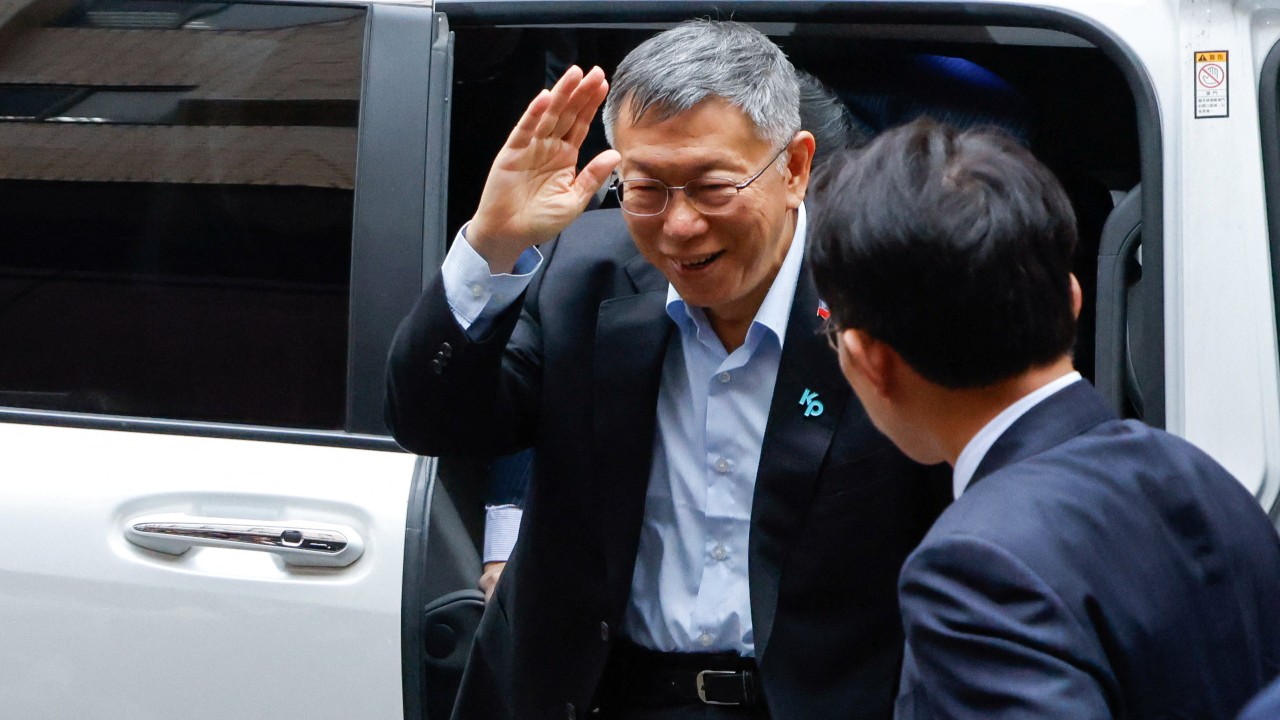
The gavel has finally dropped on the most disruptive political experiment in modern Taiwanese history. Ko Wen-je, the surgeon-turned-politician who promised to bleach the "black gold" out of Taipei’s backrooms, has been sentenced to 17 years in prison. The Taipei District Court’s ruling on corruption and malfeasance charges related to the Core Pacific City redevelopment project does more than just end a career. It shatters the myth of the "Third Way" that had captivated a generation of voters weary of the traditional blue-green duopoly.
At the heart of the case is a floor area ratio (FAR) bonus that turned a shopping mall into a goldmine. Prosecutors argued, and the court agreed, that Ko used his authority as Mayor to grant an unprecedented 840% floor area ratio to the Core Pacific City project. This was not a minor administrative tweak. It was a massive windfall for the Core Pacific Group, allegedly facilitated by a complex web of kickbacks and pressure applied to city planning officials who originally balked at the deal.
The Calculus of a 17 Year Sentence
The severity of the sentence reflects a judicial system exhausted by the revolving door of municipal corruption. Ko was found guilty under the Anti-Corruption Act for seeking personal gain through his official position. The 17-year term is a clear signal. The court rejected the defense’s narrative that Ko was a "clueless" academic outsider who simply deferred to technical experts. Instead, the evidence pointed toward a deliberate circumvention of established zoning laws to benefit a specific corporate entity.
Money is the trail that never lies. Investigators tracked a series of suspicious "donations" and payments that flowed through accounts linked to the Taiwan People’s Party (TPP) and Ko’s personal associates. While Ko’s legal team maintained these were legitimate political contributions, the timing coincided too perfectly with key approvals for the Core Pacific project. The court viewed these not as support for a political movement, but as the price of admission for extraordinary regulatory favors.
The Mechanics of the Core Pacific Windfall
To understand the scale of the crime, one must understand the value of air in Taipei. In a city where land is the most precious commodity, the ability to build higher is the ability to print money. The standard floor area ratio for the site was significantly lower than what was eventually granted. By pushing the ratio to 840%, the city effectively handed the developer billions of New Taiwan Dollars in potential real estate value.
This wasn't just about height. It was about the precedent. When the Taipei City Planning Commission initially resisted the expansion, citing a lack of legal basis, the Mayor’s office intervened. This top-down pressure is what converted a standard regulatory process into a criminal enterprise. It turned the city’s urban development department into a concierge service for a well-connected conglomerate.
A Legacy in Rubble
Ko Wen-je built his brand on the "White Force"—a claim of clinical purity. He often spoke of "transparency" and "SOPs" as if they were holy incantations that would protect him from the rot inherent in the system. His supporters, largely young professionals and students, saw him as the only honest man in a room full of thieves. That image is now the greatest casualty of the trial.
The "White Force" turned out to be just another shade of grey. The TPP, which was built entirely around Ko’s personality and perceived integrity, now faces an existential crisis. Without its founder and with its primary selling point—incorruptibility—proven false, the party has nowhere to go. It is a hollow shell, holding seats in the Legislative Yuan but possessing no moral center.
The Corporate Collateral
Core Pacific Group Chairman Sheen Ching-jing, also sentenced in this sweep, represents the other side of the coin. The symbiotic relationship between ambitious politicians and cash-rich developers is an old story in Taiwan, but this case exposed how the mechanisms have evolved. It wasn't just a suitcase full of cash under a table. It was the manipulation of "urban renewal" incentives and "public interest" clauses to justify private gain.
Business leaders across Taipei are now scrubbing their calendars and reviewing their "donations." The Ko verdict suggests that the old ways of doing business—where a mayor’s "special project" could override decades of zoning law—are becoming a high-stakes gamble with a very high probability of jail time.
The Power Vacuum in the Legislative Yuan
The political fallout extends far beyond the prison walls. In the Legislative Yuan, the TPP held the balance of power. They were the "kingmakers" who could sway legislation between the ruling Democratic Progressive Party (DPP) and the opposition Kuomintang (KMT). With Ko behind bars, that leverage has evaporated.
The TPP caucus is now a group of orphans. Some members will inevitably drift toward the KMT, seeking the shelter of a larger organization. Others may try to maintain a "pure" TPP identity, but they will be fighting a ghost. The 2028 presidential landscape has been fundamentally reshaped. The middle ground has been salted, and the two-party system is set to tighten its grip once again.
Why the Prosecution Succeeded
Many expected Ko to slip the noose. He is a master of obfuscation, often using his "eccentric professor" persona to deflect difficult questions. However, the prosecution adopted a "follow the data" strategy that bypassed his rhetoric. They didn't just look for a "smoking gun" meeting; they looked at the digital footprints of city officials and the flow of funds through shell entities.
- Evidence of Direct Interference: Internal memos showed Ko’s signature on documents that ignored the warnings of his own legal advisors.
- Financial Discrepancies: Millions in unexplained funds appeared in accounts controlled by his inner circle during the exact window of the project’s approval.
- Testimony of Subordinates: Several city officials, fearing their own indictments, turned state's witness, describing a culture of fear where "getting the boss what he wanted" was the only priority.
This was a victory for the civil service as much as it was for the judiciary. It validated the bureaucrats who tried to say "no" and were silenced. It proved that the "SOP" Ko so frequently touted was actually his undoing, as the paper trail he created to look efficient became the roadmap for his conviction.
The Death of the Outsider Myth
Taiwan has a long history of falling in love with "outsiders" who promise to fix a broken system. From Chen Shui-bian to Ma Ying-jeou, the cycle of hope and disappointment is well-documented. Ko Wen-je was supposed to be different because he wasn't a career politician; he was a doctor who saved lives. He was supposed to treat the body politic with the same rigor he applied in the ICU.
Instead, he proved that the "outsider" is often more vulnerable to corruption because they lack the institutional guardrails of a traditional party. They rely on a small, loyalist inner circle that operates without oversight. They mistake their own electoral mandate for a license to ignore the law. When the surgeon finally opened the patient, he found that he had become the very cancer he promised to excise.
The 17-year sentence is a grim reminder that in the high-stakes world of Taipei real estate and politics, there are no shortcuts to integrity. The White Tower has fallen, and the rubble has buried the aspirations of millions who thought they had finally found a clean path forward.
Look at the bank records and the zoning maps if you want to see the future of Taiwanese politics. The era of the "charismatic amateur" is over, replaced by a cold, judicial reality that demands more than just a clever slogan and a lab coat. Would you like me to analyze the specific financial structures used to hide the kickbacks in the Core Pacific case?