The High Stakes of Low Cost Luxury
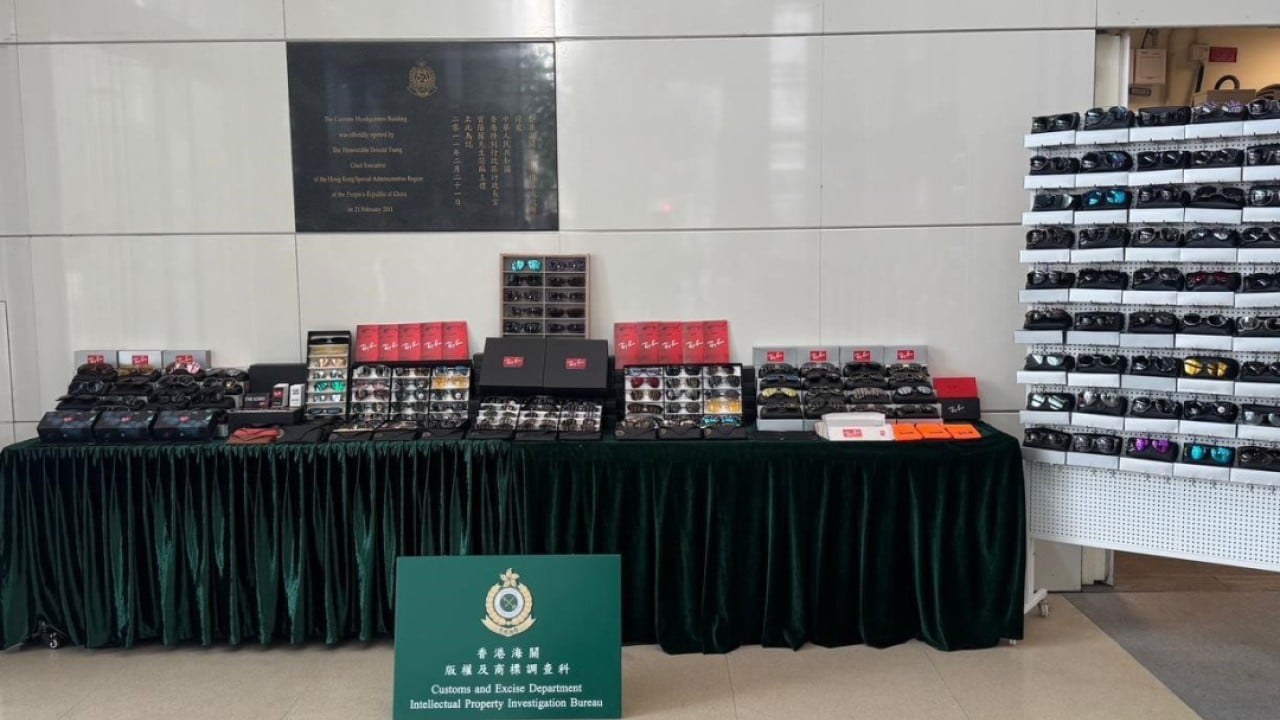
Hong Kong Customs officials recently dismantled a sophisticated counterfeit eyewear ring, seizing 3,200 pairs of knockoff glasses with an estimated market value of HK$2.2 million. While the arrests of five individuals—three men and two women—grabbed the local headlines, the scale of this operation reveals a much darker reality about the global trade in illicit optics. This wasn't a handful of street hawkers selling plastic frames on a blanket. This was a coordinated distribution network utilizing high-end showrooms and "mobile warehouses" to bypass traditional law enforcement detection.
The seizure, centered in the bustling shopping districts of Mong Kok and Tsim Sha Tsui, highlights a growing trend in the counterfeit market. Criminal syndicates are moving away from obvious, low-quality fakes. They are now producing high-fidelity replicas that can fool even seasoned retail staff. For the consumer, the danger isn't just a bruised ego or a wasted HK$500. It is a matter of public health. These seized frames, branded with the logos of world-renowned luxury houses, rarely offer the UV protection they claim, turning a fashion accessory into a literal hazard for the wearer’s retinas.
The Anatomy of a Modern Raid
The operation began with a tip-off. In the world of intellectual property enforcement, these leads often come from the brands themselves, who employ private investigators to track the flow of "gray market" and counterfeit goods. Hong Kong Customs followed the breadcrumbs to a series of fixed-pitch stalls and more secretive indoor showrooms.
The strategy used by the suspects was clever. By keeping the bulk of their stock in nearby vans or small, short-term rental units, they limited their exposure. If a stall was raided, only a few dozen pairs would be lost. However, the coordinated strike on this specific network suggests that authorities have shifted their focus from the retail "leaves" to the distribution "branches."
Among the HK$2.2 million in goods were replicas so convincing they required official brand examiners to confirm the fraud. The syndicates are now using the same materials—acetate, specialized alloys, and even polarized lenses—as the legitimate manufacturers. They have bridged the quality gap, making the "bargain" far more seductive and the crime far more profitable.
Why the Counterfeit Optics Market is Exploding
To understand why a criminal would risk a seven-year prison sentence and a HK$500,000 fine for a box of sunglasses, you have to look at the margins. The cost to produce a high-quality counterfeit frame in mainland factories is often less than US$5**. When that frame is sold in a Hong Kong "private showroom" for **HK$800 (roughly US$100), the profit margin eclipses almost any other consumer good, including narcotics in some jurisdictions.
The Luxottica Effect
The global eyewear market is dominated by a few massive entities that control everything from design to distribution. This consolidation has pushed the price of genuine luxury frames into the stratosphere, often exceeding HK$4,000 for a simple pair of acetate shades. This price floor creates a massive vacuum. When the "real" version of a product costs twenty times its manufacturing value, the incentive for counterfeiters to fill that gap is irresistible.
The Social Media Showroom
Counterfeiters no longer need to whisper to tourists on Nathan Road. They use encrypted messaging apps and private social media groups to showcase their "1:1 quality" stock. Potential buyers are invited to nondescript commercial buildings where the shopping experience mimics a high-end boutique. This "appointment only" model provides a layer of security for the sellers and a sense of exclusivity for the buyers, who often convince themselves they are buying "factory overstock" rather than illegal counterfeits.
The Hidden Danger to Your Eyesight
We often treat counterfeit fashion as a victimless crime. If a billionaire designer loses a few hundred dollars in royalties, the average shopper doesn't lose sleep. But eyewear is different from a fake handbag or a knockoff t-shirt. It is a medical device.
Genuine sunglasses are coated with specific chemicals to block Ultraviolet (UV) radiation. When you wear dark lenses, your pupils dilate to let in more light. If those lenses are merely tinted plastic without a UV filter, your dilated pupils are exposed to a concentrated dose of harmful radiation.
- Corneal Burns: Short-term exposure can lead to photokeratitis, essentially a sunburn on the eye.
- Cataracts: Long-term use of fake lenses accelerates the clouding of the eye's natural lens.
- Macular Degeneration: Permanent damage to the center of the retina, leading to vision loss.
During the Hong Kong raids, the seized goods lacked any verifiable safety certifications. They are, in the most literal sense, dangerous to the public.
The Logistics of a Shadow Industry
How do thousands of fake frames enter one of the most heavily monitored ports in the world? The answer lies in the volume of trade. Hong Kong handles millions of TEU (twenty-foot equivalent units) every year. Customs cannot inspect every box.
- Mismarking: Shipments are often labeled as "plastic parts," "unbranded hardware," or "toys."
- Transshipment: Goods move from mainland China through various Southeast Asian ports before arriving in Hong Kong, masking their origin.
- The "Last Mile" Van: As seen in this recent arrest, the final stage of the journey involves mobile storage. Using vans parked in high-density areas allows sellers to replenish stock in minutes without keeping a large, vulnerable inventory inside a storefront.
This "just-in-time" delivery for fakes shows a level of logistical maturity that mirrors legitimate e-commerce giants. The five people arrested were likely just the final link in a chain that stretches deep into industrial provinces across the border.
Identifying the Fraud in Your Pocket
If you are offered a deal that feels too good to be true in Tsim Sha Tsui, it is. However, as the quality of fakes improves, the "tells" are becoming harder to spot.
The Weight Test
Authentic luxury frames use high-grade acetate or solid metal. Counterfeits, even good ones, often feel "top-heavy" or excessively light because they use cheaper fillers in the plastic or hollowed-out metal components.
The Hinge Integrity
Open and close the arms. A genuine pair from a house like Chanel or Gucci will have a smooth, consistent resistance. Counterfeits often feel "gritty" or have a hinge that flops open too easily. Look for the screw; legitimate brands rarely use standard Phillips-head screws that look like they came from a hardware store.
The Packaging Fallacy
Counterfeiters have perfected the box, the cloth, and the "certificate of authenticity." In many cases, the packaging is more convincing than the glasses themselves. Do not rely on the presence of a "gold-stamped" card as proof of origin.
The Legal Reality
Under Hong Kong’s Trade Descriptions Ordinance, the penalties are severe. The government is trying to protect the city's reputation as a "shoppers' paradise" and a hub for intellectual property rights. But as long as the demand for the "look" of wealth exists without the desire to pay for the "cost" of it, these raids will remain a game of whack-a-mole.
The HK$2.2 million seizure is a victory for the department, but it represents a fraction of the illicit goods flowing through the territory. To truly dent this trade, the focus must shift from the stalls in Mong Kok to the digital payment processors and the landlords who turn a blind eye to what is happening in their subdivided commercial units.
If you are looking for new eyewear, avoid any seller who cannot provide a clear chain of custody or who operates out of a temporary space. Verify the retailer through the brand's official website before handing over your credit card. Your vision is worth more than a discounted logo.