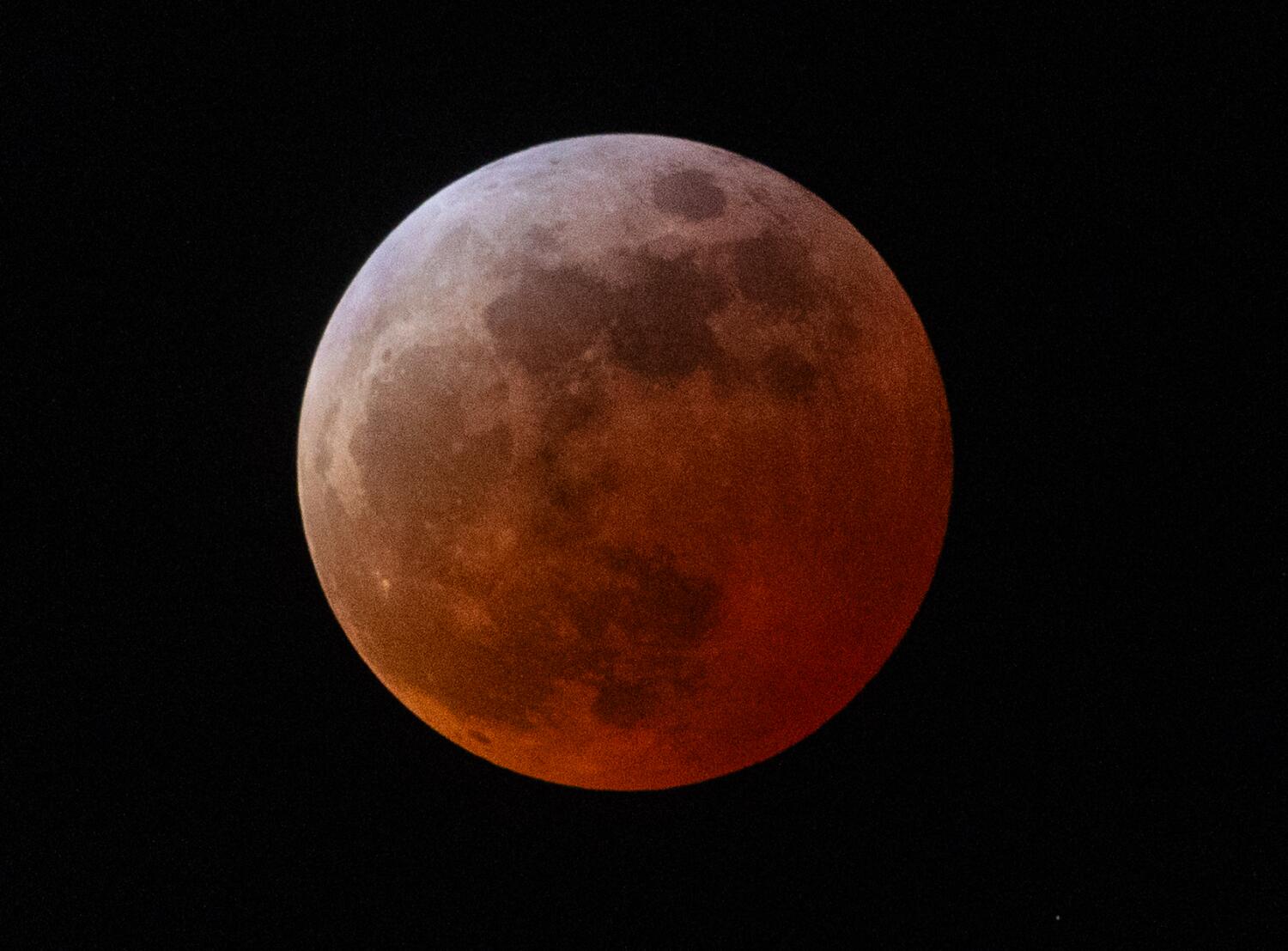
You don’t need a fancy telescope to see the best show in the solar system. Most people think astronomy requires expensive glass or a degree in physics, but a total lunar eclipse proves them wrong. It’s a massive, slow-motion alignment that turns the moon a deep, haunting red. It looks like something out of a big-budget sci-fi movie, yet it’s just physics playing with light.
If you've ever missed one because you thought it was "just the moon," you’re doing it wrong. This isn’t a blurry dot in the distance. It’s a transformation of the only other world humans have stepped on. It happens because the Earth slides directly between the Sun and the Moon, casting a long shadow into space.
The Science of the Blood Moon
When the moon enters the darkest part of Earth's shadow—the umbra—it doesn't just vanish. If our planet were a dead rock with no atmosphere, the moon would go pitch black. But Earth is wrapped in a thin layer of air. As sunlight passes through our atmosphere, the shorter blue wavelengths of light get scattered away. Only the longer red wavelengths make it through.
Think of it as the light from every sunrise and sunset on Earth happening all at once, projected onto the lunar surface. That’s why it turns red. The specific shade depends on what’s floating in our air. If there’s been a recent volcanic eruption or heavy forest fires, the moon might look like a dark, bruised purple or charcoal. On a clear night, it’s a bright, copper orange.
Breaking Down the Stages
An eclipse isn't a single event. It's a three-hour process. You'll first notice the penumbral stage. This is subtle. The moon looks slightly dimmed, like someone turned down a lamp in the room. Most people ignore this part, and honestly, you can too.
The real action starts with the partial eclipse. A dark "bite" appears on the edge of the moon. It grows steadily over an hour. This is the moment you realize how fast we’re actually moving through space. Finally, totality hits. This is the peak. The moon is fully engulfed in shadow and begins to glow with that eerie red light.
How to Get the Best View
You don't need a dark-sky preserve. You can see this from a parking lot in the middle of a city. Unlike solar eclipses, which require special glasses to keep your retinas from frying, a lunar eclipse is perfectly safe to stare at with the naked eye.
Bring binoculars if you have them. Even a cheap pair reveals the craters and "seas" of the moon bathed in red. It adds a sense of depth you can’t get with your eyes alone. You start to see the moon as a three-dimensional sphere rather than a flat disc.
Weather is Your Only Enemy
Cloud cover is the only thing that can ruin this. Always check a high-resolution satellite map an hour before you go out. If it looks patchy, be ready to drive twenty miles. It’s worth the gas. I’ve seen people give up because it was cloudy in their backyard, while clear skies were just a short hop away. Don't be that person.
Common Misconceptions About the Red Tint
People call it a "Blood Moon," but that’s not a scientific term. It’s a media-friendly name that stuck. Some folks get worried that it’s a sign of something bad. It’s not. It’s just Rayleigh scattering. It’s the same reason the sky is blue and the sunset is orange.
There’s also a myth that the moon gets bigger during an eclipse. It doesn't. If it looks huge, that’s just the "moon illusion." Your brain compares the moon to objects on the horizon like trees or buildings and tricks you into thinking it’s massive. It’s a cool effect, but the moon is the same size it was yesterday.
Why This Eclipse is Unique
Every eclipse has a different "L-scale" rating, named after the astronomer André-Louis Danjon. The Danjon Scale runs from 0 to 4.
- L=0: A very dark eclipse. The moon is almost invisible.
- L=2: Deep red or rust-colored moon with a dark central shadow.
- L=4: A bright copper-red or orange eclipse with a bluish rim.
Watching the color shift tells you about the health and state of Earth's atmosphere. You’re literally looking at a reflection of our planet’s air quality.
Photography Tips for Beginners
Don't just point your phone and hope for the best. You'll end up with a blurry white blob. If you're using a smartphone, you need a tripod or a steady surface. Use a "night mode" or manual exposure setting.
Lower the exposure. The moon is surprisingly bright, and your camera will try to overexpose it. Tap the moon on your screen and slide the brightness down until you see the details of the craters. If you have a DSLR, use a long lens—at least 200mm—and a slow shutter speed. Since the moon moves, don't go longer than a few seconds or you'll get motion blur.
Timing Your Night
The best part of a lunar eclipse is that it lasts. A solar eclipse gives you maybe four minutes of totality. A lunar eclipse gives you over an hour. You have time to grab a coffee, talk to your neighbors, and really soak it in.
Check the local transit times for your specific zip code. Most major astronomy sites like TimeandDate or NASA's eclipse page provide exact minute-by-minute breakdowns. Set an alarm for ten minutes before totality starts. That’s the "sweet spot" where the contrast between the dark shadow and the remaining sliver of white light is most dramatic.
Why We Keep Looking Up
There’s something grounding about seeing the clockwork of the universe. We spend our days staring at screens and worrying about tiny problems. Then, something like this happens. It reminds you that we're riding a rock through a massive vacuum.
It’s a shared experience. Millions of people are looking at the same red orb at the same time. It’s one of the few times humanity looks in the same direction.
Stop what you’re doing when the next one happens. Put the phone down for a minute after you take your photo. Just look at it. You’re seeing the shadow of your own home cast onto another world.
Check your local forecast now. Find a spot with a clear view of the horizon. Pack a chair and a blanket because it gets cold standing still for two hours. Don't wait for the morning news to show you pictures of what you could have seen with your own eyes.