The belief that the United States is a "sleeping giant" for soccer media is the most expensive delusion in sports business. Every three years, a fresh crop of venture-backed executives enters the fray, armed with pitch decks full of demographic charts and "untapped potential." They point to the 2026 World Cup as if it’s a guaranteed liquidity event. They talk about "capturing the attention" of a fragmented audience.
They are almost always wrong.
The mistake isn't a lack of passion. It’s a fundamental misunderstanding of how the American sports consumer actually functions. Investors are pouring millions into "community-driven platforms" and "lifestyle brands" while ignoring the brutal reality of the attention economy. Soccer in America isn't a single market; it’s a chaotic collection of silos that hate each other.
The Myth of the Monolithic Soccer Fan
Most media startups build their strategy on the "rising tide" theory. They assume that if you like the Premier League, you’ll eventually care about MLS, and if you watch the USWNT, you’re a prime candidate for a subscription about the Bundesliga.
This is total nonsense.
The American soccer fan is tribal to a fault, but not for the sport itself. The "Euro-snob" who wakes up at 7:00 AM to watch Liverpool has zero interest in the tactical struggles of a mid-table squad in Ohio. The Liga MX viewer—the largest soccer television audience in the country—is consistently ignored by English-language startups trying to "cultivate" an audience that already exists elsewhere.
When a media company says they want to "unite the fans," what they’re really saying is they don't know who their customer is. You cannot scale a business on the premise of a "global game" when the consumption habits are strictly local or hyper-specific to elite European tiers. I’ve watched companies burn through Series A rounds trying to be everything to everyone. They end up being nothing to nobody.
The 2026 World Cup is a Trap
"Wait until 2026," the consultants whisper. They claim the North American World Cup will be the "inflection point" where soccer finally moves from a niche interest to a top-three sport.
History says otherwise. We saw this movie in 1994. We saw it with the "Beckham Experiment" in 2007. We saw it with the arrival of Messi in Miami. Each time, there is a spike in curiosity, followed by a massive, silent retreat to the familiar comforts of the NFL and NBA.
The World Cup is an event, not a habit.
For a media company, banking on a quadrennial tournament to sustain a permanent business model is like a retail store hoping to survive the entire year on Black Friday sales. The "captive audience" these startups chase doesn't want another news aggregator or a "bold new voice" in commentary. They want access.
In the current broadcast environment, access is owned by the giants. NBC, Apple, and Disney have locked the gates. If you don't own the rights to the matches, you are essentially a parasite living off the scraps of the conversation. And in the digital age, being a "second-screen experience" is a race to the bottom of the CPM charts.
The High Cost of "Authenticity"
Startups love the word "authentic." They hire former players and influencers to create "raw" content. They think that by removing the polish of traditional broadcasting, they can win over Gen Z.
Here is the truth: Authenticity is cheap to produce but impossible to monetize at scale.
The "Creator Economy" model for soccer media works for individuals on TikTok or YouTube because their overhead is a smartphone and a ring light. The moment you add a C-suite, a physical studio, and a sales team, your "authentic" content needs to generate millions in revenue.
But the American soccer fan is already over-saturated. Between Reddit, X (formerly Twitter), and specialized podcasts, the "community" is already built. You aren't "cultivating" anything; you’re trying to move into a neighborhood that’s already full and asking the residents to pay you rent.
The Math of Failure
Let’s look at the actual mechanics of these media plays. A typical startup aims for a mix of branded content and perhaps a premium subscription tier.
- Customer Acquisition Cost (CAC): Massive. You are competing with betting apps and global athletic brands for the same eyeballs.
- Churn Rate: High. Fans follow the season. When the whistle blows on the final matchday, the subscription cancels.
- Scalability: Limited by language and time zones.
If your plan is to "disrupt" the space by being "the voice of the American fan," you are fighting for a piece of a pie that is being eaten by the clubs themselves. Why would a fan go to a third-party startup for "behind-the-scenes" access when Manchester City or LAFC provides it directly via their own social channels?
Stop Solving Problems That Don't Exist
The "People Also Ask" section of the internet is littered with questions like "How can I follow soccer in the U.S.?" or "What is the best way to learn about soccer?"
The "lazy consensus" answer is to build a guide or a portal. The contrarian truth? The problem isn't a lack of information. It’s an overabundance of it.
Fans don't need more "coverage." They don't need more "analysis" from a 24-year-old who just discovered the offside rule three years ago. They need a filter.
The only way to survive in this market is to be aggressively elitist or aggressively local.
- The Elitist Path: Forget the "general fan." Target the obsessive tactical nerd who will pay $20 a month for data visualizations that explain why a specific pivot midfielder is undervalued. This is a small market, but it’s a loyal one.
- The Hyper-Local Path: Focus on the specific culture of a single city’s soccer scene. Ignore the national conversation. Build a moat around a specific geography that the national broadcasters are too big to care about.
The Messi Mirage
The arrival of Lionel Messi at Inter Miami provided a temporary hit of dopamine to the U.S. soccer media ecosystem. It inflated numbers, drove Apple TV subscriptions, and gave every soccer startup a "case study" to show investors.
But Messi is an anomaly, not a blueprint.
Basing a long-term media strategy on the presence of a once-in-a-century talent is a recipe for disaster. When he leaves—and he will—the casual fans who tuned in for the "celebrity" factor will vanish. The media companies that over-leveraged themselves to "cover the Messi era" will be left holding an empty bag.
I’ve seen this before in other "emerging" markets. The hype creates a bubble of "lifestyle soccer brands" that sell $80 t-shirts and produce glossy "culture" magazines. Within two years, they are either pivoting to a "creative agency" model or quietly folding.
The Inevitability of Consolidation
The current path for these "confident" new media companies is a predictable slide toward being acquired for pennies on the dollar by a gambling company.
In the U.S., soccer isn't being sold as a sport anymore; it’s being sold as an inventory for sportsbooks. If your media company doesn't have a "bet now" button integrated into its core DNA, your valuation is a work of fiction.
The tragedy is that these startups often start with a genuine love for the game. But love doesn't pay for server costs or high-end production crews. The "captive audience" isn't sitting there waiting for a new savior. They are already watching the games, arguing in their WhatsApp groups, and moving on with their lives.
If you want to build something that lasts, stop trying to "cultivate" an audience. Start admitting that the audience is smarter than you, busier than you think, and perfectly happy without your "disruption."
The market doesn't need a new soccer media company. It needs fewer people pretending that soccer in America is a problem that needs to be solved with another digital platform.
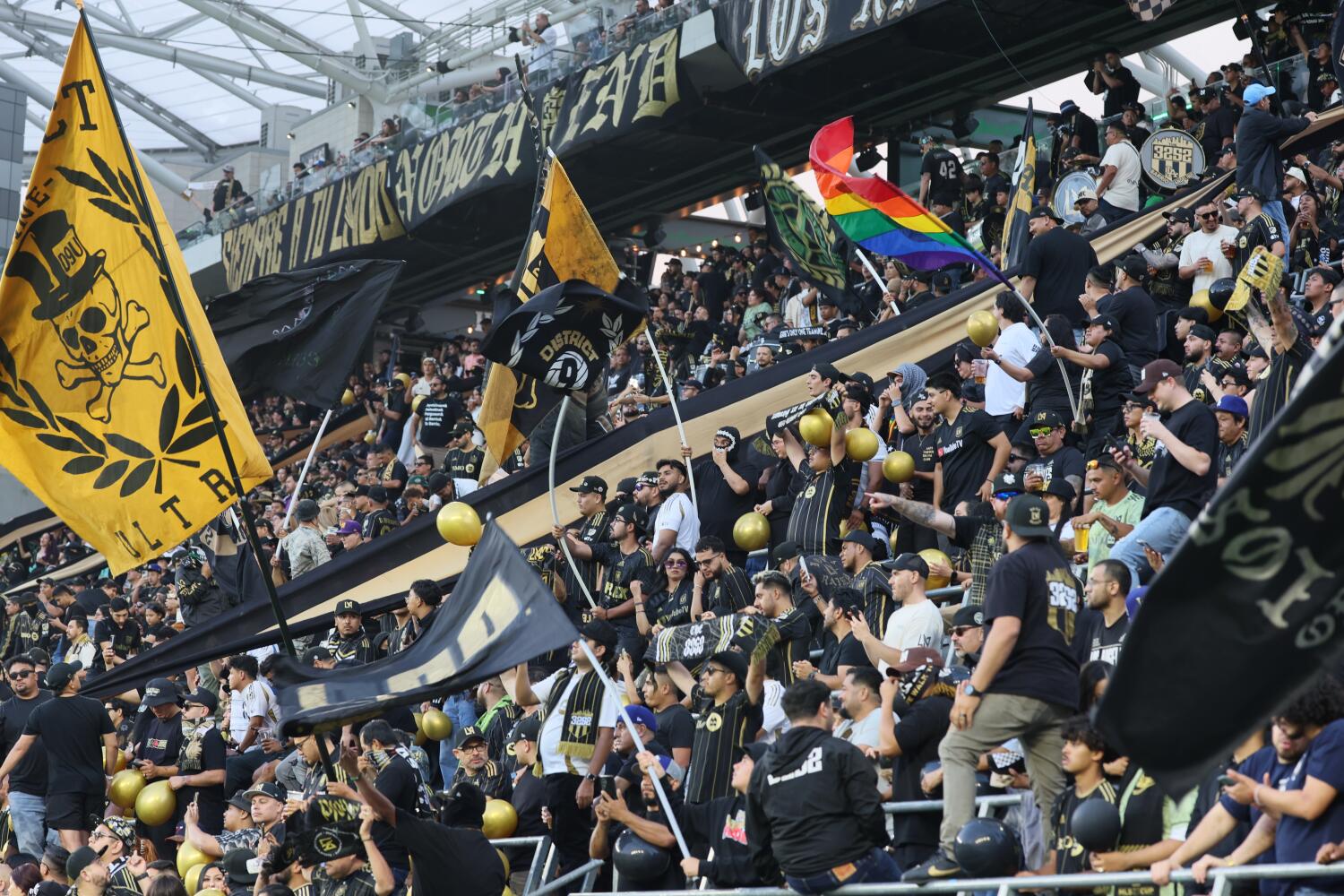
Go buy a ticket to a match. That’s the only captive audience that actually exists.