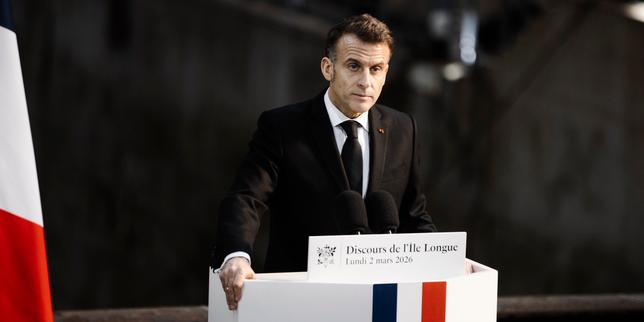
France remains the only European Union member with a nuclear arsenal. That’s a heavy reality. When Emmanuel Macron stood at the Île Longue submarine base recently, he wasn't just giving another military speech. He was throwing down a gauntlet. For decades, Europe leaned on the American umbrella. Now, that umbrella looks a bit leaky.
The French President essentially told his neighbors that France’s "vital interests" have a European dimension. It’s a bold shift. If you’ve followed the shifting sands of NATO and the EU, you know this is a massive departure from the Gaullist tradition of "splendid isolation" regarding the Force de Frappe. Macron is offering a seat at the table, but there's a catch. He wants Europe to wake up and take its own defense seriously.
The End of the American Certainty
We can't ignore the elephant in the room. The United States is distracted. Between internal political fractures and a pivot toward the Indo-Pacific, Washington’s commitment to dying for Danzig or Paris isn't the absolute guarantee it was in 1960.
Macron knows this. His visit to the home of France’s Strategic Oceanic Force (FOST) served as a visual reminder of what real sovereignty looks like. Four Triomphant-class submarines. Sixteen M51 ballistic missiles each. These aren't just props. They are the ultimate insurance policy.
Most European capitals, especially Berlin, have historically been allergic to this conversation. They prefer the "nuclear sharing" model with the U.S., where they host American B61 bombs. But those bombs come with a dual-key system. If the U.S. President says no, those planes stay on the tarmac. France offers something different: a deterrent that's entirely European in its DNA.
What Macron Actually Offered at Ile Longue
He didn't offer to share the "button." Let’s be clear about that. No French leader will ever give up the final authority to launch. What he did offer was a "strategic dialogue."
- Participation in French exercises.
- Deeper coordination on doctrine.
- A shared understanding of what constitutes a "vital interest."
This is more than just talk. It’s an invitation to build a common strategic culture. For a long time, France kept its nuclear secrets locked in a black box. By opening the lid just a crack, Macron is testing whether Germany and others are ready to stop being strategic consumers and start being strategic providers.
The skepticism is real. Critics argue that France just wants the rest of Europe to help foot the bill for its expensive military upgrades. Maintaining a nuclear triad—or in France’s case, a "diad" of subs and Rafale-carried missiles—costs billions of Euros annually. But honestly, in a world where Russia regularly rattles the saber, can Europe afford to keep pretending the Cold War ended with a permanent "happily ever after"?
The Technical Reality of the French Deterrent
France’s power isn't theoretical. It’s backed by the M51.3 missile, a beast of an engine that can hit targets thousands of kilometers away with terrifying precision. The Île Longue base is the heart of this system. It’s one of the most protected places on the planet.
The FOST ensures that at least one submarine is always at sea, hidden in the depths of the Atlantic. It’s the "second strike" capability. Even if France were wiped off the map, that lone sub could deliver a devastating response. This is the level of "hard power" that Macron is bringing to the European bargaining table. He's saying that while others talk about "strategic autonomy," France has been practicing it for sixty years.
Why Berlin is Hesitant
Germany has a complicated relationship with anything nuclear. It’s understandable. But the "Zeitenwende" (turning point) declared by Chancellor Scholz after the invasion of Ukraine hasn't fully reconciled with the nuclear reality.
Berlin recently decided to buy F-35s specifically to continue the U.S. nuclear sharing mission. This was a bit of a snub to Paris. It showed that despite all the talk of "European sovereignty," Germany still trusts Washington more than Paris. Macron’s speech at Île Longue was an attempt to change that math. He’s arguing that a European defense without a European nuclear component is a house built on sand.
Practical Steps for a Unified Shield
If Europe actually wants to take Macron up on his offer, it doesn't happen overnight. It starts with small, unglamorous steps.
- Joint Threat Assessment: Actually agreeing on what Russia or other actors represent to the continent.
- Integrated Command Exercises: Bringing European officers into the planning rooms of the Force Aéroportée Nucléaire (FAS).
- Industrial Cooperation: Ensuring the next generation of delivery systems, like the FCAS fighter, are built with these missions in mind.
The ball is indeed in the court of the allies. France has laid out the terms. You can either keep relying on a distant superpower that might change its mind every four years, or you can start building a deterrent that actually belongs to the continent.
Stop waiting for a signal from the White House that might never come. European leaders need to engage with the French proposal seriously. This means moving past the taboos of the 20th century. It means recognizing that in a world of giants, the only way for Europe to remain a player is to have a stick as big as the ones being carried in Moscow, Beijing, and Washington.
The next move isn't a speech. It’s a budget line and a seat at a briefing in Paris.