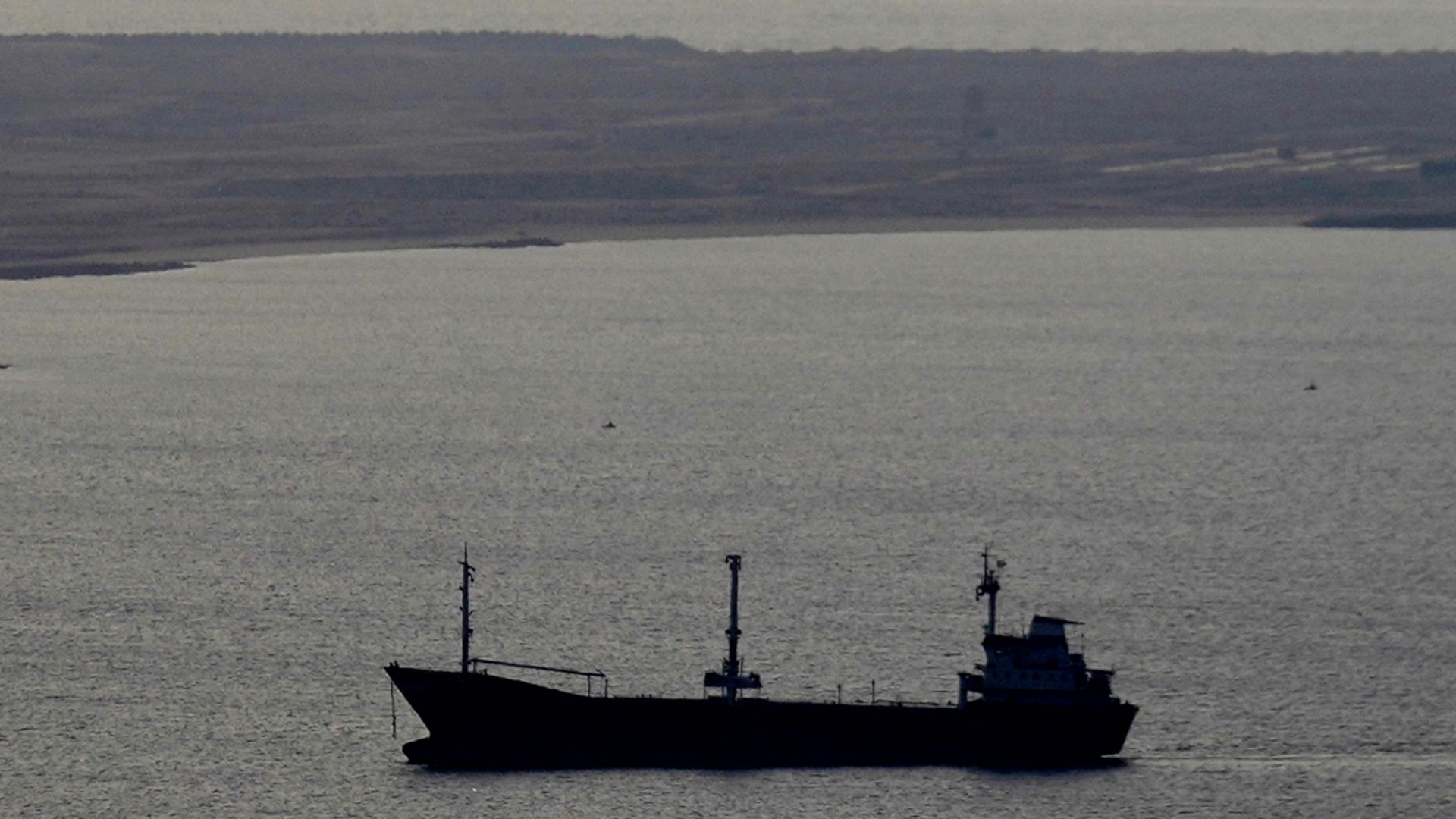
British residential energy costs are no longer dictated by local demand but by the volatility of the Strait of Hormuz. When geopolitical friction in the Middle East escalates, the immediate spike in wholesale gas prices reflects a "risk premium" that bypasses traditional supply-demand curves. For the UK household, the primary vulnerability is not a physical shortage of gas—given the UK's diverse import infrastructure—but the mechanisms of the Ofgem Price Cap, which lags behind market realities and forces consumers into a reactive stance.
The Mechanism of Price Transmission
The link between a conflict in the Middle East and a Londoner’s utility bill is governed by the Intercontinental Exchange (ICE) and the National Balancing Point (NBP). The UK’s energy market operates on a marginal pricing model. This means the price of all electricity is often set by the most expensive generator required to meet demand, which is typically a gas-fired power station.
Global markets view the Strait of Hormuz as a chokepoint through which 20% of the world’s liquefied natural gas (LNG) passes. Even if the UK sources the majority of its gas from the North Sea and Norway, it competes for LNG cargoes on the global stage. If Asian markets (JKM) bid higher due to supply fears, Atlantic prices (NBP and TTF) must rise to attract or retain those same cargoes. This creates a global price floor that rises regardless of local UK storage levels.
The Three Pillars of Household Energy Defense
To mitigate exposure to these macro-shocks, a household must move from a consumption-only model to an energy-management model. This involves addressing three distinct variables: Volume, Timing, and Arbitrage.
1. Volume: The Physics of Thermal Retention
The most direct way to decouple a household from geopolitical volatility is to reduce the base load of energy required to maintain thermal comfort.
- The Fabric First Approach: Before investing in high-tech solutions, the integrity of the building envelope determines the "loss factor." This is the rate at which kilowatt-hours (kWh) leak into the environment.
- Incremental Gains: Upgrading loft insulation from 100mm to 270mm can reduce heat loss through the roof by approximately 20%. While basic, the ROI on this specific intervention is often higher than any technological upgrade because it addresses the fundamental physics of the dwelling.
2. Timing: Breaking the Peak-Load Cycle
UK energy infrastructure is strained between 4:00 PM and 7:00 PM. During these hours, the "Carbon Intensity" of the grid spikes as gas-fired "peaker" plants are brought online to meet demand.
- Time-of-Use (ToU) Tariffs: Households with smart meters can access tariffs that fluctuate based on wholesale costs. In a high-volatility environment caused by international conflict, the spread between "peak" and "off-peak" prices widens.
- Load Shifting: Moving high-energy tasks (dishwashers, washing machines, EV charging) to the 10:00 PM to 5:00 AM window exploits the lower wholesale prices during those periods. This is not merely "saving pennies"; it is a strategic shift to consume energy when the grid is less dependent on the expensive, marginal gas units influenced by global conflict.
3. Arbitrage: Local Storage and Generation
The ultimate defense against a gas price spike is the ability to store energy when it is cheap and use it when it is expensive.
- Battery Storage Systems: By pairing a home battery with a ToU tariff, a household can "buy" energy at 7p/kWh overnight and use it during the 35p/kWh evening peak. This effectively creates a buffer against the volatility of the gas market.
- Solar Integration: While solar generation is seasonally dependent in the UK, its primary value in a high-gas-price environment is the reduction of the "imported" energy requirement. Every kWh generated on a roof is a kWh that does not need to be purchased at a price influenced by Middle Eastern tensions.
The Ofgem Price Cap Paradox
The Ofgem Price Cap was designed to protect consumers from "loyalty taxes" by energy suppliers, but in a period of rapid geopolitical escalation, it becomes a double-edged sword. The cap is calculated based on historical wholesale prices. When a conflict causes a sudden spike, there is a delay before that spike is reflected in the cap.
While this provides a temporary shield, it often results in "price shocks" during the next adjustment period. Furthermore, the cap applies to the price per unit, not the total bill. If a household increases volume during a cold snap while prices are capped, the total financial exposure remains uncapped. Reliance on the regulator for protection is a passive strategy that fails in a sustained high-cost environment.
Structural Vulnerabilities in UK Energy Storage
A critical failure point in the UK's energy strategy is the lack of long-term gas storage compared to European peers like Germany or France. Following the closure and subsequent partial reopening of the Rough storage facility, the UK operates on a "just-in-time" delivery model.
- Pipeline vs. LNG: The UK relies heavily on pipeline gas from Norway and LNG shipments. Pipeline gas is generally more stable but finite.
- The LNG Elasticity Problem: LNG is a highly liquid global commodity. In the event of a closure of the Strait of Hormuz, the UK would be forced to outbid nations like Japan and South Korea for the remaining available cargoes. This "bidding war" is what drives the domestic price rises that UK households see on their statements.
The Strategic Value of the "One Thing"
The "one thing" often cited—fixing a long-term energy contract—is a move of financial hedging. By locking in a fixed rate, a household is essentially purchasing an insurance policy against further escalation. However, this requires a precise calculation of the "risk premium" already baked into the fixed offer.
If a household fixes at the top of a fear-driven market, they may overpay if the conflict de-escalates. The decision to fix should be based on the individual household's "disposable income elasticity." If a 20% rise in energy costs would cause financial insolvency, fixing is a mandatory risk-mitigation step. If the household has the liquidity to absorb fluctuations, staying on a variable tariff allows them to benefit from any rapid de-escalation in the Middle East.
Quantifying the Impact of Smart Thermostats
Modern heating control systems (TPI or Modulating) move beyond the simple "on/off" logic of traditional thermostats.
- Overshoot Reduction: Traditional thermostats allow a room to heat past the set point, wasting energy.
- Zonal Control: Heating only the rooms in use reduces the total volume of gas required. Reducing the temperature of unused rooms to 15°C while maintaining 19°C in living areas can reduce total gas consumption by up to 12%.
In a scenario where gas prices rise by 50% due to international conflict, a 12% reduction in consumption does not just save money; it significantly flattens the household's inflation curve.
The Hydrogen and Heat Pump Transition
The transition away from gas boilers is often framed as an environmental imperative, but in the context of Middle Eastern volatility, it is a matter of national and personal energy security.
- Heat Pump Efficiency: A heat pump typically operates at a Coefficient of Performance (CoP) of 3.0 to 4.0. This means for every 1 unit of electricity, it produces 3 to 4 units of heat.
- Electricity Diversification: Unlike gas, which is a single-source fuel for a boiler, electricity can be generated from wind, solar, nuclear, or hydro. Moving to an electrified heating system allows a household to benefit from the UK’s growing domestic renewable sector, which is fundamentally decoupled from the price of gas in the Strait of Hormuz.
Strategic Implementation for the Current Quarter
The immediate priority for a household is to audit the "Heat Loss Perimeter." This is a manual inspection of all external doors, windows, and loft hatches for air ingress.
- Draught Proofing: Use thermal imaging or simple smoke tests to identify leaks. Sealing these is the lowest-cost, highest-impact action.
- Flow Temperature Optimization: For households with combi boilers, reducing the flow temperature to 55°C (for heating) allows the boiler to operate in condensing mode more frequently, increasing efficiency by 6-8% without any loss of comfort.
- Data Monitoring: Utilize apps that connect to the smart meter's In-Home Display (IHD) to identify "Phantom Loads"—appliances that draw power when not in use.
The geopolitical situation remains fluid. Strategic energy management is not about predicting the date a conflict ends, but about building a household system that is resilient to the inevitable price spikes that follow. The goal is to move the household from a position of "price taker" to "system optimizer."
Evaluate your current energy contract against the "Standard Variable" rate. If the "Fix" is within 10% of the current cap, it serves as a viable hedge against a worsening Middle East conflict. If the premium is higher, focus your capital on physical interventions—insulation and draught proofing—to reduce the volume of kWh purchased, regardless of the price.