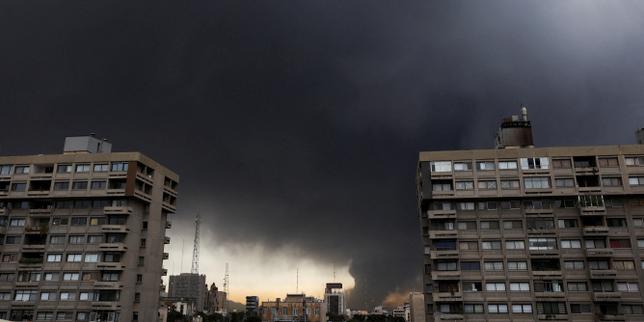
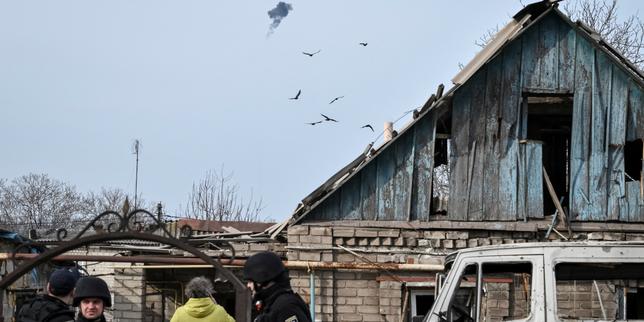
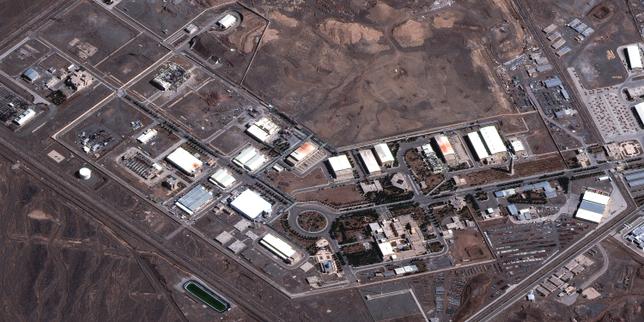
In a glass-walled office in Brussels, a diplomat watches a screen that reflects the glow of a different world. He is checking a satellite feed from the outskirts of Isfahan. On the display, the pixelated streaks of interceptor missiles trace white scars across a midnight sky. He has the phone numbers of every major player in the region. He has the historical maps, the economic white papers, and the sincere desire to prevent a global catastrophe.
What he does not have is the remote control.
The conflict currently reshaping the Middle East has exposed a quiet, devastating reality that most European leaders have spent decades trying to ignore. Europe is no longer a protagonist in the stories that define its own security. It has become a spectator, sitting in the front row of a theater it used to own, watching a play where the actors aren't sticking to the script.
Consider the case of a mid-sized logistics firm in Hamburg. Let’s call the owner Stefan. For thirty years, Stefan’s business relied on the predictability of the Suez Canal. He viewed the geopolitical stability of the Middle East as a background process, like the electricity in his warehouse—always there, never questioned. When the missiles started flying between Tehran and Tel Aviv, Stefan’s world collapsed. Not because of a direct hit, but because of the silence that followed.
He waited for a European response. He expected a naval task force with the "Made in EU" stamp to clear the lanes. Instead, he watched as Washington and Beijing dictated the terms of the new reality. Stefan discovered what the Continent is slowly realizing: influence is a muscle. If you don't use it, it withers until you can't even lift a pen to sign a ceasefire.
The numbers tell a story that the rhetoric tries to hide. For the last decade, European defense spending has been a series of accounting tricks and delayed promises. While the technology of war shifted toward autonomous swarms and long-range precision strikes, the old powers stayed comfortable under a security umbrella they didn't have to carry. Now, as the Iran-Israel shadow war breaks into the light, that umbrella is showing its age.
The stakes are not just about who wins a battle in the desert. They are about the invisible threads of energy and data that keep Berlin and Paris breathing.
When a drone strikes a refinery or a cyberattack darkens a grid, the ripple effects hit the Eurozone before the smoke even clears. Yet, when the time comes to sit at the negotiation table, the chairs are labeled in English and Farsi, Hebrew and Mandarin. The European seat is often tucked away in the corner, reserved for the person who brings the check but isn't allowed to choose the menu.
We often talk about "strategic autonomy" in dry, academic terms. We treat it like a checkbox in a bureaucratic manifesto. But strategic autonomy is actually the difference between being a customer and being a partner. It is the ability to say "no" when the world demands a "yes," and to have the hardware to back it up.
Europe’s current role as a bystander isn't a result of a lack of intelligence or diplomatic skill. It is a result of a fundamental disconnect between its economic weight and its physical reach. You cannot export stability if you cannot project power.
Think of a high-speed train stopped on the tracks because of a signal failure three countries away. The passengers are frustrated. They have paid for their tickets. They are sitting in luxury. But they are entirely dependent on a technician they will never meet, working for a company they don’t control. That is the European Union in 2026. It is a masterpiece of internal cooperation that remains perilously vulnerable to external chaos.
The technology gap is perhaps the most stinging part of this forced retirement. In the skies over Iran, the battle is being fought with AI-driven navigation and electronic warfare suites that were developed in Silicon Valley and the laboratories of Haifa. Europe has the engineers. It has the visionaries. But it lacks the singular, panicked urgency that drives innovation in a war zone. It has traded the "edge" for the "norm."
This isn't just about missiles. It’s about the soul of a continent that once believed it could lead by example.
There is a specific kind of grief in realizing you are no longer the hero of the story. It starts with denial—the belief that one more summit or one more strongly worded communique will turn the tide. Then comes the anger, directed at allies who seem to be moving on without you. Finally, there is the realization.
The diplomat in Brussels eventually turns off his screen. The white streaks over Isfahan have faded. The immediate crisis has paused, though it hasn't ended. He walks to the window and looks out at a city that feels remarkably safe, remarkably quiet, and increasingly disconnected from the engines of history.
He knows that tomorrow, the phone will ring. It will be a call from Washington or perhaps Riyadh, telling him what has been decided. He will take notes. He will offer suggestions. He will be polite.
And then he will hang up and realize that the world is being rebuilt in a shape he no longer recognizes, by hands that do not belong to him.