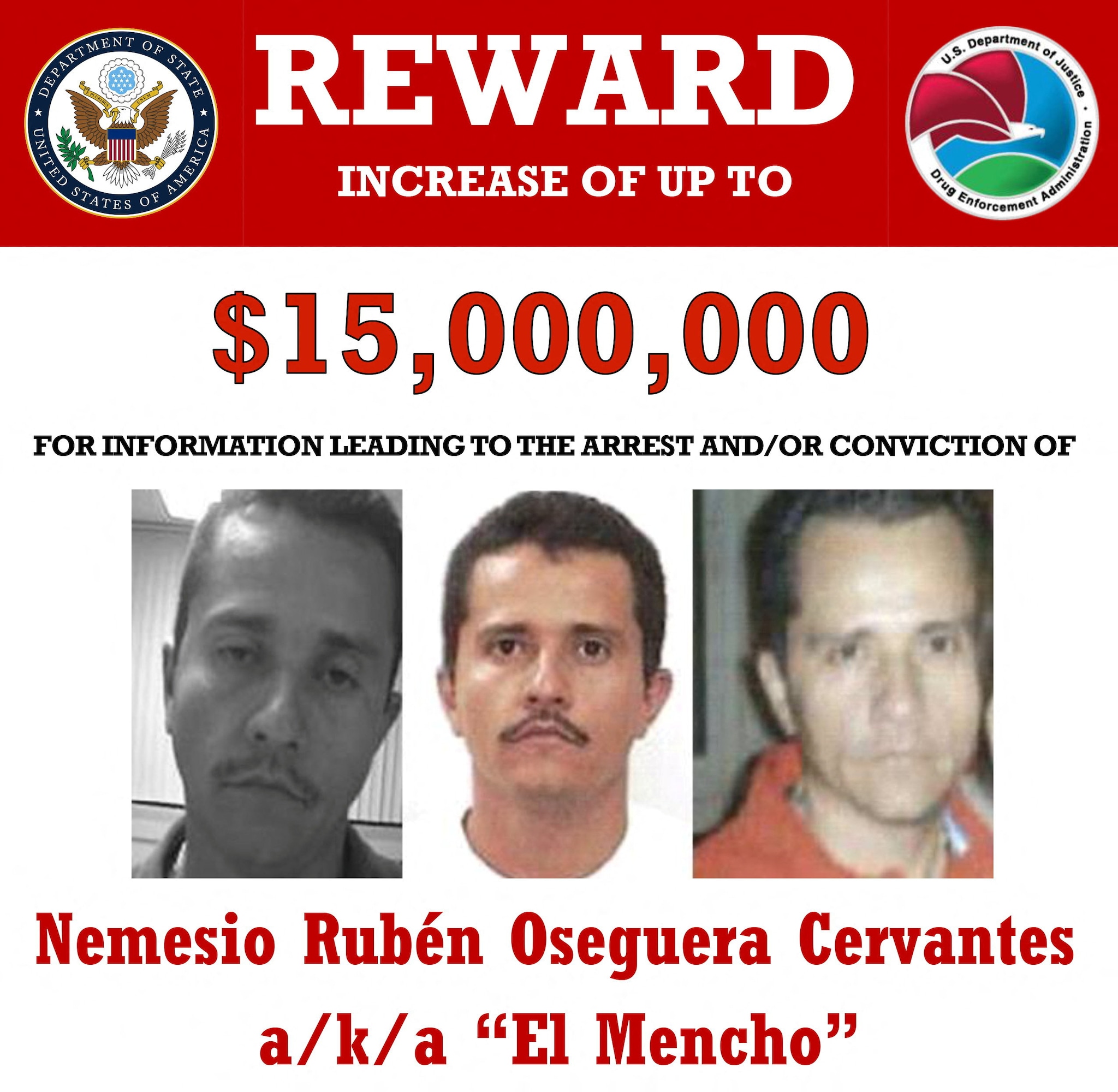
The headlines are screaming victory. Military sources claim Nemesio Oseguera Cervantes, the ghost known as "El Mencho," has finally been cornered and neutralized in a high-stakes raid. The talking heads on cable news are already dusting off the "Mission Accomplished" banners, framing this as the beginning of the end for the Jalisco New Generation Cartel (CJNG).
They are dead wrong.
If you think removing a single man at the top of a multi-billion-dollar global logistics enterprise is a victory, you don't understand how modern organized crime works. You are thinking in terms of 1920s mob movies. You are viewing the world through the "Kingpin Strategy," a failed relic of the 1990s that has done nothing but pour gasoline on the fire of the Mexican drug war for three decades.
Killing El Mencho isn't the solution. It is a massive disruption that creates a power vacuum, triggers a surge in localized violence, and ultimately forces the CJNG to evolve into something even more resilient and harder to track.
The Kingpin Strategy is a Proven Failure
Let’s look at the "battle scars" of this policy. I have watched this cycle repeat with monotonous, bloody regularity. From the takedown of Arturo Beltrán Leyva in 2009 to the multiple arrests of Joaquín "El Chapo" Guzmán, the result is always the same: a temporary "victory" followed by a permanent increase in body counts.
The logic of the Kingpin Strategy is simple but flawed: cut off the head, and the body dies. In reality, these organizations aren't humans; they are hydras. When you remove a charismatic, centralizing figure like El Mencho, you don't destroy the infrastructure. You destroy the order.
- Fragmentation: Sub-commanders who previously answered to one boss now fight for the throne.
- Diversification: To fund these internal wars, smaller factions move away from high-level trafficking and into "predatory" crimes like kidnapping, extortion, and fuel theft.
- Professionalization: The survivors of these power struggles are inevitably younger, more violent, and more technologically savvy than the old guard.
We saw this with the Gulf Cartel. We saw it with Los Zetas. To celebrate the death of a leader is to ignore the 50 lieutenants who are now unchained and hungry.
The Myth of the Irreplaceable Leader
The media loves the myth of the "narcotraficante" as a singular, god-like genius. It makes for better TV. But the CJNG is less like a kingdom and more like a franchise-model corporation.
The CJNG operates on a decentralized structure. They have a brand, a set of standard operating procedures, and established supply chains that stretch from precursor chemical labs in China to street corners in Chicago. El Mencho was the CEO, not the inventory.
When a CEO dies, the board of directors meets. In the cartel world, the "board" meets with lead and fire, but the business continues. The logistics of fentanyl production and cocaine transit are too profitable to stop because one man is out of the picture. If the demand in the United States remains at record highs, the supply will find a new manager.
Why the Military Raid is a Tactical Win and a Strategic Disaster
The Mexican military is excellent at high-value target extraction. Their special forces are world-class. But tactical brilliance cannot fix a broken strategic premise.
By prioritizing the "kill or capture" of individual leaders, governments ignore the structural reasons why cartels exist:
- Institutional Weakness: Local police forces are often outgunned or on the payroll.
- Economic Despair: In many regions, the cartel is the only employer paying a living wage.
- The Fentanyl Pivot: We are no longer dealing with bulky plant-based drugs. Synthetic opioids are produced in small, mobile labs that don't require a "boss" to oversee vast plantations.
Imagine a scenario where the CJNG splits into six smaller "mini-cartels." Instead of tracking one large organization with a known leadership structure, intelligence agencies must now track six different entities with shifting alliances. The workload sextuples. The violence becomes unpredictable. The collateral damage to the civilian population skyrockets.
Stop Asking if He is Dead and Start Asking Who is Next
People always ask: "Who will take over?" This is the wrong question. It assumes the goal is to find a replacement. The real question is: "What does the CJNG look like as a headless entity?"
The "brutally honest" answer is that the CJNG will likely become more aggressive in the short term to project strength. They cannot afford to look weak during a transition. This means more blockades, more displays of "monstruos" (armored vehicles), and more public executions to deter internal rivals.
If you want to actually hurt the CJNG, you don't shoot the leader. You target the money launderers in the legal economy. You target the chemical suppliers. You target the corrupt officials who provide the "social shield."
But those things are hard. They aren't "cinematic." They don't provide a photo op with a blindfolded prisoner or a body bag.
The Price of "Victory"
The death of El Mencho will be recorded as a win for the current administration. They will cite it in speeches. They will use it to justify further military spending.
Meanwhile, on the ground in Jalisco, Michoacán, and Guanajuato, the locals aren't celebrating. They are bracing for the inevitable "reacomodo"—the violent reshuffling of territory that follows every major kingpin's fall. They know what the policymakers in D.C. and Mexico City refuse to admit: the monster isn't the man; the monster is the market.
Until the underlying mechanics of the drug trade are addressed—specifically the insatiable demand and the ease of laundering billions through the global financial system—the death of El Mencho is nothing more than a personnel change in a company that never stops hiring.
Stop cheering for the headline. Start worrying about the vacuum.