Google Maps defines modern existence. If a business isn’t on the map, it doesn’t exist for the average consumer. If a road isn’t blue-lined by Street View, it is a wilderness. Yet, in a world where the tech giant has mapped the literal floor of the ocean and the remote hiking trails of the Galapagos, one American settlement remains a stubborn, gray void. Noatak, Alaska, is the only significant permanent community in the United States that Google’s ubiquitous cameras have never reached.
This isn't a simple case of a missed turn or a dead battery. It is a story of extreme logistics, cultural sovereignty, and the widening gap between the hyper-connected lower 48 and the "off-grid" reality of the Arctic. While tech enthusiasts talk about the metaverse and real-time digital twins of cities, the residents of Noatak live in a gap in the global record.
The Logistics of Invisibility
Mapping the world requires more than just a satellite. To achieve the level of detail users expect, Google relies on its fleet of Street View cars, snowmobiles, and "trekkers"—backpack-mounted camera rigs. In the contiguous United States, this is a matter of fuel and time. In the Noatak National Preserve, those variables change entirely.
Noatak sits above the Arctic Circle. No roads lead there. You cannot drive a camera-equipped Subaru Outback into town from Anchorage or Fairbanks. Access is strictly by bush plane or, in the summer months, by boat along the Noatak River. During the winter, snowmachines are the primary mode of transport across the tundra.
The cost of transporting a specialized mapping team and their delicate, high-resolution equipment to a village of roughly 570 people is astronomical. For a company driven by data ROI, the "cost per pixel" in Noatak simply doesn't compute. Google has mapped the Taj Mahal and the International Space Station because those locations offer massive symbolic or commercial value. A subsistence-based village in the Brooks Range offers neither to a Silicon Valley balance sheet.
Why Satellite Imagery Isn't Enough
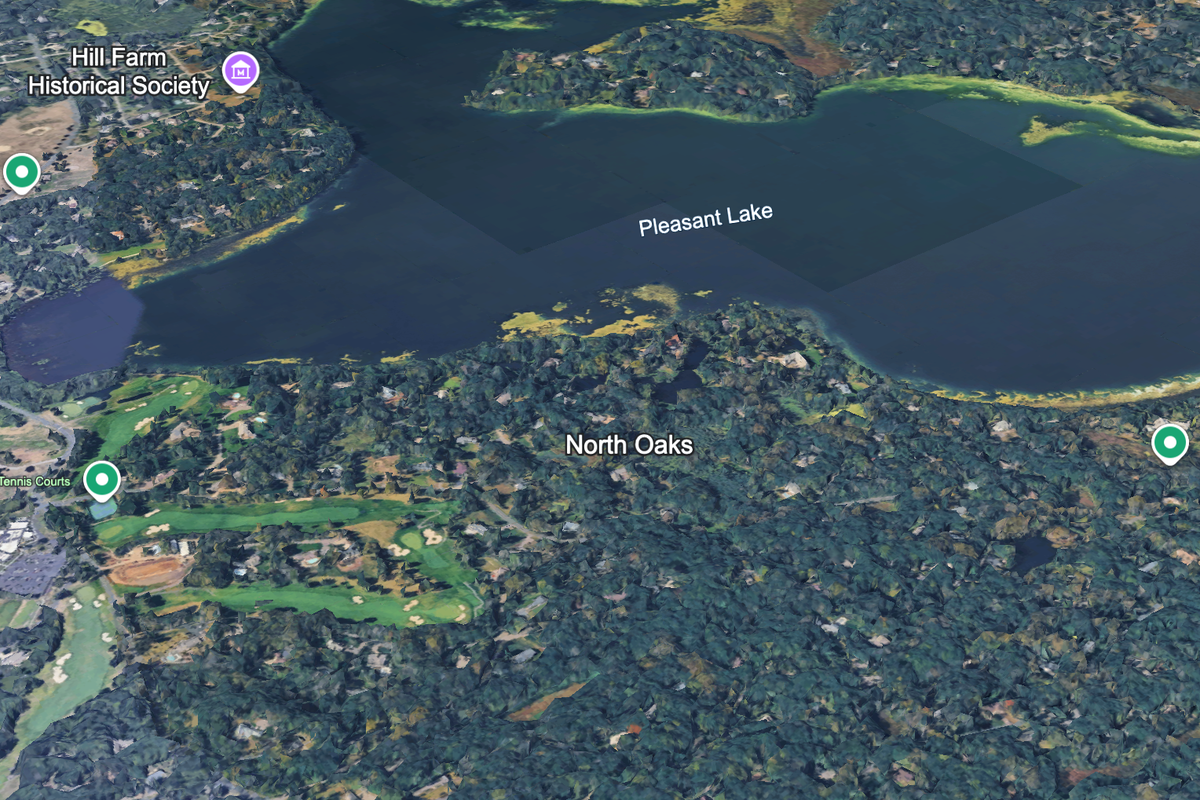
Critics often point out that you can see Noatak from space. Zoom in on Google Earth, and you will see the gravel airstrip, the clusters of homes, and the winding river. But satellite imagery is a flat, detached perspective. It provides no context for the ground-level reality of the community.
Street View provides the data that fuels modern logistics. It tells delivery drivers where a front door is. It allows emergency services to visualize an intersection before they arrive. It gives local businesses a "Great Place to Work" or "Open Now" tag that links them to the global economy. Without this ground-level data, Noatak remains a ghost in the machine.
This digital absence creates a tangible "map desert." When a location is missing from the primary interface used by the rest of the world, that location is effectively siloed. For Noatak, this isn't necessarily a tragedy—it is a reflection of a lifestyle that prioritizes the physical land over its digital representation.
The Privacy of the Tundra
There is a persistent assumption that every corner of the earth wants to be mapped. We view Google’s arrival as a form of digital liberation, bringing a town into the light of the modern age. But in many indigenous communities across the Arctic, there is a deep-seated skepticism toward outside entities documenting their private lives and traditional lands.
Data is a resource. Like oil or gold, it can be extracted and sold without the consent of those who live on the land. Mapping a village like Noatak isn't just about showing where the post office is; it involves capturing images of homes, yards, and people. In a small, tight-knit community, the "blurring" of faces often isn't enough to maintain true anonymity.
Some residents see the lack of Street View as a shield. It keeps the "looky-loos" at bay and maintains a level of sacredness for the geography. If you want to see Noatak, you have to actually go there. You have to earn the view. This creates a fascinating tension between the corporate drive for a complete global index and the human right to remain unindexed.
The Technical Hurdle of the Arctic Light
Beyond the politics and the planes, there is the brutal reality of Arctic physics. Mapping cameras require specific lighting conditions to produce the seamless, high-quality panoramas Google demands. In Noatak, the window for perfect capture is narrow.
The "Golden Hour" lasts for ages in the summer, but the sun stays low on the horizon, creating long, harsh shadows that can obscure detail and confuse stitching algorithms. In the winter, the "Blue Hour" and total darkness make ground-level photography impossible for months at a time. To map Noatak, Google would need to time a mission perfectly with the weather, the sunlight, and the availability of local transport—all for a few miles of gravel path.
The Equipment Challenge
Standard Street View sensors are not built for -40 degree temperatures or the vibration of a small bush plane. Bringing the "Trekker" backpack into this environment requires specialized cold-weather housing and battery heaters.
- Battery Drain: Lithium batteries fail rapidly in extreme cold.
- Lens Fogging: Moving equipment from a heated cabin to the Arctic air causes instant condensation.
- Data Storage: High-res imagery generates terabytes of data that cannot be "uploaded to the cloud" via Noatak's limited satellite internet. Hard drives must be physically flown back to the lower 48.
The Economic Cost of Being Off the Map
While some prize their privacy, the lack of digital infrastructure has a price. We live in an era of "Geographic Inequality." If a small-scale entrepreneur in Noatak wants to sell traditional crafts to a global market, they face hurdles that a seller in Seattle does not.
When a town is "unmapped," shipping costs are often miscalculated by automated systems. Insurance companies may struggle to verify the location of assets. Even something as simple as a tourist—who brings much-needed cash into the local economy—might be deterred because they cannot "scout" the area on their phone before booking a flight.
This isn't just about Google. It's about the entire ecosystem of apps—Uber, Yelp, DoorDash, Zillow—that pull data from the same handful of map providers. When the foundation is missing, the entire house of digital services fails to launch. Noatak is a case study in what happens when the "standard" version of the world doesn't include your zip code.
The DIY Mapping Movement
If Google won't do it, who will? A growing movement of "guerrilla mappers" is using open-source tools like Mapillary or OpenStreetMap to fill the gaps. Using nothing more than a GoPro and a smartphone, local residents can record their own tracks and upload them to public databases.
This puts the power back into the hands of the community. Instead of waiting for a multi-billion dollar corporation to decide they are "worth it," residents can define their own digital borders. This approach allows for a more curated, respectful version of a map—one that highlights what the locals find important while leaving sensitive areas in the shadows.
However, these open-source efforts rarely have the reach of the Google ecosystem. Even if a resident maps every inch of Noatak on OpenStreetMap, the 90% of the world that relies on Google Maps will still see a blank space. The monopoly on "truth" in geography is a difficult wall to scale.
The Myth of the Complete World
We have been conditioned to believe that the map is the territory. We assume that if we can't see a place on a screen, it must be an empty wilderness. Noatak proves that our digital record is incomplete, biased toward profit, and limited by the very technology that claims to be all-seeing.
The "Digital Ghost" of Noatak isn't a glitch. It is a reminder that there are still places where the physical world is more important than its digital shadow. In these gaps, life happens without the need for a "check-in" or a GPS coordinate. The world is much larger than the blue lines on your screen.
Look at a map of Alaska tonight. Find the empty space north of Kotzebue. That isn't a mistake—it’s a place that refuses to be simplified into a set of coordinates for an algorithm to digest.
Demand better data for rural America by supporting local infrastructure projects that bring high-speed fiber and modern surveying tools to the Arctic.