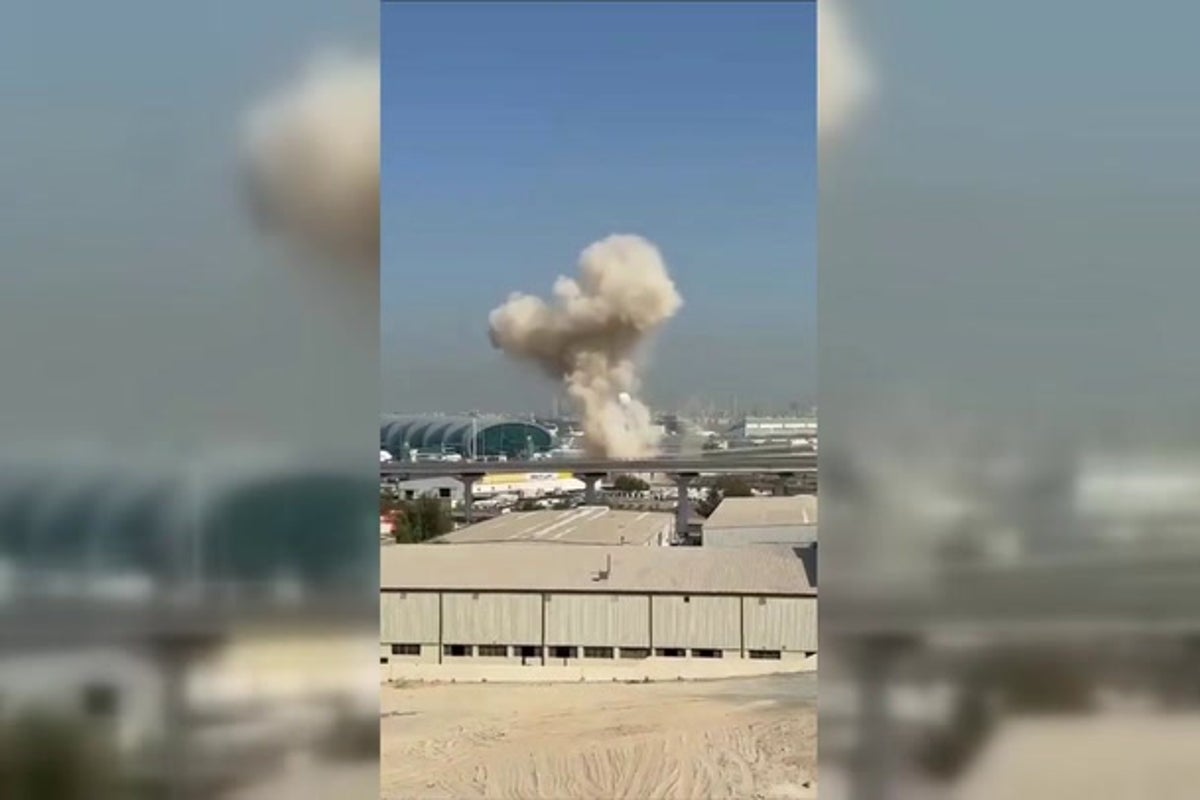
The headlines were predictable. Two weeks of drone activity over the Emirates in early 2022 sent the international media into a frenzy of "the bubble has burst" narratives. Critics jumped at the chance to paint the UAE’s "safe haven" status as a fragile marketing gimmick. They saw a few blinking lights in the sky and assumed the entire economic engine of the Middle East was about to stall.
They were wrong. Not because the threats weren’t real, but because they fundamentally misunderstood what "safety" means in a 21st-century global hub.
Safety in a city like Dubai or Abu Dhabi isn't about the absence of risk. It’s about the management of perception and the cold, hard efficiency of recovery. While outsiders were busy writing obituaries for the Gulf dream, the smart money was watching the response time.
The Fragility Fallacy
Most analysts suffer from what I call the "Glass House" bias. They look at a sparkling, high-tech city and assume it is inherently more vulnerable than a gritty, spread-out metropolis. They argue that because the UAE relies on foreign talent and capital, a single crack in the security facade will cause a mass exodus.
This ignores the reality of modern risk.
In London, New York, or Paris, systemic instability is often baked into the social fabric—strikes, rising crime rates, and crumbling infrastructure. In the UAE, the social contract is built on a different foundation: absolute security in exchange for participation in a hyper-efficient economy. When that security is challenged, the state doesn't just "spin" the news. It over-indexes on resilience.
The drone strikes weren't the end of the safe haven; they were the stress test that proved the haven was structural, not just atmospheric.
The Sovereignty of Silence
Western media outlets often criticize the UAE’s tightly controlled narrative as "propaganda." This is a lazy critique. From an industry insider perspective, controlling the narrative during a security event isn't about lying to the public—it’s about preventing a liquidity crisis.
Imagine a scenario where the government allowed every minor security tremor to be amplified by panic-driven social media 24/7. You’d see an immediate, irrational flight of capital. By maintaining a "stiff upper lip" that borders on the surreal, the UAE provides a psychological floor for investors.
Is it transparent? No. Is it effective for maintaining a multi-billion dollar real estate market during a regional conflict? Absolutely.
The "safe haven" isn't a physical bunker. It is a consensus. As long as the people with the largest bank accounts believe the state can intercept a threat and keep the malls open, the haven exists. The moment they stop believing, the physical walls won't matter anyway.
Why You’re Asking the Wrong Questions
People ask: "Aren’t you scared to live there?"
The better question is: "Where else are you going to go?"
Look at the alternatives. Europe is grappling with an energy crisis and stagnant growth. The US is polarized to the point of structural dysfunction. Asia is navigating its own complex geopolitical minefields.
When you compare the UAE to the rest of the world, the "risk" of a drone strike becomes a rounding error in a much larger calculation of lifestyle and ROI. Business leaders don't move to Dubai because they think it’s a magical land where nothing bad ever happens. They move there because when something bad does happen, the government has the resources and the singular will to fix it immediately, without three years of parliamentary debate.
The Cost of the Shield
We have to be honest about the downsides. This level of security is expensive, and it comes with a high degree of surveillance. The "safe haven" is a managed environment. It feels like a five-star resort because it is run like one.
If you want the messy, unpredictable "freedom" of a decaying Western city, the UAE will always feel sterile or even "fake" to you. But don't confuse sterility with weakness. The UAE has invested more in integrated defense systems, like the Terminal High Altitude Area Defense (THAAD), than almost any other nation of its size.
They aren't "spinning" safety; they are purchasing it at a premium.
The New Geopolitical Math
The 2022 events changed the math, but not in the way the critics thought. It moved the UAE from a "passive" safe haven to an "active" one.
The UAE isn't just a place where you hide your money; it’s a place that has proven it can stay operational while under fire. In the world of high-stakes commerce, that is a much more valuable brand. Reliability under pressure beats theoretical safety every single time.
Stop looking for the cracks in the glass. Start looking at the speed of the repair crew. That is where the real power lies.
If you’re waiting for the UAE to become a "normal" country with "normal" security vulnerabilities before you invest, you’ve already missed the point. The lack of "normalcy" is the entire product.
Go back to your spreadsheets and look at the capital inflow figures from 2022 to today. They didn't drop. They surged. The market doesn't care about your fear; it cares about the fact that the lights stayed on and the dividends kept clearing.
Stop projecting your anxieties onto a city that has already priced them into the cost of doing business.