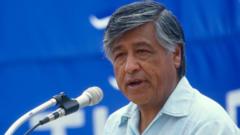
The canonization of Cesar Chavez as the undisputed saint of the American labor movement is facing its most grueling interrogation yet. For decades, the United Farm Workers (UFW) founder has been a fixture of murals, stamps, and state holidays, representing a non-violent struggle for the dignity of the working class. However, a series of recent accounts and archival re-examinations suggest that the internal culture of the UFW under Chavez was not just disciplined, but increasingly coercive and, in specific instances, allegedly predatory. The core of these allegations centers on the misuse of power, ranging from the psychological manipulation of union members to serious claims of sexual abuse that remained buried under the weight of his political stature.
When we talk about the UFW today, we often strip away the friction of the 1970s. We forget that the movement was as much a personality cult as it was a labor organization. This environment, characterized by absolute loyalty to a single figurehead, created the perfect conditions for exploitation to go unchecked.
Power Dynamics and the Shield of Sanctity
The problem with turning a man into a monument is that monuments don't have to answer for their actions. Chavez understood the power of his image. By leaning into the persona of the ascetic, fasting monk, he made it socially and politically impossible for subordinates to challenge him. If you questioned Chavez, you weren't just questioning a boss; you were questioning the cause of the poor itself.
This dynamic is central to understanding how allegations of sexual misconduct could be suppressed for decades. In any high-stakes social movement, there is an intense pressure to "protect the brand." Witnesses and victims often feel that speaking out will provide ammunition to the enemy—in this case, the powerful growers and the anti-union establishment. This creates a wall of silence that is far more effective than any legal non-disclosure agreement.
Historical records and recent interviews with former UFW staffers paint a picture of an organization that began to resemble a closed-loop sect by the late 1970s. Chavez became obsessed with "The Game," a psychological tactic borrowed from the Synanon cult. This involved "synanon-style" sessions where individuals were sat in a circle and verbally torn apart by their peers to "purify" their motives. In such a volatile and degrading atmosphere, the boundaries of personal consent and professional respect were systematically eroded.
The Specific Weight of the Allegations
The recent surfacing of sexual abuse claims against Chavez isn't a bolt from the blue for those who studied the internal decline of the UFW. While the public saw a man marching for grape pickers, the inner circle saw a leader who was increasingly paranoid and demanding of absolute physical and emotional submission.
One must look at the "how" of these allegations. They do not describe isolated incidents of passion, but rather a pattern of utilizing his position as a spiritual and political father figure to gain access to women within the movement. These women were often young, idealistic, and completely dependent on the union for their housing, food, and sense of purpose. When a leader who is compared to Gandhi or Martin Luther King Jr. makes an advance, the "no" is strangled by a sense of duty or fear of excommunication from the only community the victim knows.
The UFW archives at Wayne State University contain hints of these internal ruptures. Letters and memos from the era detail a growing discomfort with Chavez’s behavior, though much of it was coded in the language of "leadership style" or "personal failings." The tragedy is that the movement’s successes—the contracts won, the pesticide bans, the national awareness—were used as a moral offset for the personal damage inflicted behind closed doors.
The Synanon Influence and the Death of Dissent
To understand how abuse thrives, you have to look at the structure of the room. In 1977, Chavez began integrating the tactics of Charles Dederich, the founder of Synanon, into the UFW’s headquarters at La Paz. This was a turning point. "The Game" was designed to break the ego. It involved hours of screaming, personal insults, and forced confessions.
- Isolation: Staffers were discouraged from maintaining outside ties.
- Economic Dependency: Many worked for $5 a week plus room and board.
- Psychological Warfare: Dissent was labeled as "counter-revolutionary" or a sign of personal weakness.
In this pressure cooker, the power imbalance between Chavez and his followers became absolute. When an individual is stripped of their ego and their financial independence, they lose the agency required to resist unwanted sexual advances. It is a classic blueprint for institutional abuse. The union wasn't just a workplace; it was a total institution.
Breaking the Progressive Silence
There is a specific brand of discomfort that arises when a progressive icon is accused of the very things they claimed to fight against. The Right often uses these revelations to dismiss the entire labor movement, while the Left often retreats into a defensive crouch, fearing the loss of a necessary myth. Both reactions are intellectual failures.
The truth is that Chavez can be both the man who successfully organized the most marginalized workers in America and a man who presided over a toxic, abusive internal culture. These two things coexist. Acknowledging the abuse doesn't invalidate the grape strike, but ignoring the abuse invalidates the victims.
The investigative reality is that many people knew. In the small, insular world of California labor organizing in the 70s and 80s, rumors about Chavez’s "private life" and his treatment of women were persistent. But the political utility of Chavez was too high. He was the bridge to the Latino vote, the face of the boycott, and the darling of the Kennedy family. To take him down was to take down the movement.
Structural Failures of the UFW
The UFW failed to build a democratic infrastructure that could survive its founder’s flaws. Because the union was built on the charisma of one man rather than a robust system of checks and balances, there was no HR department to go to, no independent board to file a grievance with, and no path for recourse that didn't involve total social suicide.
We see this same pattern in modern tech startups and "disruptive" non-profits. A visionary leader is given a blank check because they are "changing the world," and that blank check eventually buys their silence when they cross a line. The UFW's decline in the 1980s—dropping from nearly 80,000 members to just a few thousand—wasn't just due to aggressive anti-union laws and mechanization. It was a moral rot from within. People left because they couldn't breathe in the atmosphere Chavez had created.
Re-evaluating the History of Labor
As we move further away from the era of the great strikes, the historical record is finally catching up with the reality of the people who lived it. The accounts of sexual abuse are not "distractions" from the history of labor; they are a vital part of it. They teach us about the dangers of unchecked authority in any movement, no matter how noble the goals.
The victims of this era are now coming forward in their twilight years, no longer afraid of "hurting the cause" because the cause has already been institutionalized. Their stories suggest that the price of the UFW’s victories was paid, in part, by the bodies and mental health of the women who worked in the shadows of La Paz.
If we are to truly honor the "working man" and "working woman," we have to stop protecting the men who lead them when those men become the oppressors. The legacy of Cesar Chavez is not a simple story of a hero. It is a complex, often dark narrative of how power, even when seized for the right reasons, can corrupt the person holding it.
The Concrete Steps for Accountability
- Open the Archives: University and union archives must release all unredacted testimonies and internal memos regarding personnel complaints from the 1970s and 80s.
- Acknowledge the Victims: The current UFW leadership must move beyond the hagiography of Chavez and provide a formal platform for those who were harmed during his tenure to be heard without fear of retaliation.
- Separate the Man from the Movement: Educational curricula should reflect the duality of Chavez—teaching his organizational brilliance alongside the systemic failures and personal abuses that marked his later years.
The most dangerous thing we can do is maintain the myth at the expense of the truth. When we refuse to look at the stains on a hero's cape, we ensure that the next generation of leaders will feel just as entitled to commit the same sins. History is not a cheering section; it is a laboratory. And right now, the lab results for Cesar Chavez are coming back with a deeply troubling profile of a man who lost his way in the very power he sought to distribute.
Demand that your local labor history board include the voices of the dissenters and the survivors in the next anniversary of the Delano strike.