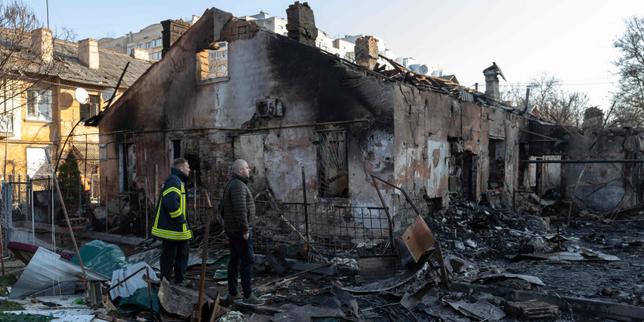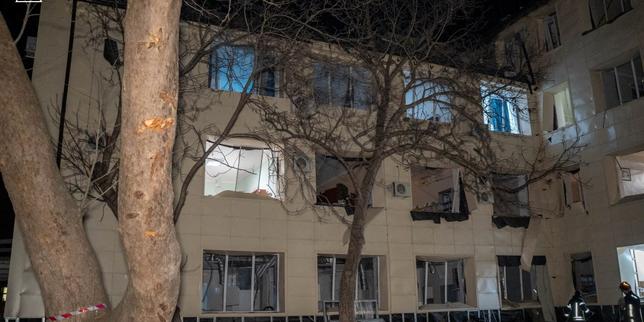
Olena does not check the weather in Kyiv anymore. She checks the frequency of the sirens. To her, the sky is no longer a source of light or rain; it is a vector for metal. For over two years, her life has been a grueling exercise in endurance, a marathon run through a minefield. But lately, she has noticed something more chilling than the sound of a Shahed drone buzzing overhead.
The world is looking away.
The digital glow of the global consciousness has migrated. It has flickered across the map, leaping from the muddy trenches of the Donbas to the arid tension of the Middle East. As the specter of a broader war involving Iran dominates the chyrons and the emergency summits in Brussels and Washington, the rhythmic thud of artillery in eastern Ukraine has become background noise. It is the hum of a refrigerator you eventually stop hearing.
This is the hidden tax of a multi-polar crisis. Attention is a finite resource. When a new fire breaks out, we tend to drop the bucket we were carrying to the old one.
The Geography of Neglect
Geopolitics is often discussed as a high-stakes chess match played by men in suits who never smell the ozone of a blast. In reality, it is a hydraulic system. When pressure builds in the Strait of Hormuz, the flow of support often thins out in the Kharkiv oblast. It is not just about physical shells or the dwindling stockpiles of Patriot missiles, though those are terrifyingly real constraints. It is about the moral oxygen required to keep a resistance alive.
Consider the logistics of empathy.
In early 2022, the blue and yellow flag was a secular icon. It was draped over balconies in suburban Ohio and projected onto the Brandenburg Gate. Today, those flags are frayed at the edges. They are sun-bleached. Some have been taken down to make room for different symbols of different tragedies.
The Iranian threat is significant. It is a dense, complex knot of nuclear ambitions, proxy militias, and regional hegemony that could indeed set the world's energy markets—and its safety—ablaze. But the danger lies in the binary trap. We are being conditioned to believe that we can only care about one apocalypse at a time.
The Irony of the Arsenal
There is a dark irony in how these two theaters are linked. The very drones that threaten to escalate a conflict between Israel and Iran are the same models that have been rainfalling onto Ukrainian power grids for months. The Shahed-136 does not care about borders; it is a bridge of fire between two wars.
When the international community shifts its entire diplomatic weight toward deterring Tehran, Moscow breathes a sigh of relief. Silence is a weapon. For the Kremlin, the ideal scenario is not a decisive victory, but a global shrug. They are betting on the "fatigue" that pundits love to discuss—the idea that Western voters will eventually find the cost of eggs more compelling than the sovereignty of a nation they can’t find on a map.
If the focus on Iran leads to a softening of the sanctions regime or a "pause" in military aid to Kyiv, we aren't just managing a new crisis. We are subsidizing the old one.
The Human Scale of the Gap
Let’s look at a hypothetical man named Anton. He is fifty-four. He was a history teacher before the full-scale invasion. Now, he manages a repair depot for Western-supplied armored vehicles.
Anton spends his nights scrolling through international news. He sees the emergency sessions of the UN Security Council. He sees the frantic shuttle diplomacy aimed at preventing a direct confrontation in the Persian Gulf. He understands the stakes. He isn't naive; he knows a war with Iran could collapse the global economy.
But then he looks at his inventory.
He is waiting for parts that are stuck in a bureaucratic bottleneck. He is watching the delivery dates for artillery shells slip from "next week" to "next quarter." He feels the invisible tether between the two regions. He knows that every minute a diplomat spends debating Iranian enrichment is a minute they aren't debating how to close the sky over his hometown.
The "invisible stakes" are found here, in the gap between what is needed and what is provided. When the world’s gaze moves, the shadow it leaves behind grows cold. For a soldier in a trench near Bakhmut, the news that the world is "preoccupied" with a new threat feels like a slow-motion abandonment.
The Fallacy of the Single Fire
We have fallen into the habit of treating global stability like a series of Netflix seasons. Season one was the pandemic. Season two was Ukraine. Season three is the Middle East.
But history doesn't work in seasons. It is a continuous, messy, overlapping blur.
The war in Ukraine is not a regional border dispute that can be put on a shelf while we deal with "more urgent" matters. It is the foundational struggle for the rules of the twenty-first century. If the precedent is set that a larger power can simply outlast the attention span of the West, then the map of the world becomes a "take what you can" buffet for every autocrat with a grievance.
Iran knows this. Russia knows this. They are not competing for our attention; they are collaborating on our exhaustion.
The Cost of Looking Away
The numbers are staggering, yet they fail to move the needle as they once did. We talk about billions of dollars as if they are abstract points in a game. We forget that those billions translate to the ability of a surgeon in Odesa to keep the lights on while removing shrapnel from a teenager's leg.
When the headlines shift, the funding follows. The private donations dry up. The volunteer groups find it harder to recruit. The political capital required to pass aid packages evaporates in the face of "new" and "urgent" priorities.
We are currently witnessing a masterclass in distraction. By forcing the world to pivot toward the Middle East, the anti-democratic axis is testing our peripheral vision. They want to see if we can hold two truths in our heads at once: that the Middle East is a tinderbox, and that Ukraine is the frontline of a global shift.
A Choice of Narratives
The story we tell ourselves matters.
If we tell a story where we are the weary giants, tired of policing a chaotic world, we will eventually retreat into ourselves. We will watch as the fires merge.
But there is another story. It is a story where the defense of Ukraine is the prerequisite for stability everywhere else. It is a story where we recognize that the drone over Kyiv and the missile over the desert are parts of the same machine.
Olena still listens for the sirens. She doesn't have the luxury of "fatigue." She cannot turn off the war because the "content" has become repetitive. Her reality is fixed, even as ours fluctuates based on the latest viral clip or the most recent alert on our phones.
The tragedy is not that the world cares about the threat of a war with Iran. The tragedy would be if that care became an excuse to let a democracy in Europe bleed out in the dark.
We are capable of holding the bucket for two fires. We have to be. Because if we drop one to save the other, we will eventually find ourselves standing in the ashes of both.
Imagine the silence that follows when the world finally stops talking about a place. It isn't the silence of peace. It is the silence of a void where a future used to be. That is the silence Anton fears more than the explosions. It is the sound of being forgotten while the world moves on to a more interesting disaster.
The sky over Kyiv is still grey. The mud is still deep. The stakes are still absolute.
Would you like me to analyze the specific economic links between Iranian military exports and the current Russian winter offensive?