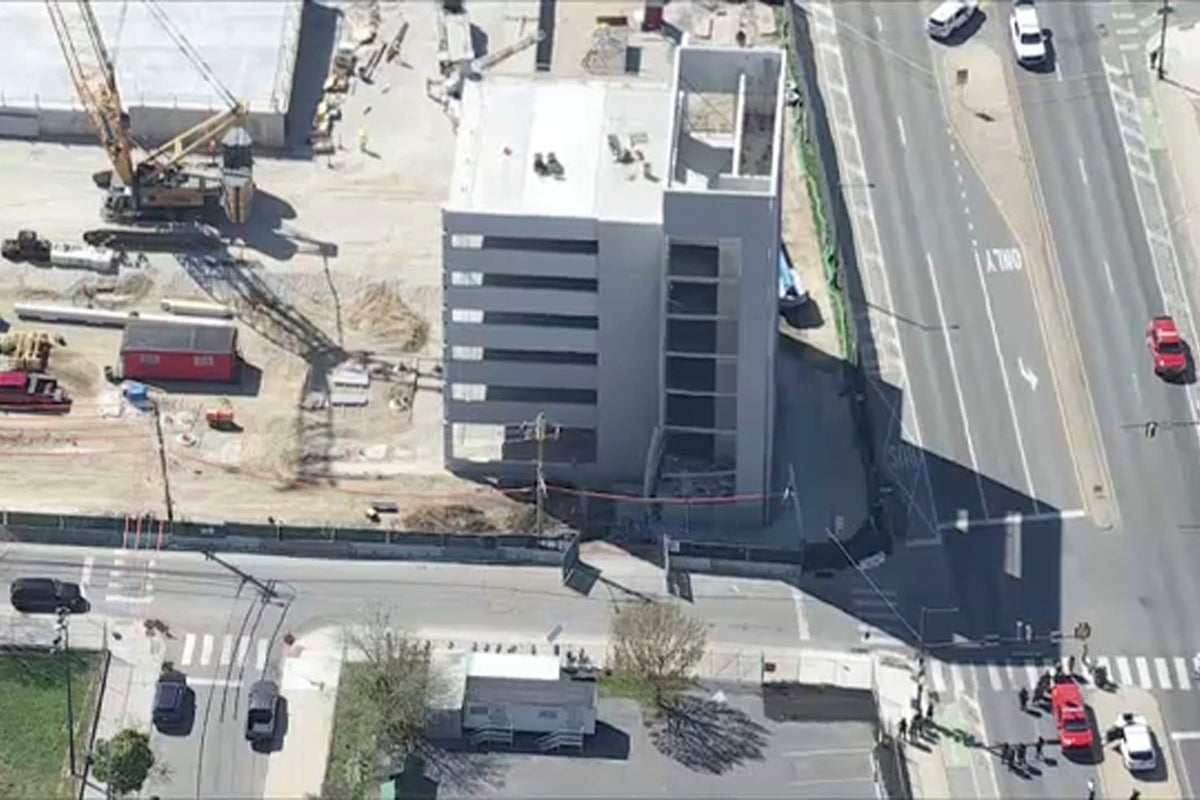
The sound was not an explosion. It was a groan—the kind of deep, tectonic complaint that metal and stone make only when they have finally decided to stop fighting gravity. In a city like Philadelphia, a place built on layers of history and heavy industrial bone, you learn to ignore the background hum of construction and the rattle of the elevated trains. But when the parking garage on the corner of 13th and Locust gave way, the air didn’t just vibrate. It went still.
Concrete is supposed to be permanent. We entrust our lives to it every time we step into an elevator or leave a two-ton vehicle suspended four stories above the street. We assume the math is right. We assume the rebar hasn't rusted. We assume the inspection stickers are more than just paper. Then, on a mundane Thursday, the math fails.
One person is dead. Two others are missing, swallowed by a gray tsunami of pulverized cement and twisted steel.
To understand the weight of this, don’t look at the news cameras or the yellow tape. Look at the shoes. Somewhere in the debris, there is a pair of loafers or sneakers belonging to someone who was just trying to get home. They were probably thinking about what to make for dinner or a deadline they had missed at the office. They weren't thinking about structural integrity. They were thinking about life.
The Illusion of Solidity
We live in a world of invisible maintenance. The systems that keep us safe—the bridges, the garages, the high-rises—require a constant, quiet vigilance that most of us never see. A parking garage is a particularly brutal environment for architecture. It isn't just a building; it’s a machine that breathes car exhaust and soaks in the corrosive salt tracked in during every Philadelphia winter.
When water seeps into a hairline crack in a concrete slab, it doesn't stay there. It finds the steel. It eats at the skeleton of the building until the metal expands, cracking the concrete from the inside out. Engineers call it "concrete cancer." It is a slow, silent decay that remains hidden behind a facade of strength until the moment the equilibrium breaks.
Consider a hypothetical commuter named Elias. He’s been parking in the same spot on the third level for six years. He knows the attendant’s name. He knows which pillar has the chipped paint. To Elias, the garage is an extension of his routine, as solid as the ground itself. When the floor beneath his front tires begins to sag, it doesn't feel like a catastrophe at first. It feels like a mistake. A dizzying, impossible glitch in the reality of the physical world.
The collapse happened in seconds. One floor pancaked onto the next, a terrifying demonstration of kinetic energy that left the structure looking like a discarded accordion.
The Search for the Unseen
Rescue workers in Philadelphia are used to old buildings. They know how to navigate the timber-framed rowhomes and the brick warehouses of the 19th century. But a concrete collapse is different. It is a puzzle of physics where moving one piece of rubble could cause a secondary slide, crushing anyone still trapped in the air pockets below.
The air around the site smelled of cold dust and hydraulic fluid. For the families waiting behind the barricades, the silence is the worst part. They are looking for a sign—a text message that won't send, a phone call that goes straight to voicemail. Every time a heavy crane groans or a rescue dog barks, the collective breath of the crowd hitches.
There is a specific kind of grief that comes with a disaster like this. It isn't the expected loss of old age or the shock of a sudden illness. It is the anger of a preventable tragedy. Buildings do not fall down because of bad luck. They fall down because of a chain of human decisions—a missed inspection, a deferred repair, a budget cut that seemed small at the time but proved fatal in the end.
The Cost of Looking Away
Data tells us that urban infrastructure across the Northeast is aging at a rate faster than we are willing to fund. We see the potholes on the Vine Street Expressway and complain about the traffic, but we rarely think about the support beams holding up the parking decks where we leave our cars.
In the wake of the collapse, the city will talk about codes. They will talk about new ordinances and increased oversight. They will look at the history of this specific garage, tracing its permits back decades to find the point where the failure began. Was it the weight of the SUVs, which are significantly heavier than the cars the garage was designed for in the 1970s? Was it a drainage issue that was ignored for a decade?
The truth is often a mosaic of small negligence.
Imagine the inspector who walked through those decks six months ago. Maybe it was a Friday afternoon. Maybe they saw the rust on the joists and made a note, but the note got buried in a pile of paperwork. Or maybe the owner of the garage saw the estimate for the repairs and decided they could wait one more year. These are the invisible stakes. We gamble with the lives of strangers to save a percentage on a balance sheet.
The Human Geometry of the City
A city is more than its skyline. It is a fragile agreement between millions of people to trust the structures we inhabit. When a building falls, that agreement is shattered. Suddenly, every crack in a sidewalk and every vibration in a floorboard feels like a threat. We are reminded that we are small, soft creatures living inside a hard, heavy world that requires constant care.
The one victim who has been recovered was a worker, someone who spent more time in that garage than almost anyone else. They were part of the building's life. The two people still missing represent the terrifying randomness of it all. They could have been anyone. They could have been you.
Rescue crews are working under floodlights now, the white glare cutting through the Philadelphia night. They move slowly, delicately, shifting tons of debris by hand when the machines are too dangerous to use. They are looking for life in a place that has become a tomb of grey dust.
The Echo in the Rubble
We will move on, eventually. The street will be cleared. The rubble will be hauled away to a landfill, and a new, shiny structure will likely rise in its place. We will drive past the corner of 13th and Locust and forget that the ground once shook.
But for three families, the world ended on a Thursday afternoon. They are left with the "what ifs." What if the meeting had run five minutes longer? What if they had parked on the street instead? These questions are a different kind of weight, one that no amount of concrete or steel can support.
The city continues to breathe around the wreckage. The sirens fade into the distance, and the tourists walk past the yellow tape, glancing at the twisted metal with a mix of horror and detachment. They don't see the loafers or the sneakers buried at the bottom of the pile. They don't hear the groan of the metal before the fall.
They only see the hole where a building used to be.
But if you stand still enough, away from the noise of the traffic and the cameras, you can almost feel the vibration of the city—a reminder that everything we build is only as strong as our willingness to look after it. Gravity never sleeps. It is always waiting for us to blink.
The lights of the city flicker on, casting long shadows across the broken slabs of the third floor, where a single car remains perched on the edge of the abyss, its headlights still pointing toward a home it will never reach.