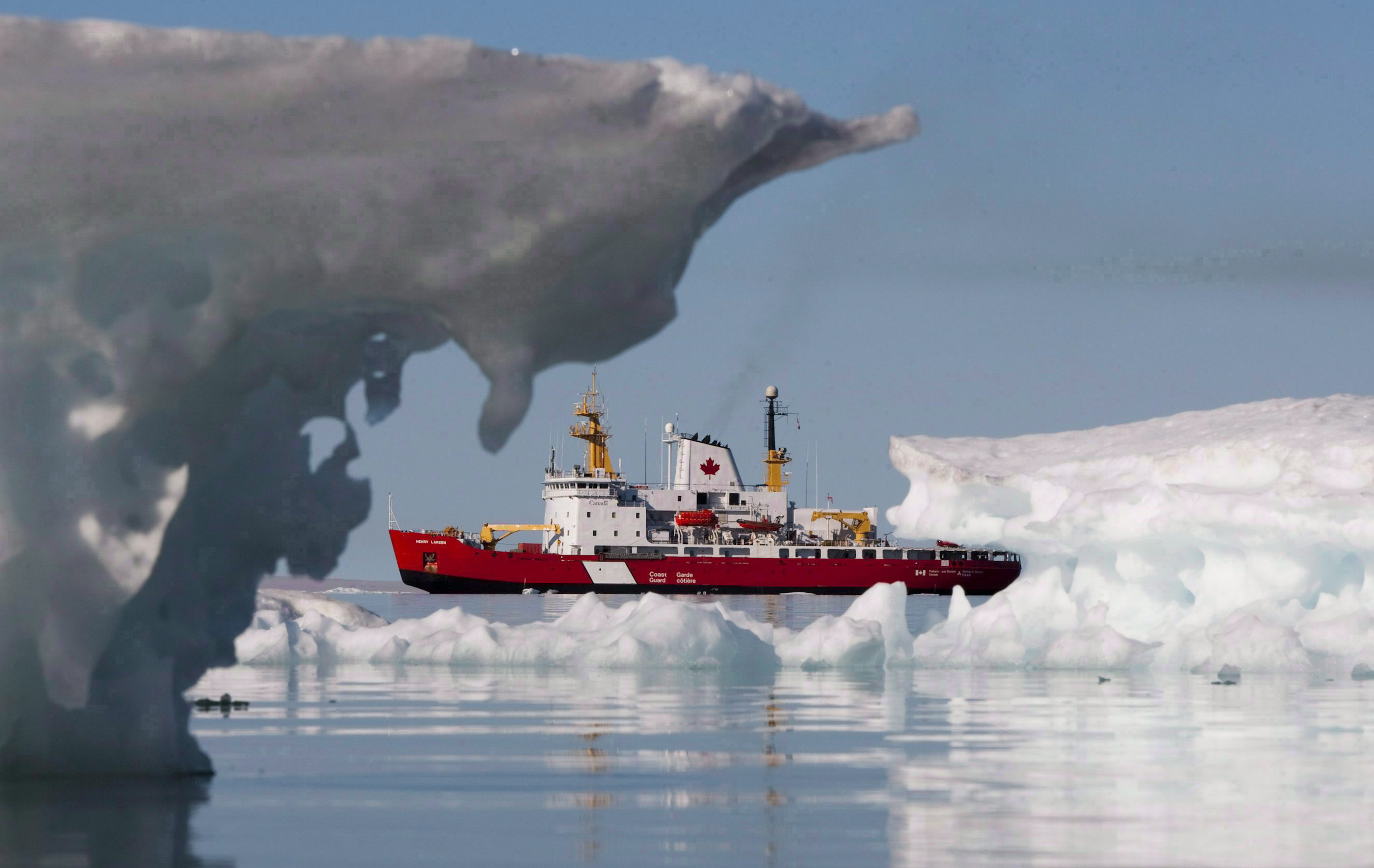
The Arctic is no longer a frozen buffer zone. It is a front line. For decades, the North Atlantic Treaty Organization (NATO) treated the High North as a theater of "low tension," a gentleman’s agreement where scientific cooperation trumped military posturing. That era ended the moment Russian tanks crossed into Ukraine, but the institutional inertia within Western capitals suggests many leaders are still checking a thermometer that broke years ago. Canada’s recent warnings about "northward" threats aren't just political rhetoric; they are a late-stage admission that the alliance is structurally and technologically ill-equipped for a fight in the deep freeze.
The primary threat isn't just a traditional invasion over the ice. It is the sophisticated integration of long-range strike capabilities, sub-surface surveillance, and the rapid dual-use expansion of Chinese and Russian infrastructure. While NATO focused on the sands of the Middle East and the steppes of Eastern Europe, the Kremlin was quietly reopening over 50 Soviet-era military outposts above the Arctic Circle. This isn't a "scramble for resources" in the way nineteenth-century colonial powers fought for gold. This is a calculated move to control the Northern Sea Route and deny NATO's ability to reinforce Europe from the North American flank.
The Infrastructure Deficit
If a conflict broke out in the High North tomorrow, NATO would face a logistical nightmare. Sovereignty is an abstract concept without the ability to project power, and currently, the West is failing the math of presence.
Canada’s Nanisivik Naval Facility, a cornerstone of its northern strategy, has faced persistent delays and scaling back of its capabilities. At the same time, the United States Coast Guard is operating a geriatric fleet of icebreakers. The Polar Star, the only heavy icebreaker in the U.S. arsenal, is over 40 years old and relies on parts scavenged from its decommissioned sister ship. In contrast, Russia maintains a fleet of more than 40 icebreakers, including nuclear-powered vessels that can smash through ice several meters thick without refueling for years.
This disparity creates a "denial of access" reality. If you cannot move ships through the ice, you cannot protect undersea cables. If you cannot protect cables, the global financial system and military communications networks are vulnerable to "gray zone" sabotage that is nearly impossible to attribute in the dark, churning waters of the Arctic.
The Underwater Acoustic Gap
The real war is happening beneath the surface. The Greenland-Iceland-United Kingdom (GIUK) Gap has historically been the chasm Russian submarines had to cross to reach the Atlantic. However, new quiet-run technologies and autonomous underwater vehicles (AUVs) are making the traditional "tripwire" sensors of the Cold War look like tin cans on a string.
Russia’s Severodvinsk-class submarines are capable of carrying hypersonic missiles that can reach North American cities with almost zero warning time. NATO’s current response relies on a patchwork of aging satellite coverage and maritime patrol aircraft that struggle with the extreme weather conditions of the north. The "northward" look required isn't just about placing boots on the tundra; it’s about a massive investment in persistent, automated sensing arrays that can survive the crushing pressure and cold of the Arctic floor.
China’s Polar Silk Road
Beijing’s interest in the Arctic is the variable that many analysts overlook. Despite having no Arctic coastline, China declared itself a "Near-Arctic State" in 2018. This wasn't a geographical claim; it was a manifesto of intent.
By investing in Russian energy projects like the Yamal LNG plant, China has secured a seat at the table. They are building their own icebreakers and testing "scientific" buoys that many intelligence agencies suspect have dual-use surveillance capabilities. For Beijing, the Arctic is a shortcut. The Northern Sea Route could shave two weeks off the shipping time to Europe, bypassing the Malacca Strait where the U.S. Navy holds sway.
The danger for NATO is a "no-limits" partnership in the north that allows Russia to provide the muscle while China provides the capital and technology. This creates a pincer movement on Western interests. While NATO members argue over 2% GDP spending targets, the Sino-Russian axis is building a physical reality on the ice that will be difficult to dislodge without a massive, sustained escalation.
The Sovereignty Trap
For nations like Canada, Norway, and Denmark, Arctic defense is inextricably linked to Indigenous rights and environmental protection. This creates a domestic political friction that authoritarian regimes don't face.
Building a deep-water port or a new radar installation requires years of environmental assessments and consultations. While these are essential components of a healthy democracy, they are being weaponized by adversaries who use disinformation to stoke internal divisions. We see coordinated campaigns highlighting the "militarization" of the North to turn local populations against necessary defense upgrades.
The Technology of Survival
Standard military hardware fails in the Arctic. Batteries die. Steel becomes brittle and snaps. Lubricants freeze into jelly. The "northward" shift requires a fundamental redesign of how the West builds its tools of war.
- Materials Science: Developing polymers and alloys that maintain structural integrity at -50°C.
- Communications: Shifting from geostationary satellites, which have poor coverage at high latitudes, to Low Earth Orbit (LEO) constellations like Starlink or specialized military alternatives.
- Unmanned Systems: Drones that can de-ice their own wings and operate in GPS-denied environments using terrain-mapping or celestial navigation.
Relying on "off-the-shelf" technology is a recipe for disaster in the High North. The environment is a more consistent enemy than any human adversary. NATO needs a dedicated Arctic Center of Excellence that isn't just a think tank but a testing ground for hardware that can actually survive a week in a blizzard.
The Intelligence Vacuum
One of the most alarming aspects of the current situation is the lack of "eyes on" the ground. Satellite imagery is often obscured by cloud cover or the months-long "polar night." Human intelligence is sparse. We are essentially flying blind across a territory that is becoming more navigable every year due to receding ice.
This lack of visibility creates a hair-trigger environment. If a NATO commander can't distinguish between a scientific research vessel and a surveillance platform, the risk of accidental escalation skyrockets. Miscalculation is the greatest threat to peace in the Arctic. Without clear communication channels—most of which were severed after the invasion of Ukraine—a simple engine failure on a Russian ship could be misinterpreted as a provocative maneuver, sparking a conflict that neither side can easily contain.
The Cold Reality of Modern Deterrence
Deterrence only works if the threat is credible. Right now, NATO’s northern flank is a series of vulnerabilities masquerading as a defense strategy. We have the maps, we have the speeches, but we do not have the icebreakers, the cold-weather hardened troops, or the integrated sensor networks required to hold the line.
The "northward" warning isn't a call for future planning; it’s an alarm for a house that is already starting to smoke. To secure the Arctic, the alliance must move beyond symbolic exercises and commit to the grueling, expensive work of building a permanent, resilient presence in the most inhospitable place on Earth. Anything less is just an invitation for the ice to be claimed by those who showed up with the right gear.
The window for a peaceful, coordinated management of the Arctic is closing. As the ice thins, the geopolitical friction increases. NATO must decide if it is willing to pay the price of admission to its own backyard, or if it will concede the top of the world to those who have been preparing for this thaw for thirty years.
Demand your representatives provide a clear timeline for the commissioning of a modern polar fleet.